

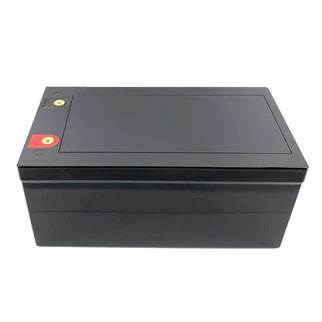
二: Calculate the battery capacity requirements: For example, the accumulated lighting time of street lights every night needs to be 7 hours (h) at full load; (For example, turn on at 8:00 in the evening, turn off 1 channel at 11:30 in the evening, turn on 2 channels at 4:30 in the morning, and close at 5:30 in the morning) It needs to meet the lighting needs of continuous rainy days for 5 days. (5 days plus the lighting of the night before the rainy day, totaling 6 days) Battery = 5A×7h×(5+1) day=5A×42h=210AH In addition, in order to prevent the battery from overcharging and over-discharging, the battery is generally charged to about 90%; about 20% is left for discharge. So 210AH is only about 70% of the true standard in the application. 三: Calculate the peak demand of the battery panel (WP): The accumulated lighting time of the street lamp every night needs to be 7 hours (h); ★: The solar panel receives an average of 4.5 hours (h) of effective light per day; at least relax the reserve of 20% of the solar panel demand. WP÷17.4V=(5A×7h×120%)÷4.5h WP÷17.4V=9.33 WP=162(W) The calculation method of the photovoltaic power generation system Photovoltaic systems have different scales and application forms. For example, the scale of the system is very large, ranging from a few watts of solar garden lights to MW-level solar photovoltaic power plants. Its application forms are also diverse and can be widely used in many fields such as household, transportation, communication, and space applications. Although the scale of the photovoltaic system is different, its composition structure and working principle are basically the same. The solar power generation system is composed of a solar cell group, a solar controller, and a battery (group). If the output power is AC 220V or 110V, an inverter is also required. The role of each part is: (1) Solar panels: Solar panels are the core part of the solar power generation system and the most valuable part of the solar power generation system. Its function is to convert the sun's radiation capacity into electric energy, or send it to the storage battery for storage, or drive the load to work. (2) Solar controller: The function of the solar controller is to control the working state of the entire system, and to protect the battery from overcharge and over-discharge. In places with large temperature differences, a qualified controller should also have the function of temperature compensation. Other additional functions such as light control switch and time control switch should be optional options of the controller; (3) Batteries: generally lead-acid batteries, nickel-hydrogen batteries, nickel-cadmium batteries or lithium batteries can also be used in small and microsystems. Its function is to store the electrical energy generated by the solar panel when there is light, and then release it when needed. (4) Inverter: On many occasions, an AC power supply of 220VAC and 110VAC is required. Because the direct output of solar energy is generally 12VDC, 24VDC, 48VDC. In order to provide electrical energy to 220VAC electrical appliances, it is necessary to convert the DC electrical energy generated by the solar power generation system into AC electrical energy, so a DC-AC inverter is required. On some occasions, when multiple voltage loads are required, a DC-DC inverter is also used, such as converting 24VDC electric energy into 5VDC electric energy (note that it is not a simple step-down). The design of a photovoltaic system includes two aspects: capacity design and hardware design. Before proceeding with the design of the photovoltaic system, it is necessary to understand and obtain some basic data necessary for calculation and selection: the geographic location of the photovoltaic system site, including location, latitude, longitude, and altitude; the meteorological data of the area, including the monthly total solar energy Radiation, direct radiation and scattered radiation, annual average temperature, maximum and minimum temperature, longest continuous rainy days, maximum wind speed, hail, snow, and other special meteorological conditions. The design of the battery includes the design calculation of the battery capacity and the series-parallel design of the battery pack. First, the basic method of calculating battery capacity is given. . The first step is to multiply the daily power consumption required by the load by the number of self-sufficient days determined according to the actual situation to get the preliminary battery capacity. II. In the second step, divide the battery capacity obtained in the first step by the maximum allowable depth of discharge of the battery. Because the battery cannot be completely discharged in self-sufficient days, it is necessary to divide by the maximum depth of discharge to get the required battery capacity. The selection of the maximum depth of discharge requires reference to the performance parameters of the battery selected for use in the photovoltaic system, and detailed information about the maximum depth of discharge of the battery can be obtained from the battery supplier. Generally, if you are using a deep-cycle battery, it is recommended to use 80% depth of discharge (DOD); if you are using a shallow-cycle battery, it is recommended to use 50% DOD. The basic formula for designing battery capacity is as follows: Self-sufficiency days X daily average load Battery capacity =-Maximum depth of discharge These are of course not correct, the following is the correct calculation formula: The calculation formula for battery capacity BC is: BC=A×QL×NL×TO/CC Ah(1) In the formula: A is the safety factor, which is between 1.1 and 1.4; QL is the daily average power consumption of the load, which is the working current multiplied by the daily working hours; NL is the longest continuous rainy days; TO is the temperature correction coefficient, generally, 1, if it is above 0°C, 1.1 if it is above -10°C, and 1.2 if it is below -10°C; CC is the battery discharge depth, generally 0.75 for lead-acid batteries and 0.85 for alkaline nickel-cadmium batteries. Below we introduce the method to determine battery series and parallel. Each battery has its nominal voltage. In order to achieve the nominal voltage of the load, we connect the batteries in series to supply power to the load. The number of batteries that need to be connected in series is equal to the nominal voltage of the load divided by the nominal voltage of the battery. Load nominal voltage Number of batteries in series = nominal battery voltage The basic idea of the solar battery module design is to meet the annual average daily load power demand. The basic method of calculating solar cell modules is to divide the energy required by the load per day (ampere-hours) by the energy that a solar cell module can produce in a day (ampere-hours), so that the system needs to be connected in parallel with solar cells The number of components, using these components in parallel can generate the current required by the system load. Divide the nominal voltage of the system by the nominal voltage of the solar cell module to get the number of solar cell modules that need to be connected in series. Using these solar cell modules in series can generate the voltage required by the system load. The basic calculation formula is as follows: Number of modules connected in parallel = average daily load (AH)/daily output of modules (AH) Number of modules in series = system voltage (V)/module voltage
Jan 19, 2021
Calculation formula for solar panel and battery configuration
You Might Also Like



Send Message