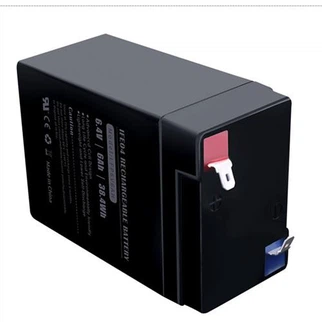
Lithium iron phosphate battery is a kind of lithium ion battery that uses lithium iron phosphate (LiFePO4) as the positive electrode material and carbon as the negative electrode material. During the charging process, part of the lithium ions in the lithium iron phosphate are extracted, transferred to the negative electrode through the electrolyte, and inserted into the negative electrode. Carbon material; at the same time, it releases electrons from the positive electrode and reaches the negative electrode from the external circuit to maintain the balance of the chemical reaction. During the discharge process, lithium ions are extracted from the negative electrode and reach the positive electrode through the electrolyte. At the same time, the negative electrode releases electrons from the external circuit to the positive electrode to provide energy for the outside world.
The low-temperature performance of lithium iron phosphate batteries is mainly affected by factors such as production environment and materials. In the production process of lithium iron phosphate batteries, there are high requirements for temperature, humidity, dust, etc., which need to be strictly controlled in place. In terms of materials, the lithium iron phosphate positive electrode itself has relatively poor electronic conductivity, and it is more prone to polarization, which reduces the performance of the capacity; the negative electrode is mainly charged at low temperature because it will affect the safety problem; the electrolyte is, It is possible that the viscosity will increase at low temperature, and the lithium ion migration resistance will increase; the binder has a relatively large impact on the low temperature performance of the battery.
The low-temperature performance of the lithium iron phosphate battery pack can be improved by adjusting the four pieces of positive electrode, negative electrode, electro-hydraulic, and binder.
For the positive electrode, the particle size, resistance force, and the axis length of the AB plane will affect the low-temperature characteristics of the entire battery. The nano-particle size shortens the migration path and improves the low-temperature discharge performance, because the lithium iron phosphate discharge is mainly It is related to the positive electrode.
As for the negative electrode, the low-temperature charging of lithium batteries is mainly affected by the negative electrode, including the particle size and the change in the distance between the negative electrodes, and the granular graphite with large interlayer spacing. In terms of impedance, the bulk resistance and ion migration resistance are relatively small.
Electrolyte includes three aspects: solvent, lithium salt and additives. The influence of solvent on the low temperature of lithium iron phosphate battery pack ranges from more than 70% to more than 90%. Solvent, lithium salt and additives all have a certain influence on the low temperature characteristics of power batteries.
As for the adhesive, a linear adhesive is used.
In the whole system, from the improvement of the positive electrode, negative electrode, electrolyte to the binder, the lithium iron phosphate battery monomer will show better results.