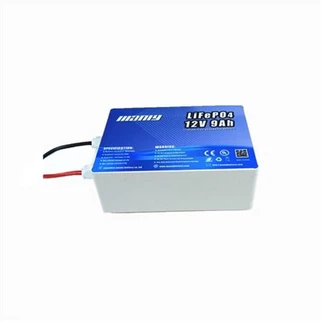
Lithium iron phosphate cycle performance, low price, good safety, and has the potential for fast charging, so with the rapid development of the domestic electric vehicle industry, the demand for lithium iron phosphate batteries is also rapidly increasing, the current electric bus such as the higher safety requirements of the car used are basically lithium iron phosphate batteries. With these lithium iron phosphate batteries into the end-of-life, we have to face a difficult problem - the recycling of used batteries.
Lithium iron phosphate battery recycling has its own characteristics, compared to other layer structure materials, lithium iron phosphate materials have a more stable olivine structure, so very stable, charging even if all the Li + from the lithium iron phosphate material inside off, lithium iron phosphate material can still maintain the FePO4 structure, without structural collapse and transformation, so lithium iron phosphate battery decay in the cycle process is generally Neelima Paul and his team at the Technical University of Munich, Germany, used neutron diffraction to study long-term cycling of lithium iron phosphate (LFP/MCMB) batteries and concluded that the main factor causing the decay of the lifetime of lithium iron phosphate batteries is the Li depletion due to SEI membrane reconfiguration and growth during cycling [1].
Neelima Paul, using neutron diffraction, analyzed batteries after 4750 cycles of cycle 1C and stored at 23°C for 2 years (20% SoC) and found that even after complete discharge of the battery (positive electrode in the embedded Li state and negative electrode in the delithiated state), a significant percentage of FePO4 was observed in the diffraction peak of the positive electrode, and in the 4750 cycles of the The ratio of LFP:FP was 67:33 in the battery and 75:25 in the battery stored for 2 years, while no diffraction peak of LiC6 was observed in the diffraction peak of the negative electrode. This result shows that a significant proportion of Li+ in the cycle and storage of lithium iron phosphate batteries "disappeared into thin air", but also indicates that the positive and negative active materials can participate in the charge and discharge reactions during the cycle process, and no loss of active material, so the main cause of lithium iron phosphate battery decay is the cycle process Li loss during the cycle.
Since the LFP material can maintain the stability of the crystal structure during the battery cycle, we only need to supplement the LFP material with appropriate Li to obtain a good performance of LFP material, which can greatly reduce the production cost of LFP material and reduce environmental pollution. Xuelei Li et al [2] from Tianjin University of Technology designed a green recycling process for waste LiFePO4 batteries, and the specific process steps are shown in the figure below. The most important feature of this step is that it achieves low cost, high efficiency and environmentally friendly recycling for the characteristics of lithium iron phosphate material. As we can see from the flow chart, the process not only achieves the recovery and regeneration of positive LFP material and negative graphite material, but also recovers difficult to recycle materials such as electrolyte.
Xuelei Li et al. first discharged and disassembled the waste LiFePO4 battery, and the residual electrolyte was treated with low concentration of NaOH. The separation of DMC, DEC and EC was achieved according to the physical characteristics of different densities, solubility and boiling points of solvents in the electrolyte, while the solvent salt LiPF6 would decompose in aqueous solution as shown in the following equation, and then it could be filtered through It is recovered.
The separated positive LFP material is mixed with certain Li2CO3 in this process, and then the regenerated LFP material is obtained by heat treatment at different temperatures under Ar/H2 atmosphere. In order to ensure that the recovered and regenerated LFP materials can have good performance, Xuelei Li conducted LFP regeneration experiments at 600, 650, 700, 750 and 800 degrees Celsius, respectively, and tested the performance using buckle half-cells, and the results are shown in the table below. From this table, we can see that the capacity of LFP material without regeneration treatment is about 143mAh/g, and the capacity of LFP material after 650 degrees Celsius treatment is increased to 147mAh/g, but the capacity of LFP material after other temperature treatments is decreased to different degrees. It is also noted that the first-time efficiency of the regenerated material is significantly lower than that of the unregenerated LFP material, which is mainly due to the presence of heterogeneous phases in the regenerated LFP, and Xuelei Li's study shows that the first-time efficiency of the LFP material can be improved by appropriately extending the heat treatment time.
In the study of the electrochemical properties of the regenerated LFP, it was shown that the heat treatment could significantly improve the cycling performance of the LFP material (shown in Figure a below), while the heat treatment also significantly improved the multiplicative performance of the LFP material (shown in Figure b below).
The proposed recycling method for lithium iron phosphate batteries combines the structural stability of lithium iron phosphate materials, and instead of using traditional methods such as acid treatment and recovery of valuable elements in it, it directly regenerates it, using a lower cost to obtain high-performance recycled LFP materials, while the process also achieves the recycling of electrolyte and other materials, greatly reducing the recycling process of lithium iron phosphate batteries on the Environmental pollution in the recycling process of lithium iron phosphate batteries. As a large number of lithium iron phosphate power batteries are scrapped and enter the recycling stage, the battery recycling market drop shows an explosive growth, in order to avoid secondary pollution of the environment during the recycling process, we need to adopt a greener recycling method, Xuelei Li's research provides a useful reference for us.