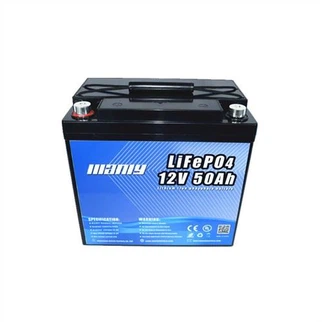
Power battery is the core component of electric vehicles, and its cost accounts for nearly 40% of the whole vehicle cost. Therefore, the battery should become the meat and potatoes of the electrification era, and any car company committed to electric vehicle products dare not take it lightly.
For the vehicle manufacturers, the supply of power batteries is only the following paths.
The most common is to purchase cells from external power battery suppliers, which basically will establish a cooperative relationship with multiple suppliers, not limited to one.
Or take a stake in a battery company, or set up a joint venture with the battery company, with the capital ties, so that the interests of both sides will be more closely bound.
More ambitious car companies will also choose to build their own battery factories to produce cells, to a certain extent, they also become battery suppliers, competitiveness will be a step up.
Since this year, the cooperation between vehicle enterprises and power battery enterprises has been frequent. This fully illustrates that, with the acceleration of the electrification process, the major car companies realize that they need to build up a stable and diversified battery supply chain as early as possible, to prepare for the rainy day, and to prepare in advance for the back of the electric vehicle products on the volume.
According to incomplete statistics, this article takes stock of the battery suppliers of Volkswagen, Toyota, Renault-Nissan-Mitsubishi Alliance, General Motors, Hyundai, Ford, PSA-FCA Alliance, Daimler, BMW, Honda and other global car companies, from which we can also see the different responses of different car companies.
Volkswagen
Last year, Volkswagen Group had revealed that the company would purchase 50 billion euros worth of batteries and had identified Sweden's Northvolt, South Korea's SKI, LG Chem and Samsung SDI and China's Ningde Time as strategic partners.
VW has invested in Swedish battery maker Northvolt Sweden for a 20% stake and has also established a battery joint venture with it, Northvolt Zwei, to build a plant in Salzgitter specifically to supply VW.
VW also invested an additional $200 million in Quantumscape, a Silicon Valley solid-state battery developer, to help build a mass production line for solid-state batteries by 2025.
So far, the VW Group has entered into partnerships with three Chinese battery companies, including Ningde Times, Guoxuan High-Tech and Wanxiang A123. And, in May this year, VW invested about 1.1 billion euros to acquire 26.47% equity in Guoxuan Hi-Tech, becoming its largest shareholder.
In addition, in the first batch of electric cars, VW is also using Panasonic batteries. VW's choice of power battery suppliers can be said to be a comprehensive network, with China, Japan and South Korea battery suppliers have cooperation.
Toyota
Toyota has been using NiMH batteries in the more than 10 million hybrid models it sells worldwide. However, it set up a battery research department as early as 2008 to focus on the development of different types of batteries, including lithium batteries, and in the same year started cooperation with Panasonic to increase the reserves of lithium battery technology.
This year, Toyota launched three pure electric vehicles in the Chinese market - C-HR EV/ Eze E into the engine, and Lexus UX 300e, all of which are equipped with Panasonic square lithium-ion high-capacity batteries.
In 2019, Toyota Motor has established partnerships with Ningde Times and BYD one after another. It will cooperate with these two Chinese battery companies in the future in areas such as battery supply as well as technology development.
Although Toyota does not have many pure electric products yet, it has prepared for the future by laying out its battery supply chain in advance in Japan as well as China.
Renault-Nissan-Mitsubishi Alliance
In November 2018, Alliance Ventures, the strategic venture capital arm of Renault-Nissan-Mitsubishi, announced that it had taken a stake in Enevate, a lithium-ion battery technology company based in Irvine, California.
Nissan has entered into a procurement agreement with Ningde Times, from which the power cells for the Dongfeng Nissan Xuan Yi Pure Electric come. In June, Nissan announced that it will work with Shin Wanda to develop the next generation of onboard batteries for the e-POWER system, with a final agreement expected to be reached within this year.
In 2017, Mitsubishi Motors then formed a joint venture with GS Yuasa and others to form LEJ Battery Manufacturing Company to supply batteries for Mitsubishi Motors. In addition, Nissan and Mitsubishi Motors have selected Toshiba's SCiB lithium-ion batteries for use in their small hybrid vehicles.
General Motors
Adhering to the concept of deep involvement in battery cell development, GM has a long-term partnership with battery suppliers to develop batteries, has independent battery labs in the U.S. and China, and has its own battery pilot production line for battery prototype development and certification for various types of tests.
The ternary lithium cells selected for the SAIC-GM Buick Micro Blue 7 and Micro Blue 6 PHEV are proprietary formulations and designs further optimized on the basis of LG Chem's technology solutions.
GM is working with local Chinese suppliers such as Ningde Times to accelerate the landing of the third-generation global EV platform in China.
In July 2020, GM broke ground on a joint venture with LG Chem for a battery manufacturing plant in Lordstown, Ohio. The new Ultium batteries produced by the joint venture will be used in Cadillac LYRIQ, Hummer electric pickups and other models.
Hyundai Motor
Hyundai Motor has partnerships with Samsung, SK, LG and others in the field of new energy power batteries. Hyundai also holds the EV&BATTERY CHALLENGE with LG Chem to identify and nurture potential startups.
Meanwhile, Ningde Times is also a partner of Hyundai. In the Chinese market, Ningde Times provides batteries for Hyundai and Dongfeng Yueda Kia.
Ford Motor
The upcoming Ford Ruiji PHEV is equipped with power batteries from Xi'an Zhongdi Lithium Battery Co.
In overseas markets, Ford's battery suppliers include Samsung SDI, LG Chem and SKI, which is planning to build a second plant in the U.S. to supply batteries for Ford's electric pickups.
PSA-FCA
LG Chem became FCA's battery supplier back in 2016. And PSA's battery suppliers mainly include Ningde Times and LG Chem.
Meanwhile, PSA also plans to establish two automotive power battery plants in Europe in a joint venture with Saft. The two invested a total of 5 billion euros to establish a joint venture, AutomoTIve Cell Company (ACC), with an initial 50:50 shareholding in the company, which will subsequently be controlled by the PSA Group. Total manufacturing capacity is planned to be 48 GWh by 2030, and production of pure electric vehicle batteries will begin in 2023.
In July this year, France's PSA Group has officially signed a procurement contract with domestic power battery company Honeycomb Energy, confirming that it will support PSA's Chinese and global electric vehicles, with an estimated procurement demand of 7Gwh.
Daimler
In March, Daimler invested 100 million euros in Thai battery supplier TAAP, which was used to renovate the existing battery production facilities at TAAP's Bangkok plant and to build a new battery factory.
In July, Daimler announced that Mercedes-Benz has established a far-reaching strategic partnership with VN Technology and will take a $904.5 million stake in VN Technology, holding approximately 3% of VN Technology's shares in the future.
In August, Ningde Times announced that it will further strengthen cooperation with Mercedes-Benz in the field of battery technology, both sides will jointly develop battery technology, Ningde Times will support the large-scale electrification of Mercedes-Benz models and secure the battery supply for the next generation of EQ products in the coming years.
In addition, the battery suppliers signed with Daimler include SKI and LG Chem.
BMW
Samsung SDI has been BMW's lithium battery supplier since 2009. in November 2019, BMW signed a long-term supply contract with Samsung SDI totaling 2.9 billion euros, valid from 2021 to 2031.
As early as 2018, Ningde Times got a 4 billion euros purchase intention order from BMW. in November 2019, BMW added additional purchases from Ningde Times, with the total order amount raised from 4 billion euros to 7.3 billion euros and the contract validity extended to 2031.
On July 16 this year, BMW announced that it had signed a €2 billion contract with Swedish company Northvolt for the supply of batteries. The latter will produce battery packs at its plant in northern Sweden starting in 2024.
Immediately after that, on July 21, EVERLIGHT released an announcement that it had received a letter from BMW Brilliance Automotive Co. As a result, Yeastar became the second power battery supplier that BMW cooperated with in the Chinese market.
Honda
As early as 2009, Honda Motor established Blue Energy, a joint venture with GS Yuasa for lithium batteries for hybrid vehicles.
In 2018, Panasonic confirmed its intention to supply automotive lithium-ion batteries to Honda Motor. The batteries' multiple cells are combined into a single interchangeable battery pack for Honda's electric motorcycles and compact four-wheeled electric vehicles.
In July, Ningde Times said Honda will become an important partner of the company through an investment subscription of about 1 percent of the equity. In the future, Ningde Times will provide Honda with power battery solutions, and Chinese-made Honda new energy vehicles equipped with its batteries are expected to be launched into the Chinese market starting in 2022.
Welcome to visit our company website: www.manlybattery.com. If you have any interests in batteries, please feel free to contact us: info@manlybattery.com