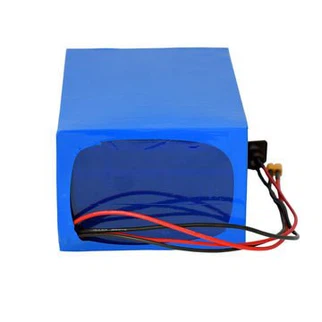
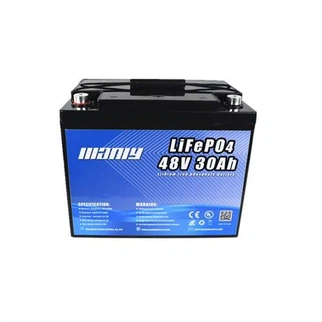
In nature, lithium is a light metal material with the lowest atomic mass and the smallest relative atomic mass, it has an atomic weight of, ρ=. Lithium is chemically active and very easy to lose electrons to be oxidized to Li+, lithium is a raw material with high energy density. Generally refers to lithium ion with lithium nickel cobalt manganate as the battery cathode material and high purity graphite as the battery cathode material. Unlike lithium phosphate batteries, ternary lithium-ion batteries have a higher operating voltage service platform, which indicates that the energy density of ternary lithium-ion batteries in the same volume and net weight is higher than the power. It is worth mentioning that lithium-ion batteries have great advantages in terms of charging and cold resistance.
Lithium-ion battery as a lithium-ion battery charger has the advantages of stable output voltage, high output voltage, stable characteristics, high capacity, long service time, wide operating temperature range, good safety factor, no pollution and so on. It is a lithium-ion battery rechargeable lithium-ion battery, which is now widely studied and applied.
For ternary lithium-ion batteries, the largest number of bioscience research, the most complete technology is the Japanese company Panasonic, the experimental link has been able to carry out 30c charge and discharge, including the successful commercial mass production of 18650 lithium-ion battery charge and discharge rate of 12c, the volume can also reach 3300mah. China also has a lot of ternary polymer lithium-ion manufacturers, do more successful.
The life of ternary polymer lithium batteries.
Lithium battery life generally refers to the rechargeable battery after a period of application, the volume decay coefficient is tolerance volume (room temperature 25 ℃, standard atmospheric pressure and charge and discharge battery capacity) of 70%, can be considered to be terminated. In manufacturing, the cycle system life is estimated by the frequency of a lithium-filled cycle system. Throughout the application, lithium-ion batteries are subject to irreversible electrochemical corrosion, such as dissolution of the lithium battery electrolyte, dissolution of specific raw materials, and collapse of positive and negative structures will lead to a reduction in the number of lithium-ion batteries. Experiments show that the charge and discharge of the polymer will lead to a rapid decay coefficient of volume, and if the charge and discharge current is low, the battery voltage will be close to the equilibrium operating voltage, which can release a large amount of kinetic energy.
In theory, ternary lithium-ion battery life is 2000 battery charging cycle system, we calculate that once a day charging, but also can maintain more than five years. It is highly recommended that the soc application dialog box is 10% 90%, and in many ways it is not recommended to charge the battery, otherwise it will cause irreversible harm to the positive and negative structure of the battery. In addition, if lithium is often charged and discharged in the natural environment of the polymer and at high temperatures, the number of battery cycles will be greatly reduced to less than 200.
Welcome to visit our company website: www.manlybattery.com, If you have requests or queries on batteries, please feel free to contact info@manlybattery.com. Thank you.