

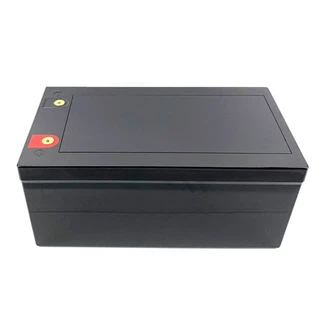
1. Lead-acid batteries use different discharge currents at the same temperature, and their discharge output characteristics are very different. 2. For the same fully charged lithium iron phosphate battery, at the same temperature, using different rates of discharge current, its discharge output characteristics are very stable. The distance between the positive and negative poles of lithium batteries is smaller than that of lead-acid batteries, and the electrolyte itself does not participate in the electrochemical reaction, so the dynamic internal resistance of lithium batteries is much smaller than that of lead-acid batteries. Therefore, the voltage of the iron-lithium battery is relatively stable during discharge. 3. Charging characteristics of lead-acid batteries and lithium batteries. Lead-acid battery charging method: constant current discharge-constant voltage discharge-trickle charge, long-term under-charge, over-discharge or long-term storage in the discharged state will cause sulfation of the negative electrode, which will form a kind of PbSO4 crystallization, causing re- Difficulty charging. It must be completely discharged and charged once a month to maintain the activity of the lead-acid battery plate material. There is a thermal runaway failure mode, and the float voltage of each charger must vary with the temperature coefficient of the battery voltage. Early capacity loss. 2. Charging characteristics of lithium iron phosphate, Charging method: constant current discharge-constant voltage discharge; has a wide range of charging efficiency. When needed, the charging time can be controlled within 30min~1h, and the charging efficiency can reach 84% or more; it is recommended to charge once every 3 months, and the maximum 6 months must be charged.
Jan 03, 2021
Lithium batteries may replace lead-acid batteries or become a trend
You Might Also Like



Send Message