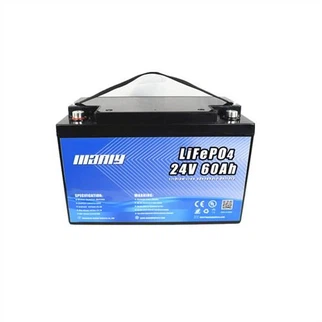
The low-temperature environment will have a certain impact on the performance of lithium-ion batteries. Low-temperature lithium-ion battery is a special battery developed specifically for the low-temperature defects inherent in the performance of chemical power sources, which can be divided into three kinds of low-temperature batteries from the low-temperature perspective: civilian low-temperature batteries, special low-temperature batteries and extreme environment low-temperature batteries.
Currently on the market for commercial civilian low-temperature lithium-ion batteries with better performance is the low-temperature polymer lithium-ion batteries in the lithium cobalt acid class formula lithium-ion batteries. Many lithium-ion battery manufacturers after years of research and development, has its own proprietary battery formula.
Special low-temperature lithium-ion battery is a requirement for the temperature, important for the low temperature environment of minus 40 ℃, requiring the battery to discharge at 0.2C can reach more than 80% of the rated capacity. The main feature is that the capacity should be sufficient at low temperatures to work properly.
Typically low-temperature lithium-ion batteries are required to have the following performance advantages.
1) low temperature discharge performance: in -50 ℃ to 0.2C discharge, the efficiency can reach more than 60%; in -40 ℃ environment, to 0.2C discharge, discharge up to 80%.
2) Operating temperature range: -50°C to 50°C.
3) low temperature cycle performance: charge and discharge at 0.5C in -30°C environment, capacity maintained at 85% or more after 300 cycles.
4) Safety performance: UL/CE/UN certification required.
5) Suitability for mass production: good consistency of the battery.
6)High rate discharge performance: can generate high current at -50℃.
7) Suitable for various environmental conditions: can be applied to special equipment in cold climates as well as military equipment.
Why conventional lithium-ion batteries are not suitable for working in low temperature environment?
1: At low temperatures, the viscosity of the electrolyte decreases. The electrical conductivity decreases, and the activity of the active material will also decrease. It will make the concentration difference of the electrolyte larger and the polarization enhanced, so that the lithium-ion battery charging is terminated early. Lithium iron phosphate has a fatal disadvantage, lithium iron phosphate ion batteries have slightly worse low-temperature performance than other technical systems of batteries. Low temperature on lithium iron phosphate anode and cathode, electrolyte and bonding agent are affected.
2: low temperature cathode material activity decreases, making the number of lithium ions that can move to bring the discharge current decreases, is the root cause of the capacity drop.
3: The performance of lithium-ion batteries degrades seriously at low temperatures, while some side reactions occur during the charging and discharging of lithium-ion batteries. Important in these side reactions is the irreversible reaction of lithium ions and electrolyte, which will cause the lithium-ion battery capacity decline and further deterioration of battery performance.
In summary: low-temperature lithium batteries are now widely used in the military industry, outdoor exploration and some special equipment also applied low-temperature lithium batteries, and finally, conventional lithium-ion batteries can not be used in low-temperature environments, you must use special with low-temperature performance of low-temperature lithium-ion batteries.
Welcome to visit our company website: www.manlybattery.com. If you have any interests in batteries, please feel free to contact us: info@manlybattery.com