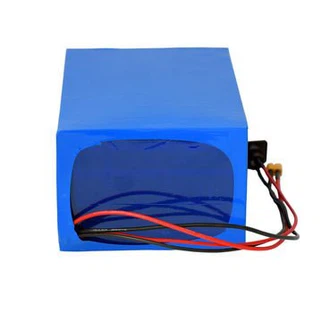
Following China Mobile’s announcement on March 4 that it will purchase 610.2 million Ah (3.2V) lithium iron phosphate batteries (about 1.95GWh) for use in the communications field, China Tower also announced that it will purchase lithium iron phosphate batteries on a large scale. . On March 11, China Tower issued the "2020 Procurement Announcement for the Intensive E-commerce Procurement of Lithium Iron Phosphate Battery Pack Products for Backup Power", and it will bid for the procurement of 2GWh lithium iron phosphate battery pack products.
This time it plans to purchase about 2GWh of lithium iron phosphate battery packs, including 51.2V models of 20, 50, 100, 150, 200Ah, and the procurement cycle is one year. The number of successful bidders in this bidding procurement is 5, and the shares are 40%, 28%, 17%, 10%, and 5% respectively. At the same time, applicants are required to have a cumulative total of not lower from January 1, 2018 to March 11, 2020. The sales performance of lithium iron phosphate battery packs (limited to power backup, energy storage, and power) of RMB 50 million, and the production capacity of lithium iron phosphate battery packs (including independent production capacity of lithium iron phosphate batteries).
As of the end of February this year, China Tower has built a total of 200,000 5G base stations. According to the goals of China Mobile, China Unicom and China Telecom, 600,000 5G base stations will be opened by the end of this year. The market gap is still huge. The large-scale application of 5G technology will inevitably require the construction of a larger number of base stations. At the same time, coupled with the upgrade of the existing 3G/4G communication base stations, it will provide more space for the demand for lithium iron phosphate, and the 5G base station market The demand for lithium iron phosphate batteries will continue.
The energy consumption of 5G base stations has greatly increased, which places higher requirements on the performance of base station power batteries, and the shortcomings of lead-acid batteries are becoming more and more obvious. Some insiders pointed out that "it will be an inevitable trend for base station energy storage batteries to replace lead-acid with lithium iron phosphate." At present, communications and equipment companies including China Tower, China Mobile, China Unicom, China Telecom, and Huawei are increasing their communications. Replacement of lithium iron phosphate batteries in the field.
The acceleration of 5G construction has opened up the market space for base station energy storage for the lithium iron phosphate industry chain; and under cost pressure and technological breakthroughs, iron-lithium batteries for commercial vehicles are expected to compete with ternary batteries in the new energy passenger car market. The "dormant" lithium iron phosphate battery for many years will return to a new cycle.
The current power battery cathode materials mainly have two technical routes: lithium iron phosphate and ternary. The corresponding material systems of the systems are different. The main corresponding links of the lithium iron phosphate power battery system are lithium iron phosphate cathode materials, dry-process diaphragms, and power electrolytes. Carbon nanotube conductive agent. The material types corresponding to each link form a competitive relationship with the ternary system.
According to Gaogong’s lithium battery data, my country’s lithium battery cathode materials shipped 404,000 tons in 2019, a year-on-year increase of 32.5%, of which ternary cathode materials shipped 192,000 tons, a year-on-year increase of 40.7%, and lithium iron phosphate materials shipped 88,000 tons, year-on-year An increase of 29.3%, shipments of lithium cobalt oxide and lithium manganese oxide were 66 thousand and 57 thousand tons respectively.
From materials to batteries, the cost advantage of the lithium iron phosphate technology route is obvious. The performance of the battery is determined by the performance level of the material. As a kind of lithium battery, the advantages and disadvantages of the lithium iron phosphate battery (LFP battery) are very obvious: low cost, high cycle times, Poor low temperature performance and low energy density.
Special index data determines that the share of lithium iron phosphate batteries in new energy vehicles is gradually being eaten away by ternary batteries with higher power density and energy density. The current installed capacity is mainly concentrated in passenger cars and special vehicles. The installed capacity share is low.
However, with the substantial changes in the subsidy policy, the pursuit of high energy density of ternary batteries has encountered cost resistance. Under the pressure of cost reduction, finding other batteries to replace the ternary battery is the idea that car companies have been insisting on. Lithium iron phosphate batteries, which are 10%-15% cheaper than ternary batteries in price, have become one of the options considered by car companies for low-end passenger models.
Before 2018, because lithium iron phosphate technology was mainly used in the passenger car market, and the growth of passenger car demand has stagnated since 2017, the power demand for lithium iron phosphate materials basically zero growth in 2017-2019.
Entering the second half of 2019, as the price of lithium iron phosphate continues to fall, non-power demand for 5G base station power supplies and low-speed vehicles has been activated, driving the demand for lithium iron phosphate materials to achieve an output of 89,000 tons, but the price drop has further expanded to 30% As a result, the industry's output value did not achieve positive growth in 2019.
According to the requirements of the new energy subsidy policy in 2019, the subsidy coefficient is divided into three levels. The ternary system corresponds to a subsidy coefficient of 1, and the current corresponding to a subsidy coefficient of 0.8 for iron and lithium is expected to increase to 0.9 in 2020. In 2020, the rapid installation of new energy vehicles and the increase in the penetration rate of lithium iron phosphate power batteries will be positive for the corresponding links.
The lithium iron phosphate industry chain involves the upstream raw materials phosphoric acid, iron phosphate, and lithium carbonate, the midstream cathode material lithium iron phosphate, and the downstream lithium iron phosphate pools and complete vehicles. The back-end market also includes the dismantling of power waste lithium iron phosphate batteries, echelon utilization and wet Law recovery.
In 2019, the leading effect of the lithium iron phosphate industry is highlighted, and the industry is becoming more concentrated. In the past environment of long-term oversupply in the industry, product profits showed a gradual decline. Finally, in the stage of competing for cost control capabilities, leading companies gradually gained competitive advantages through scale effects, customer stickiness and historical experience, and market concentration showed an upward trend . Leading companies have gradually expanded their market share. From 2017 to 2019, CR3 was 41%, 43%, and 57%, respectively, and CR5 was 51%, 55%, and 83%, respectively.
Overall, the competitive landscape of lithium iron phosphate power batteries is relatively stable. After a round of shuffling, the concentration of lithium iron phosphate batteries has increased significantly. According to data from the China Chemical and Physical Power Supply Industry Association, in the ranking of domestic lithium iron phosphate battery installed capacity in 2019, CATL ranked first in the country with 11.3Gwh installed capacity, with a market share of 54%, and Guoxuan Hi-Tech (15%) , BYD (13%) and Yiwei Lithium Energy (8%) are the second echelon. Leading companies will form cost advantages through economies of scale and continue to strengthen themselves in terms of product performance and management.
In the fixed increase plan released by the Ningde Times this month, 3 billion yuan is clearly used for energy storage research and development projects, and the Jiangsu Times and Ningde Cheliwan projects both include energy storage battery capacity investment. In November 2019, Guoxuan High-Tech stated that it would invest 5.5 billion yuan to build a 5G new energy industrial base with a capacity of 7GWh in Tangshan; earlier in June, the company signed a procurement cooperation agreement with Huawei. Lithium iron phosphate upstream material companies are also increasing. Defang Nano announced on the 10th that the company plans to invest 1 billion yuan in the construction of a "lithium iron phosphate cathode material production project" in Qujing.
The total output of iron-lithium cathodes in 2019 was 89,000 tons, an increase of 52.4% year-on-year. Since the subsidy subsided, market demand has weakened. With the advantages of high safety and high cost performance, the application demand of iron-lithium in the field of energy storage and special vehicles has recovered. The shipment scale of cathode material manufacturers is affected by their customers. As some battery manufacturers produce lithium iron phosphate cathode materials by themselves, and their procurement strategies are relatively dispersed, their concentration is lower than that of the battery sector.
According to the data of Xin Information, the market share of TOP5 lithium iron phosphate cathode materials in 2019 reached 72.3%, an increase of 3.6 percentage points year-on-year, and the degree of concentration has further increased. Among them, Defang Nano belongs to the first echelon of the industry, with shipments exceeding 20,000 tons in 2019, and Beiterui and Guoxuan Hi-Tech are the second echelon, with shipments of about 15,000 tons. Hubei Wanrun and Hunan Yuneng Shipments are around 10,000 tons.