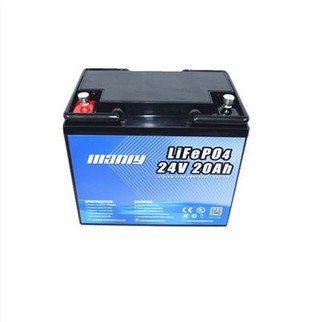
Power battery manufacturers analyze how to achieve rapid charging of lithium batteries, with the advent of the electrical age, electronic products in people's lives are increasingly indispensable; with the pace of people's lives continue to accelerate, the demand for time efficiency is increasingly high. As the energy supply source of electronic devices, the problems of the battery itself are getting more and more attention. The most widely used battery type is lithium-ion battery, which has stable working voltage, small size, large storage capacity, no memory effect, low self-discharge, and is safe and environmentally friendly, and is an ideal power source for electronic devices in line with the new concept of modern technology development. Electric vehicles (EVs), as larger power-consuming devices, have many advantages over gasoline vehicles, such as no tailpipe air pollutants, less noise pollution, simple mechanical structure, high energy efficiency and reduced waste heat. The operating cost and lifetime of the battery seriously affect the use and popularity of EVs. At the same time, there is a growing market demand for electric bicycles and electric motorcycles. Therefore, reducing the charging time and improving the energy efficiency of batteries is the focus of current research. The charging time of electric vehicle batteries is usually very long, while conventional gasoline vehicles can be refueled in (5-10) min or less, so consumers find it inconvenient compared with conventional gasoline vehicles. Obviously, the higher the charging current of a lithium-ion battery, the faster it will charge, but at the same time, the less safe the battery will be. Overcharging, overheating or short-circuit charging will cause lithium-ion batteries to spontaneously combust or even explode. The constant current and constant voltage (CC-CV) charging method enables the Li-ion battery to be charged within (2~4) hours. Although this method can avoid overcharging and obtain almost the full capacity of the battery, it increases the charging time and is not suitable for fast charging. In recent years, many domestic and foreign scholars have spent a lot of efforts and resources to conduct in-depth research on lithium batteries from the perspective of fast, efficient and non-damaging battery charging. The charging method of lithium batteries has made decisive progress, resulting in the emergence of fast charging methods for lithium batteries. This paper summarizes the current charging methods commonly used for batteries and proposes a fast charging method on this basis.
Power battery manufacturers to analyze how to achieve rapid charging of lithium batteries?
1 Traditional charging method
1.1 Constant-current (CC) charging method
Constant-current charging refers to the use of a constant current to charge the battery. During the charging process, the charging voltage value of the power supply or the resistance value in the charging circuit is adjusted to ensure that the charging current of the battery is constant. This method is simple to control, easy to operate, and can be used to select the charging current arbitrarily, which is highly adaptable and especially suitable for long time charging with low current for battery capacity recovery. If the initial current is too small, the charging time will be longer, and if the charging current is higher, it will easily lead to gas precipitation inside the battery, which will prevent the battery from being fully charged and reduce the charging efficiency, and cause the active material on the internal plates of the battery to fall off and the temperature of the battery to rise sharply, which will seriously affect the service life of the battery. Therefore, this method is seldom used alone and is often used as a part of stage charging.
1.2 Constant-voltage (CV) charging method
Constant voltage charging refers to the charging of the battery with a constant voltage. The charging voltage is kept constant during the charging process, and the charging current is automatically adjusted as the battery charge capacity changes. However, it is relatively difficult to select the appropriate charging voltage value. Too high a charging voltage will cause the initial charging current to be too large and damage the battery, while too low a voltage will not be able to keep up with the battery charging speed and may cause the battery to be undercharged. Like the constant-current charging method, the constant-voltage charging method is rarely used alone.
1.3 Constant Current Constant Voltage (CC-CV) Charging Method
Combining the above two charging methods results in a constant-current, constant-voltage charging method, as shown in Figure 1. The whole charging process is divided into three parts: the first stage is the pre-charge area, that is, before charging the battery voltage detection, if it is lower than its threshold voltage of 2.5V (if higher than 2.5V, then directly into the constant current charging stage), the battery is pre-charged with a small current (C/10) to avoid sudden high current damage to the battery, the battery voltage gradually rises to the threshold voltage, then into the constant current charging area When the battery voltage reaches its upper limit voltage (4.2V), the constant current charging ends and the battery is transferred to the constant voltage charging area, the battery voltage is constant at 4.2V, and the charging is stopped when the charging current slowly decreases to below 0.1C. The constant current and constant voltage charging method overcomes the defects of both constant current charging and constant voltage charging, and is the mainstream charging method at present, but its charging speed is not fast.
2 Fast charging method
2.1 Segmented constant-current charging method
The segmented constant current charging method means that the battery is charged with a constant current in stages. At the beginning of charging, apply a higher current to charge the battery, charge a larger capacity for a short time, and when the battery terminal voltage rises to a predetermined value of %, reduce the charging current to the next constant current stage, until the charging current is reduced to 0, to complete charging. This method is more in line with the change of charging current during the actual charging of the battery.
2.2 Pulse charging method
Based on a large amount of experimental data and phenomena, scientist Maas proposed the maximum charge current curve that the lithium battery can withstand in the charging state, as shown in Figure 3. When the charging current is on the upper side of the maximum acceptable charging curve, the gas precipitation of the battery increases, oxygen precipitates from the positive electrode, hydrogen precipitates from the negative electrode, and the polarization reaction increases; when the charging current is on the lower side of the maximum acceptable current curve, the damage to the battery is avoided, but the charging speed is too slow to meet the requirements of fast charging.
The acceptable charging current of the battery gradually decreases as charging proceeds, and in response to this phenomenon, scholars have proposed a pulse charging method with a gradually decreasing pulse duty cycle [7'9], as shown in Figure 4. The battery is charged with constant current at the beginning of charging, and then disconnected when the terminal voltage gradually rises to a predetermined value of %, and then changed to pulse charging after Af time, with a current amplitude of 0. With the stopping time Al fixed, the pulse current width decreases and the charging current duty cycle decreases.
2.3 Negative pulse charging method
As charging occurs, the internal polarization effect of the battery becomes more and more serious, which will greatly reduce the charging efficiency. The ohmic polarization effect can be eliminated instantly by suspending the charging at the right time, so that the charging current suddenly changes to zero, and the concentration polarization and electrochemical polarization can be properly reduced due to the diffusion of electrolyte. A more effective method than natural depolarization is forced depolarization, in which a reverse charging current is added to the forward charging process and the battery is properly discharged deeply and instantaneously to cause a chemical reversal inside the battery, thus suppressing polarization. This method is the negative pulse charging method, as shown in Figure 5.
2.4 Intermittent charging method
The intermittent charging method combines the characteristics of constant-current charging, constant-voltage charging and pulse charging, and adds a short time stop during the charging process, which can greatly alleviate the battery polarization effect. The intermittent charging method is divided into variable current intermittent charging method and variable voltage intermittent charging method, as shown in Fig. 6 (a) and Fig. 6 (b), respectively.
In the variable current intermittent charging method, the battery is first charged with a high initial current, and the battery is charged with most of the power for a short period of time. When the battery terminal voltage reaches the preset voltage, the charging is disconnected briefly, and then the charging current is reduced step by step to charge the battery in a cycle until the charging is completed.
The variable voltage intermittent charging method charges the battery at an initial high voltage and then reduces the charging voltage in sequence, with the charging current decreasing automatically. The variable voltage intermittent charging method is simple to operate and only requires control of the charging voltage.
Due to the limitation of charging current and polarization effect, constant-current charging, constant-voltage charging and constant-current and constant-voltage charging methods are rarely used in practice because of the serious polarization effect, slow charging speed and insufficient charging capacity under high-current charging. The variable-current intermittent charging method, on the other hand, uses a short discharge gap to greatly reduce the polarization effect and shorten the charging time. Based on the above analysis, this paper investigates the fast charging method of lithium battery pack by using segmented constant current combined with high current pulse charging, and simulates the segmented constant current combined with pulse charging method in Matlab/Simulink.
3 Conclusion
This paper analyzes and compares the advantages and disadvantages of several charging methods, and proposes a segmented constant current combined with pulse charging method based on extensive experiments, which can weaken the polarization effect, shorten the charging time and achieve the purpose of fast charging in a safe and harmless manner.
Charging method Charging time (h) Battery terminal voltage (V) End SOC
Constant-current constant-voltage charging 2.4 4.158 0.994
Staged constant current charging 1.85 4.155 0.995
Pulse charging 1.71 4.168 0.997
Segmented constant current combined with pulse charging 1.33 4.21 0.998
The analysis of Table 1 shows that the segmented constant current combined with pulse charging method greatly reduces the polarization effect, and although the charging can be carried out quickly, the battery terminal voltage is not affected when the charging is completed, and the battery charge capacity is increased. The combination of constant current and pulse charging method can effectively shorten the charging time and greatly improve the charging efficiency without damaging the battery.
Welcome to visit our company website: www.manlybattery.com. If you have any interests in batteries, please feel free to contact us: info@manlybattery.com