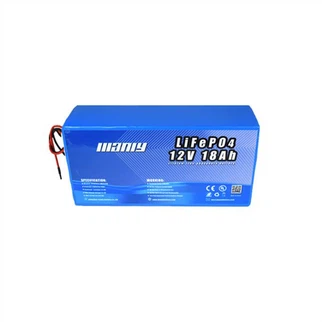
The survey shows that in 70%of the power outage incident, most families with 30kWh home battery storage system can maintain power demand.
According to a study based on the Lawrence Berkeley National Laboratory (LBNL), a single house equipped with a residential solar system and energy storage system can be dealt with for multiple days of power outages without turning off lighting, heating, and refrigeration. Impact, but this largely depends on the level of configuration of solar+energy storage systems.
The study is the first in a series of solar+energy storage systems compiled by LBNL and the National Renewable Energy Laboratory (NREL). The report inspected a power outage of more than 24 hours or more, aiming to provide a set of performance evaluation benchmarks.
LBNL researchers concluded in a report released in September, "Among the 7 of these 10 incidents, most home users can use solar+energy storage systems of 30kWh residential energy storage systems to maintain electricity. "This is usually the upper limit of the scale of the energy storage system on the market.
The report also pointed out that there may be significant differences between different family users, especially families with electricity heating, which is much lower to maintain power demand.
Researchers pointed out that its performance depends to a large extent on the size and power load of the energy storage system. However, if heating and refrigeration equipment are not considered, small energy storage systems with energy storage capacity only 10kWh can almost meet the three -day power supply demand.
LBNL said that there is a certain limitations of this study, because it uses a variety of simplified assumptions, and does not consider factors such as snow that may occur during winter activities.
The report explains that Jixue is a very complicated factor for residential solar facilities because it depends not only on climate and physical characteristics, but also on behavioral factors. For example, whether the residents of buildings are cleared to clear snow, this may depend on power interruption.
It is reported that the future research of LBNL and NREL may establish a model of energy efficiency and electrification measures in a wider range of regions, including the use of heat pumps under cold climate and battery usage other than backup power supply on the charging state of solar+energy storage systems.