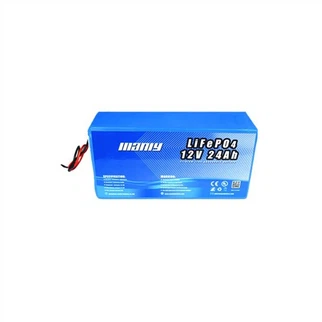
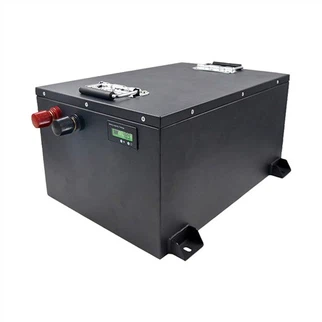
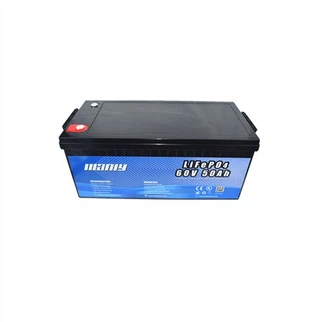
Energy storage batteries do not require high battery energy density, but because energy storage projects usually have a long profit payback period, it is required that the batteries carried on the batteries have enough life. Taking lithium-ion batteries, which are the most widely used, as an example, lithium-ion iron phosphate batteries are mostly used in energy storage projects. Compared with ternary lithium-ion batteries, the mainstream battery used in vehicles, lithium-ion iron phosphate batteries have the advantages of lower cost and longer life, and are more suitable for carrying on the energy storage system.
Lithium-ion batteries have taken a leading position in the electrochemical energy storage market in recent years due to their high energy density, long service life and wide applicable temperature range. According to statistics, in 2018, lithium-ion batteries almost dominated the world in the newly installed electrochemical energy storage capacity, accounting for 94%. But lithium-ion batteries have some natural disadvantages when it comes to energy storage. Huang Shilin, vice chairman of Ningde Times New Energy Technology Co., Ltd., has publicly expressed doubts about the phased use of energy storage by power lithium batteries:
First, the service life is short. 4000 cycles of power lithium battery decay to 2000 cycles, if installed in the energy storage system, just do peak filling, lithium iron phosphate can be used for three to four years, and three battery can only use two years;
Second, high cost. If the power lithium battery is detected from recycling to transportation and then made into an energy storage system, the hidden cost is very high.
Three, there are security risks. At present, the mainstream battery of the car is three-way battery. If the system is not well designed or the system is in service for an extended period of time, it will leave many safety risks.
4. Different technical routes. The technical route of power lithium battery and energy storage battery is different. The cycle life of power lithium battery will decrease after the energy density is improved, and it is not appropriate to use it as a cascade.
Based on this, there have been a number of power lithium battery companies began to enter the field of energy storage, the production of energy storage batteries suitable for carrying on the energy storage system. Take Ningde Times, the leading domestic power lithium battery company, as an example: in 2019, Ningde Times will mass produce energy storage batteries with a cycle life of more than 10,000 times. According to industry estimates, Ningde Times 2022 annual shipments of energy storage batteries will reach more than 1GWh, the corresponding market share will rise to about 14%.
Lead-acid battery:
China's lead-acid battery technology is mature, is also the world's largest lead-acid battery producer and consumer country. The battery material has a wide range of sources and low cost. Its disadvantages are less cycle times, short service life, improper treatment in production and recycling and other links, which may easily cause environmental pollution. China's iron towers have been using lead-acid batteries as backup power for their communication base stations until 2018, according to the country's large state-owned telecom infrastructure integrated service company. Since 2015, China's iron towers have carried out tests to replace lead-acid batteries with batteries in more than 3,000 base stations in 12 provinces and cities. In 2018, China's iron towers stopped purchasing lead-acid batteries and unified the procurement of echelon batteries. By the end of 2018, about 1.5GWh of ladder batteries had been used in about 120,000 base stations in 31 provinces and cities across China, replacing about 45,000 tons of lead-acid batteries.
At present, the important production companies of lead-acid batteries are Nantu Power Supply Co., Ltd., Shengyang Power Supply Co., Ltd., Shuangdeng Group Co., Ltd., Training Battery Co., Ltd., Shanghai Xi 'endi Co., Ltd. These companies' battery products have a wide range of applications in energy storage. The technical route of power storage in Nantu is battery-based. It is understood that the commercial energy storage power station project of lead-carbon battery technology actively promoted by Nandu Power Supply has significant economic advantages. It is estimated that under the peak-valley electricity price difference of 0.9 yuan /kWh, the total annual operating profit of the company for each 1MWh energy storage power station is about 100,000 yuan and the internal rate of return is as high as 11% only through peak-valley filling mode.
SAN Yang power has now formed mature lead-carbon batteries, carbon batteries, its production of FCP lead battery company introduced Japan's ancient river advanced lead-carbon technology and product design and manufacturing experience, 70% DOD deep cycle number more than 4200 times, the design life of 15 years, applied to the new energy access, distributed generation, smart grid, etc. Shuangdeng Group is a supplier of energy storage micro-grid solutions. At present, it has formed various energy storage application solutions, such as wind-solar storage micro-grid, peak-clipping-valley filling energy storage power station, wind-solar diesel-electric hybrid base station power supply system, border, and coastal defense power supply system, and has a series of standardized and modular energy storage system products. In the State Grid Zhangbeixuang Storage and Transmission Demonstration Power Station, it is equipped with a 12MWh battery for energy storage. In the Qilian micro-grid energy storage system of GCN, the 28MWh tubular colloidal lead-acid battery system is used as the main power supply, and the stable operation and energy optimization management of the micro-grid can be realized in cooperation with the lithium-ion battery.
Flow battery:
A liquid flow battery is generally called an oxidation-reduction liquid flow battery, is a new type of large electrochemical energy storage device, the positive and negative electrode all use vanadium salt solution is called full vanadium liquid flow battery, referred to as vanadium battery. The all-vanadium liquid flow battery is a new type of energy storage equipment, which can not only be used as the energy storage device supporting the solar and wind power generation process but also can be used for peak regulation of the power grid to improve the stability of the power grid and ensure the safety of the power grid.
Compared with other energy storage batteries, the liquid flow battery has the advantages of flexible design, fast charge and discharge response, good performance, long battery life, easy regeneration and recycling of electrolyte solution, the large degree of freedom in site selection, high safety, environmental friendliness, high energy efficiency, and fast start-up speed.
Sodium sulfur battery:
Sodium sulfur battery is composed of the molten electrode and solid electrolyte. The active substance of the negative electrode is molten metal sodium, and the active substance of the positive electrode is liquid sulfur and sodium polysulfide molten salt. It has the advantages of small size, large capacity, long life, and high efficiency. It is widely used in energy storage such as peak clipping, valley filling, emergency power supply, and wind power generation.
The energy density of the sodium-sulfur battery is about 760Wh/kg, the conversion efficiency is close to 100%, and the number of battery cycles is more than 2500 times. However, the cost is high, up to about $2000 /kWh; The working environment is demanding, 300℃ can start, if there is a short circuit fault, the temperature will be as high as 2000℃ or so, so the technology has very high requirements, the sodium-sulfur energy storage battery is used more abroad, domestic has not been promoted on a large scale.