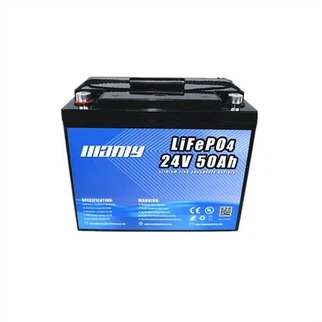
What are the special requirements of high-temperature lithium-ion batteries for ambient temperature? Lithium-ion battery products discharge state and temperature is affected, such as high and low temperatures have an impact on the working state of lithium-ion batteries. Lithium-ion battery performance is fully working temperature is commonly 0 ~ 40 ℃, some special environmental requirements of the lithium-ion battery temperature varies, some can even be in the hundreds of degrees Celsius environment normal.
What are the special requirements of high temperature lithium-ion batteries for environmental temperature?
As time goes by the earth's temperature becomes higher and higher, the technical specifications and requirements for our day by day become higher and higher, especially part of the holding kind of high-temperature environment or summer vehicle enterprise products using lithium batteries, which will be a test of lithium battery materials and design. In the last few years of doing lithium batteries, with the passage of time the main application areas of lithium batteries become more and more colorful, waterproof and moisture-proof, explosion-proof type, high temperature, low temperature, outer space with these provisions, lithium experts are also actively experimenting to enhance.
High-temperature batteries, in general, can be divided into 100 ℃, 125 ℃, 150 ℃, 175 ℃, and 200 ℃ and above the use of environmental five levels. Generally speaking, lithium batteries bear high temperature in the test, there are 130 degrees, 150 degrees, 800 degrees, etc., but generally speaking the situation, in ordinary daily life pressed and will not touch such a high temperature.
High-temperature lithium-ion batteries in all electrochemical systems, the two systems have the longest storage time, the highest operating voltage, the ambient temperature requirements are also very different. Lithium batteries for high-temperature lithium batteries have the advantages of high energy density, small size, light weight, long life and wide operating temperature range.
High temperature lithium-ion battery.jpg
1, 150 ° C and 175 ° C lithium-ion batteries, the use of special design;
2, less than or equal to 100 ℃ lithium-ion batteries, do not special design, the general market lithium-ion batteries can be used with appropriate improvements;
3, less than or equal to 125 ℃ lithium-ion batteries, as long as the conventional battery production process based on appropriate adjustments and control, you can produce qualified products;
4, 180 ℃ and 200 ℃ above the use of lithium-ion batteries, because the melting point of lithium 180.5 ℃ is no longer suitable for the negative electrode, such lithium-ion batteries must use lithium alloy for the negative electrode.
Lithium-ion battery in the special temperature, humidity and poor contact conditions may be instantaneous discharge and a large amount of current, the occurrence of spontaneous combustion or explosion. Lithium-ion batteries are more and more widely used in people's lives, which makes its temperature environment become a major concern, relatively speaking, lithium-ion batteries are more likely to have safety problems in high-temperature environments. Therefore, the high temperature performance of lithium batteries must be tested and compared with their normal temperature test data.
In order to ensure the service life and safety of high temperature lithium batteries, advanced BMS battery protection management system is used in the battery pack of high temperature lithium batteries to avoid damage due to overcharge, overdischarge, high temperature operation, low temperature charging, or short circuit, or even safety problems.
High-temperature lithium battery parameters
1. High temperature lithium battery
Ternary lithium batteries adapt to a wide range of ambient temperatures, and their electrothermal peak can reach 350℃-500℃. The organic chemistry of lithium metal material is very prominent in the heating process, and the high temperature resistor of the rechargeable battery is about two hundred degrees Celsius. When the temperature is higher, the organic chemistry of lithium ternary materials will be stronger, and the electrolysis of lithium batteries will quickly light up.
2. High temperature resistant lithium polymer batteries
Usually, the ambient temperature of lithium polymer batteries is between -20℃ and 70℃. High and low temperatures will interfere with the capacity of the battery. At the same time, the chemical structure of the materials in the rechargeable battery will continue to be damaged and changed to seriously interfere with the battery life.
3. High temperature lithium iron phosphate batteries
High temperature lithium iron phosphate battery pack, can be divided into five levels of 100 ℃, 125 ℃, 150 ℃, 175 ℃ and more than 200 ℃ used in the natural environment. At this stage, many key high-temperature batteries are suitable for lithium/sulfuryl chloride and lithium/sulfuryl chloride in electro-photocatalytic management systems. This is due to the fact that these two systems have the highest energy density, wide temperature range, longest storage time and highest operating frequency. the P-O bond in the LifePO3 crystal is solid and cannot be dissolved, even at high temperature or high pressure, it will not collapse like the Li-Co structure, nor will it produce strong oxides, one maintains good safety performance.
In summary: lithium battery high temperature resistance and high density is the future development direction, lithium-ion battery adaptability to temperature is just like the human body, too high, too low temperature is not conducive to its maximum function, choose the right material, optimize the structure design, customize the appropriate use conditions, in order to give full play to its performance.