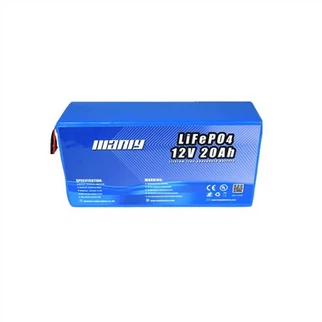
There are many reasons why electric vehicles cannot completely replace gasoline vehicles in a short period of time, but the most important thing is battery life. The battery used in electric vehicles is different from gasoline, which has a constant combustion value. After long-term use, the battery of chemical energy storage technology will have different degrees of attenuation. In addition, if the core component of the battery fails or is damaged by water, consumers must replace the core component of the electric vehicle --- the energy storage battery.
Here, what this article is going to talk about is not the battery swap model, the concept of price separation that Weilai and BAIC New Energy promote, or the swap-and-go car model. What we want to analyze is a piece of news reported by the media recently. Due to the deep wading of electric vehicles, the energy storage battery is irreversibly damaged, and it loses the meaning of repair. The cost of replacing the battery is 69,000 yuan, which is more than buying a new car. 4000 yuan expensive. The 4S shop explained that the low price of the whole car is because the state subsidizes, but the state does not subsidize the battery alone.
Through Internet searches, we found that replacing the battery is more expensive than the car usually occurs after the subsidy, the electric vehicle less than 130,000, such as the Emgrand EV450, it costs about 80,000 yuan to replace a battery. The higher unit price of Tesla or Weilai ES8 is more expensive, and Tesla ModelS costs at least 120,000. Weilai ES8 will cost at least 100,000 yuan. However, due to the high price of the car, the battery only accounts for about 30% of the price of the whole car. This is reasonable, so why is it unreasonable for a car with less than 100,000 yuan to change to a 69,000 battery? This is actually a barrier to subsidies.
To say that subsidies are really good things, not just consumers staring at them, who doesn't like car manufacturers? When the new subsidy method was not introduced, electric vehicles with a battery life of less than 150km won a lot of sales with subsidies, and the maximum subsidy reached 20,000 yuan. Now, in the promotion of the electric vehicle industry and green travel, the high endurance models are set as high subsidies. In fact, this does not negate the initial policy, but develops different incentive methods in different periods. For example, the initial period is the promotion period of electric vehicles, the middle period is the period of electric vehicle technology improvement, and so on, when the technology and social awareness reach a certain scale. Subsidies are no longer a necessary medicine for the development of electric vehicles.
One direction can be seen from this event, that is, small electric vehicles are being marginalized, and it is also the initial exposure of the electric vehicle industry, which fully shows that in the development of electric vehicles, core components have absolute right to speak from beginning to end. It also shows that only the improvement of technology can reduce the cost of core components. In other words, electric vehicles with a cruising range of 150-200km have entered a period of change. Of course, there are still some consumers who are using this type of product. So, how will consumers of this level of electric vehicles respond to the need for battery replacement caused by battery degradation or damage?
When should the battery of an electric car be replaced?
1. Natural life
The battery life has "dry storage life" and "wet storage life". These two concepts are only for the self-discharge of the battery, not the actual life of the battery. According to the theoretical value statistics of the charging and discharging life of electric vehicle energy storage batteries, the charging and discharging cycle life of cadmium-nickel batteries is 500-800 times, lead-acid batteries 200-500 times, lithium-ion batteries 600-1000 times, and zinc-silver batteries are very short. About 100 times.
2. Actual use period
According to the announcements of different domestic electric vehicle brands on battery warranty, the battery system warranty period is generally 100,000 kilometers or longer in 5 years. Including BYD, the battery warranty period has reached or even exceeded the battery warranty period of new energy duty-free models. Taking BYD Qin as an example, the manufacturer currently provides a 6-year or 150,000-km warranty for the entire vehicle and a lifetime warranty for the battery cell. SAIC Roewe E50 provides a 3-year 100,000-km warranty for the entire vehicle. In particular, it provides a 5-year warranty of 100,000 kilometers for core components such as batteries. And BAIC has promised to supply 5 years unlimited kilometers for its E150ev battery.
3. The degree of battery attenuation
Public data shows that SAIC Roewe New Energy battery promises that the battery will attenuate less than 20% within 5 years of 100,000 kilometers and less than 30% within 8 years of 200,000 kilometers. The three power companies have an 8-year warranty of 120,000 kilometers;
The battery life of BYD, like the F3DM in Shenzhen, has been reduced from 50km to 40km after accumulative operation of 500,000 kilometers, which is equivalent to 20%;
The battery warranty of BAIC New Energy has increased from 120,000 kilometers in the previous eight years to 150,000 kilometers in the current eight years. The ternary lithium-ion battery used by BAIC New Energy Vehicles can achieve 2000 cycles of charge and discharge attenuation of less than 10%;
The warranty period of the Tesla ModelS three-electric system is 8 years unlimited mileage. According to the test report, the Tesla battery system attenuation is about 1.6% of the cruising range lost per 16,000 kilometers, and the total mileage is expected to be up to 160,000 kilometers.
From the above three points, domestic and foreign electric vehicle manufacturers have prepared a warranty method for the battery. If it is a normal situation, the battery has a problem, the warranty policy will provide consumers with free repairs, replacement of the battery and other solutions. Of course, this is considered from the perspective of natural attenuation and the product's own problems. If the battery is damaged due to water ingress, etc., it will not be covered by the warranty and insurance claims.
Commercial insurance does not include battery claims
The battery, which accounts for nearly half of the cost of an electric vehicle, is the same as a gasoline vehicle engine that cannot be insured alone. Currently, there is no separate commercial insurance. Moreover, the fundamental difference between a battery and an engine is that the battery is a consumable, if the battery is damaged, the compensation price will be very high, and insurance companies will naturally not do this.
However, just at the beginning of the year, the Insurance Industry Association of my country held the first regular meeting of the Commercial Vehicle Insurance Model Clause Research Working Group in 2018. It is reported that this regular meeting will discuss the introduction of new energy vehicle exclusive insurance clauses, and the relevant details are all targeted. The terms and specifications. However, before the introduction of the insurance, if the battery is damaged due to water ingress and other actions, consumers have to pay for the maintenance and replacement of the battery.
The state does not separately subsidize batteries
Regarding the electric vehicle battery part, in the 2018 pure electric vehicle national subsidy standard (subsidy classification + calculation method), it is clearly shown that the subsidy part is only for the whole vehicle. According to the dealer’s behavior regarding individual battery replacement, the purchase and replacement of auto parts will be charged uniformly.
What technical requirements must a pure electric vehicle meet to receive subsidies?
1. The maximum speed of a pure electric passenger car in 30 minutes is not less than 100km/h.
2. The cruising range of a pure electric passenger car is not less than 150km.
3. The energy density of the lithium-ion battery system for pure electric passenger vehicles is not less than 105Wh/kg.
4. The adjustment coefficient for setting the energy consumption level of pure electric passenger vehicles, according to the vehicle's curb weight (m), needs to meet the threshold standard for power consumption per 100 kilometers under working conditions.
Can electric cars wade through water?
In fact, electric vehicles are the same as fuel vehicles and cannot be immersed in water for a long time. Many people think that without a fuel engine and air intake, an electric vehicle will wade deeper than a fuel vehicle, but it is not. It's just that at the same depth, the risk of electric vehicles passing through the water is less than that of fuel vehicles. However, this is only temporary. If you use an electric car as a boat, it won't work.
Although the battery pack has been sealed, and in accordance with the IEC (International Electrotechnical Commission) protection level, different degrees of protection measures have been taken. But only related to the battery pack.
The protection level of most electric vehicles has reached the IP67 level. The waterproof performance of this level can at least ensure that the battery pack is immersed in the water to a depth of one meter and there will be no problems within a short period of time.
It is conceivable that the battery pack can withstand the height of water that almost never exceeds the roof of the car, but the low waterproof level of other electrical appliances and computers in the vehicle cannot withstand such wading conditions, and we cannot relax our vigilance in urban waterlogging.
According to the experimental rules of the international standard ISO6469.3 and the "Beijing Demonstration and Application of New Energy Passenger Vehicle Production and Product Review and Filing Management Rules", it is shown that most electric vehicles can be less than or equal to 30cm, which is less than half the depth of the wheel. Wading through.
In this news, a large number of traces of rust have been found in the battery pack, indicating that the battery pack has serious water ingress and cannot be repaired. According to the above analysis, consumers intelligently purchase by replacing parts. The purchase price is based on the price of a single battery pack and related parts. This is also reasonable.
According to this news analysis, the following conclusions can be drawn. First of all, after purchasing an electric car, consumers must prevent irreversible damage to the battery such as water in the battery compartment. Secondly, in the early stage of the development of electric vehicles, there are still many uncertainties at the core of electric vehicles---battery. Subsidies are a double-edged sword. On the surface, they see the sales brought by low prices, but ignore the relevant core zero in the industry chain. The high cost of parts after the vehicle package is separated.
On the other hand, the battery is the same as the gearbox and engine of a fuel vehicle, and it is impossible to enjoy the overall benefits of the new car when it is replaced twice. None of the distributors or manufacturers have carried out promotional activities regarding the individual replacement of core components.
Manly Battery which located in Shenzhen,China. A leading Lithium battery manufacturer over 12 years ,if there is any project need to evluate ,pls feel free tosend email to info@manlybatteries.com