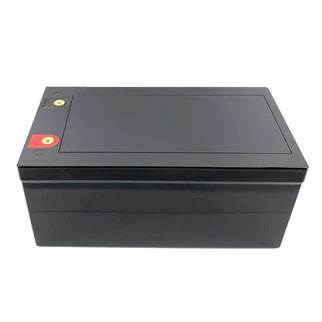
Both of these batteries can be used in stationary energy storage systems, and the higher energy density nickel-cobalt-manganese ternary lithium-ion battery (NMC) is currently more commonly used in electric vehicles (EV). However, many suppliers and customers have begun to adopt lithium iron phosphate batteries (LFP) batteries. One of the main reasons is that the thermal runaway failure rate of nickel-cobalt-manganese ternary lithium-ion batteries (NMC) is higher than that of lithium iron phosphate batteries (LFP).
Christine Lampe Onnerud, CEO and founder of Cadenza Innovation, an American energy storage manufacturer based on the innovative architecture of lithium batteries, said that although in principle there are some factors that cause thermal runaway, any battery can be used safely. Onnerud said that this is because it is not the lithium iron phosphate battery (LFP) or nickel-cobalt-manganese ternary lithium-ion battery (NMC) that burns in the battery cathode during a thermal runaway fault, but its electrolyte.
Lithium battery module burns in the impact test
For this reason, Cadenza Innovation has developed a "Supercell" architecture for lithium-ion batteries. The company claims that this architecture can prevent batteries that catch fire due to thermal runaway from spreading the fire to adjacent batteries. The architecture has recently received UL 9540 A certification. Obtaining this certification seems to prove its safety.
The company’s CEO stated that this was done using the battery with the highest nickel content, and its battery design architecture has nothing to do with whether it uses lithium iron phosphate batteries (LFP) or nickel-cobalt-manganese ternary lithium-ion batteries (NMC). Onnerud said that which battery to use is not important, what is important is the control strategy for the safe use of the battery, but more and more users are adopting lithium iron phosphate batteries (LFP) as a battery solution to the problem of thermal runaway.
Onnerud said, "This is why public utility companies are hesitant to adopt lithium-ion battery energy storage systems. And industry professionals need to analyze and discuss the conditions under which lithium-ion batteries enter a thermal runaway state."
Lithium iron phosphate battery (LFP) market share is expected to grow
There may be other differentiating factors that will further segment the battery market. Danny Lu, executive vice president of Powin Energy, said that safety is one of the main reasons why the company uses lithium iron phosphate batteries (LFP) to build battery energy storage systems, which means that Powin can use lithium iron phosphate batteries that are not subject to supply restrictions. (LFP), the same is true for other manufacturers. Power is therefore able to provide users with customized energy storage solutions at a stable price.
The latest forecast of the research organization Wood Mackenzie indicates that lithium iron phosphate batteries (LFP) will occupy an increasing share of the stationary energy storage market in the next few years, and may exceed nickel-cobalt-manganese ternary lithium-ion batteries by 2030 (NMC).
Wood Mackenzie senior analyst Mitalee Gupta pointed out that starting from the early synergies with the electric vehicle (EV) market, the energy storage market’s requirements for battery performance are changing, leading to its market evolution.
Since 2010, due to the rapid growth in demand for electric vehicles, its development has also promoted a reduction in the cost of nickel-cobalt-manganese ternary lithium-ion batteries (NMC) by more than 85%, but the large demand in the field of electric vehicles means the stationary energy storage industry Encountered a shortage of supply.
Gupta said, “Although nickel-cobalt-manganese ternary lithium-ion batteries (NMC) are in short supply in the energy storage market, the supply of lithium iron phosphate batteries (LFP) batteries is abundant. ) The delivery time has been extended and the price has remained unchanged. Lithium iron phosphate battery (LFP) suppliers have begun to enter the market where the application of nickel cobalt manganese ternary lithium-ion batteries (NMC) is restricted at a competitive price, thus making lithium iron phosphate batteries (LFP) have become an attractive option for power and energy applications."
Bo Normark, executive director of industrial strategy at the European Institute of Innovation and Technology, said that the fact that lithium iron phosphate batteries (LFP) do not require cobalt is likely to be another important difference, although a large number of nickel-cobalt-manganese ternary units were produced in the early days for the electric vehicle industry Lithium-ion batteries (NMC) mean that their costs will be greatly reduced, but lithium iron phosphate batteries (LFP) can also benefit from rapidly expanding production scale.
Normark said, “The automotive industry actually uses more nickel-cobalt-manganese ternary lithium-ion batteries (NMC) because of their high energy density and the ability to produce them at low cost due to their huge output. But as people have seen The cost of lithium iron phosphate batteries (LFP) is even lower than that of nickel-cobalt-manganese ternary lithium-ion batteries (NMC), and does not require the use of metal cobalt. Also in the energy storage industry, the cost of mass-produced lithium iron phosphate batteries (LFP) Very low and very competitive."
Normark said that over time, battery safety may be more important than cost reduction. The safety of battery energy storage systems more critically depends on the battery management system and battery quality.
He said, "Therefore, we believe that the security issue will be resolved in the future, but I think this is not the final decisive factor, but more related to cost."
Brian Perusse, vice president of marketing and strategy at Fluence, an energy storage system integrator, and technology provider, said that the company’s new sixth-generation energy storage system can use lithium iron phosphate batteries (LFP) or nickel-cobalt-manganese ternary lithium-ion batteries ( NMC) battery operation.
Perusse said when releasing the Fluence Cube battery energy storage modular solution: "We believe that both batteries can play an important role in the battery energy storage system, so it is very important to have an energy storage system that can use one of the batteries."