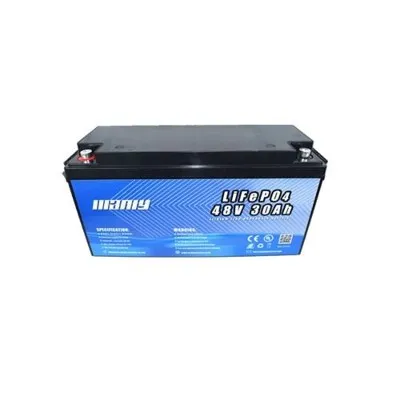
18650 lithium battery
A. The advantages of 18650 lithium battery
18650 lithium battery general knowledge
Generally thought that the lithium battery no-load voltage to 3.0V or less is thought to run out of electricity (the detailed value needs to see the threshold value of the battery maintenance board, for example, as low as 2.8V, there are also 3.2V). Most lithium batteries can not be discharged to no-load voltage below 3.2V, otherwise excessive discharge will endanger the battery (the general market of lithium batteries are simply used with the maintenance board, so excessive discharge will also lead to the maintenance board can not detect the battery, and then can not charge the battery).
4.2V is the highest limit of battery charging voltage, generally thought that the lithium battery no-load voltage charged to 4.2V is thought to be charged, battery charging process, the battery voltage in 3.7V gradually rose to 4.2V, lithium battery charging can not be charged to no-load voltage above 4.2V, otherwise it will also harm the battery, which is the special place of lithium batteries, in general, 18650 lithium batteries have The following advantages.
1、Wide application range
Laptop computers, walkie-talkies, portable DVDs, instruments, audio equipment, models, toys, video cameras, digital cameras and other electronic devices.
2、Series connection
Can be connected in series or parallel to form 18650 lithium battery pack.
3、Small internal resistance
The internal resistance of polymer cells is smaller than that of general liquid cells, and the internal resistance of domestic polymer cells can even be less than 35mΩ, which greatly reduces the battery's self-consumption and extends the standby time of cell phones, and can completely reach the level of international standards. This kind of support for large discharge current polymer lithium is the ideal choice for remote control models, becoming the most expected replacement for NiMH batteries.
4、No memory effect
Dry goods】18650 lithium battery general knowledge detailed
No need to empty the remaining power before charging, easy to use.
5, high voltage
18650 lithium battery voltage is generally at 3.6V, 3.8V and 4.2V, much higher than the 1.2V voltage of NiCd and NiMH batteries.
6, high safety function
18650 lithium battery safety function is high, no blasting, no burning; non-toxic, non-pollution, through the RoHS trademark certification; various safety functions while the iron is hot, the number of cycles is greater than 500 times; high temperature resistance function is good, 65 degrees under the conditions of discharge efficiency of 100%. To prevent the short-circuit phenomenon of the battery, the positive and negative poles of 18650 lithium battery are separated. Therefore, the possibility of short circuit has been reduced to the extreme. Maintenance board can be added to prevent the battery from overcharging and overdischarging, which can also extend the life of the battery.
7、Long service life
18650 lithium battery life is long, the normal use of the cycle life of up to 500 times, is more than twice the ordinary battery.
8、Large capacity
18650 lithium battery capacity is generally 1200mah ~ 3600mah, while the general battery capacity of 800 or so, if the combination of 18650 lithium battery into 18650 lithium battery pack, the 18650 lithium battery pack can casually break through the 5000mah.
Second, 18650 lithium battery compared to polymer batteries
【Dry goods】18650 lithium battery general knowledge detailed
The so-called lithium polymer battery is assigned to the use of polymer as the electrolyte of lithium-ion batteries, detailed points are divided into "semi-polymer" and "full polymer" two. The "semi-polymer" refers to a layer of polymer (generally PVDF) coated on the isolation film, so that the bonding force of the cell is stronger, and the battery can be made more rigid, and the electrolyte is still a liquid electrolyte. All-polymer" means that the polymer is used to form a gel network inside the cell, and then the electrolyte is injected to form the electrolyte. Although "all-polymer" batteries still need to use liquid electrolyte, but the amount is much less, which is a great improvement to the safety function of lithium-ion batteries. As far as I know, only SONY is now in mass production of "all-polymer" lithium-ion batteries.
From another point of view, polymer batteries are assigned to use aluminum-plastic packaging film as the outer packaging of lithium-ion batteries, which is commonly known as soft pack batteries. This packaging film consists of three layers, respectively, PP layer, Al layer and nylon layer, because PP and nylon are polymers, so this kind of battery cell is called polymer battery.
1、Lower price
The international price of 18650 is about 1USD/pcs, which is about 3RMB/Ah according to 2Ah, while the price of polymer lithium battery is 4RMB/Ah for low-end cottage factory, 5~7RMB/Ah for mid-end, and more than 7RMB/Ah for mid-end. Like ATL, Li Shen such, generally can be sold to about 10RMB/Ah, and you single small people are not willing to accept.
2, not customized
SONY has always wanted to make lithium-ion batteries like alkaline batteries, there must be industrial norms, like No. 5 batteries, No. 7 batteries, the world is basically the same. But because one of the advantages of lithium-ion batteries is that they can be based on customer demand for shape planning, there may not be a consistent specification, so now the lithium-ion battery industry as long as the 18650 specification model, the other are based on customer demand for planning.
3, poor safety
Dry goods] 18650 lithium battery general knowledge detailed
We know that lithium-ion batteries in the extreme conditions (such as overcharge, high temperature, etc.), the internal chemical reaction will occur violently, a large amount of gas. 18650 batteries use a metal shell, there is a certain strength, when the internal pressure reaches a certain point steel shell will crack and burst, the occurrence of extreme fear of safety accidents.
This is why the room where the 18650 battery is tested must generally be maintained with layers, and absolutely no one can enter during the test. Polymer batteries do not have this problem, even in the same extreme conditions, because the strength of the packaging film is low, as long as the air pressure is slightly high will break, will not occur burst, the worst situation is to burn. So in terms of safety, polymer batteries are better than 18650 batteries.
4、Low energy density
The general 18650 battery capacity can do about 2200mAh, so the energy density is about 500Wh/L, while the energy density of polymer batteries can be close to 600Wh/L at this stage of mass production.
But the polymer battery also has its own disadvantages. First of all, the cost is higher because it can be planned according to customer demand, and the R&D cost here should be taken into account. And the shape is variable, a variety of types, resulting in a variety of fixtures in the manufacturing process is non-standard parts, but also correspondingly increased the cost. Polymer battery itself is poor versatility, which is also flexible planning, often for so 1mm difference will need to plan a customer from scratch.
Third, the use of 18650 lithium battery
【Dry goods】18650 lithium battery general knowledge detailed
In the power battery industry lithium secondary battery use thanks to its superior function. With the continuous development of lithium secondary battery technology, has been widely used in our daily life; repeated use of rechargeable batteries are increasingly favored by consumers. Concerned about the power battery industry, fully know the battery so that we can do "for my use", now 18650 lithium battery despise the scope of a certain use.
1, energy storage class
The main use in the base station power supply, clean power storage, grid power storage, home light storage system, etc.
2、Power class
Mainly refers to electric transportation, electric bicycles, new power cars, etc.
3、Digital
Cell phones, tablets, laptops, electric toys, MP3/MP4, headphones, rechargeable batteries, models, mobile power, etc.
Four, 18650 lithium battery classification
Dry goods] 18650 lithium battery general knowledge detailed
18650 lithium battery production are required to have maintenance lines to prevent the battery from being overcharged and overdischarged. Of course, this is necessary for lithium batteries, which is also a general disadvantage of lithium batteries, because lithium batteries are simply lithium cobaltate information, and lithium cobaltate lithium batteries can not be discharged at high currents, poor safety, from the classification, 18650 lithium battery classification can be classified in the following way.
1, according to the classification of the practical function of the battery
Power type battery and energy type battery. Energy type battery features high energy density, mainly used for high energy output; power type battery features high power density, mainly used for instantaneous high power output, output battery. The power energy type lithium battery is presented along with the plug-in hybrid vehicle. It requires a higher energy stored in the battery, can support a distance of pure electric travel, but also to have a better power characteristics, in the low power into the hybrid form.
Briefly understand, energy type is similar to marathon runners, to have endurance, that is, the requirement of high capacity, high current discharge function requirements are not high; then the power type is a sprinter, the fight is burst power, but endurance should also have, or capacity is too small will not run far.
2、According to the electrolyte material
Lithium-ion batteries are divided into liquid lithium-ion batteries (LIB) and polymer lithium-ion batteries (PLB).
Liquid lithium-ion batteries use a liquid electrolyte (now the power battery is mostly such). Polymer lithium-ion batteries are replaced by solid polymer electrolytes, which can be either "dry" or "gel", and nowadays most of them use polymer gel electrolytes. About solid state battery, strictly speaking, it means that the electrode and electrolyte are solid state.
3、Classification by product appearance
Dry goods】18650 <a target=_blank href='dghoppt.com'>lithium battery</a> general knowledge detailed
Divided into: cylindrical, soft package, square.
Cylindrical and square outer packaging is mostly steel or aluminum shell. Soft pack outer packaging for aluminum plastic film, in fact, soft pack is also a square, the market is accustomed to the aluminum plastic film packaging called soft pack, but also some people will be soft pack batteries called polymer batteries.
About the cylindrical lithium-ion battery, its model number is generally 5 digits. The first two digits are the diameter of the battery, and the center two digits are the height of the battery. The unit is millimeter. For example, 18650 lithium battery, which has a diameter of 18 mm and a height of 65 mm.
4, according to the pole information classification
Positive electrode information: lithium iron phosphate (LFP), lithium cobalt acid (LCO), lithium manganate (LMO), (binary battery: lithium nickel manganate / lithium nickel cobalt acid), (ternary: lithium nickel cobalt manganate (NCM), lithium nickel cobalt aluminum acid (NCA)).
Negative electrode information: lithium titanate (LTO), graphene battery, nano carbon fiber battery.
Regarding the concept of graphene in the market, it refers first and foremost to graphene-based batteries, i.e. adding graphene slurry to the pole piece or adding graphene coating to the diaphragm. Lithium nickel acid, magnesium-based batteries on the market simply does not exist.
V. 18650 lithium battery charging and discharging
According to industrial specifications, about lithium batteries, the general nominal capacity is the minimum capacity, this capacity is a batch of batteries, in 25 degrees at room temperature, first filled with cc/cv0.5c and left to stand for a period of time (generally 12 hours). With 0.2c current constant current discharge discharge to 3.0v (there are norms is 2.75V, but the impact is not much, 3v to 2.75v drop very quickly without much capacity), the capacity value released, because a batch of batteries must have individual differences, the lowest capacity of the battery capacity value released in practice. That is to say, any one of the batteries in this batch of practical capacity should be greater than or equal to the nominal capacity.
1, 18650 lithium battery charging process
Some chargers use cheap programs to achieve, in the control precision is not good enough, easy to form battery charging abnormalities, and even damage the battery. When choosing a charger try to pick a big brand of 18650 lithium-ion battery charger, quality and after-sales service is guaranteed to extend the life of the battery. Brand assurance of 18650 lithium-ion battery charger has four maintenance: short-circuit maintenance, over-current maintenance, overvoltage maintenance, battery reversal maintenance function. Overcharge maintenance: When the charger overcharges the lithium-ion battery, the charging condition needs to be stopped in order to prevent the rise in internal pressure caused by the rise in temperature.
For this reason, the maintenance equipment needs to monitor the battery voltage, when it reaches the battery overcharge voltage, that is, to activate the overcharge maintenance function to suspend charging. Over-discharge maintenance: In order to prevent the lithium-ion battery over-discharge condition, when the lithium-ion battery voltage is lower than its over-discharge voltage detection point, that activates the over-discharge maintenance, discontinue the discharge, and keep the battery in the standby form of low quiescent current. Over-current and short-circuit maintenance: When the lithium-ion battery's discharge current is too high or a short-circuit condition occurs, the maintenance equipment will activate the over-current maintenance function.
Li-ion battery charging control is divided into two stages, the first stage is constant current charging, the charger will charge at a constant current when the battery voltage is below 4.2V. The second stage is the constant voltage charging stage, when the battery voltage reaches 4.2V, because of the characteristics of lithium batteries, if the voltage is higher, it will be damaged, the charger will fix the voltage at 4.2V, the charging current will gradually decrease, when the current decreases to a certain value (usually 1/10 set current), cut off the charging circuit, the charging completion indicator lights up, charging is complete.
2、Charging principle of 18650 lithium battery
Dry goods] 18650 <a target=_blank href='dghoppt.com'> lithium battery</a> general knowledge detailed
The operating principle of lithium-ion battery is its charging and discharging principle. When the battery is charged, lithium ions are generated at the positive electrode of the battery, and the generated lithium ions move through the electrolyte to the negative electrode. The carbon as the negative electrode is in the form of a layer structure, which has many micro-pores, and the lithium ions reaching the negative electrode are embedded in the micro-pores of the carbon layer, and the more lithium ions embedded, the higher the charging capacity.
By the same token, when the battery is discharged (i.e., we use the battery process), the lithium ions embedded in the carbon layer of the negative electrode come out and move back to the positive electrode. The more lithium ions that return to the positive electrode, the higher the discharge capacity. We usually say that the battery capacity refers to the discharge capacity.
Six, summary: in fact, on the lithium battery, the reason for the burst can be understood, after all, at one time, the mastery of this stability will not be so fierce, but 18650 as a function of the very high contrast lithium battery, its use will certainly become more and more widespread, after all, on this indispensable battery, 18650 lithium battery is the best one to choose.
If you have requests or queries on batteries, please feel free to contact info@manlybattery.com