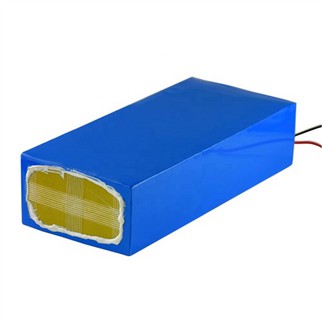
Today's transportation industry is full of batteries. Battery innovation is a highly competitive field, with significant investment pouring into battery technology and manufacturing on a daily basis. None of this is surprising given the widespread global electrification that will take place over the next few decades. Many of the limitations that challenge electricity infrastructure and products, both technically and socially, are based on the limitations of battery technology. Batteries are the beating heart of the electronic world, and what they can and cannot do determines where the frontiers of technological development lie.
The field of battery innovation is full of startups and revolutionary ideas. One manufacturer of zero-emission heavy-duty trucks is working on hydrogen batteries; another battery technology company produces solid-state batteries that ditch liquid electrolytes; another is making batteries from graphene to reduce costs and create an electric car battery that can be fully charged in five to 15 minutes.
Improving the chemistry of batteries is difficult. There's an old saying in production that reflects the challenges of electrochemistry: Everyone wants a good, fast, cheap product,but you can only choose two of them. When it comes to battery technology, there are six metrics that create an inexcusable balance: power, safety, temperature resistance, lifetime, cost, and energy. Increasing one of these factors always comes at the expense of at least one other metric. Many of the brightest innovators in this field have searched for a panacea that would free them from the conflict of these six factors, and have continually encountered obstacles.
Lithium-ion batteries came along in the 1970s. It took 50 years to get today's battery technology to where it is today. Currently, the vast majority of innovation in battery technology occurs in the big tent of lithium-ion batteries, where incremental evolution plays a dominant role. The challenges facing lithium-ion batteries are widely understood and supported by a body of knowledge that has been painstakingly constructed by a large number of researchers and industrialists.
Building new chemistry with this technology will take several years. It is important to understand that the key component in this field is the simple battery-Dr. Moshiel Biton, CEO of Addionics, Inc.
Acknowledging the difficult journey battery chemists face also makes us realize that lithium-ion will likely remain the standard for the next 10 years or more (these are huge factors not only in terms of technology but also in terms of applications and infrastructure). The billions of dollars invested in battery technology are largely focused on companies like these, which are looking at ways to subtly improve one or more of these six factors while minimizing the cost of the others. One such company is Addionics, an Israeli battery technology company.
Addionics' CEO and co-founder, Dr. Moshiel Biton, holds a Ph.D. in materials science. His fascination and passion for the technology he has developed are evident in his presentations, whether he is talking about the history of battery technology or the electrification of transportation. His company belongs to a rather unique class of innovators who respect the boundaries drawn by lithium-ion chemistry but have found a novel solution that can be applied both in the lithium-ion field and outside of it.
Biton is candid about the pace of progress in this area: "It takes years to build new chemistry into this technology. It's important to understand that the key component in this field is the simple battery. Companies like Tesla will wisely choose batteries that are well tested, easy to understand, and scalable and install them in their cars. To increase driving range, they add more batteries until they reach a limit. There's no trickery here."
However, lithium-ion batteries have reached a significant stage of stability in terms of performance. Today, most battery companies are focusing on the chemistry of the battery, looking for ways to improve at least one of those factors. But as Biton says, there is a conundrum when it comes to energy density versus power density. "Energy density has to do with capacity, which determines how far I can drive the car; power density has to do with charging time and how fast the car can accelerate. It's usually an opportunity cost between the two. Current technology can only improve one by weakening the other."
This leads us to the claims of Addionics (which is already commercially viable). Their approach increases the life of the existing battery technology - lithium-ion batteries - by 50%, halves the recharge rate, and doubles the range. biton also makes it clear that their technology is not only applicable to lithium-ion batteries: "Our technology is agnostic. Any battery chemistry can benefit from our innovations and developments. We are not betting on one specific horse but on the whole race. We are unique because we are focused on an area that the rest of the industry takes for granted."
Proponents of electrification must remain patient as we find a revolutionary battery-powered solution. Replacing fossil fuels with batteries as the heart of transportation is a long and complex process. However, if companies like those led by Biton continue to find ingenious ways to develop the technologies we already know, we will undoubtedly achieve global electrification.