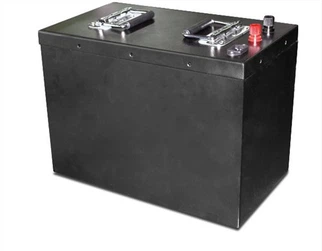
Comparison of the advantages and disadvantages of new energy power cell lithium battery, fuel cell. New energy batteries mainly include lithium batteries, fuel cells, fuel cells are power generation devices, while lithium batteries are energy storage devices. Lithium batteries are used in large quantities in cell phones, computers and other devices. Fuel cells, on the other hand, are created for electric/hybrid vehicles. The following is a comparison of the advantages and disadvantages of these two types of new energy batteries.

Comparison of the advantages and disadvantages of new energy power battery lithium battery and fuel cell
Lithium batteries are currently the most widely used. According to the different materials, lithium batteries can be divided into lithium iron phosphate, lithium cobalt acid and lithium ternary polymer batteries.
Lithium iron phosphate technology is relatively mature and safe, but there are shortcomings, namely, low energy density, battery consistency problems are difficult to solve, accuracy and stability is difficult to control, although most electric vehicles are now using lithium iron phosphate, but lead to short range of electric vehicles, it is difficult to meet consumer demand.
Lithium cobalt acid battery compared to lithium iron phosphate battery, although the energy density is greater, but the safety is lower, and the cost is high; ternary battery energy density is high cost is lower, but the current technology is not mature, resulting in safety performance can not be guaranteed.
Fuel cells are also another major hot spot in the development of new energy batteries. The outstanding characteristics of hydrogen fuel are non-pollution, high efficiency and recyclability. As a fuel gas, hydrogen releases three times more heat than gasoline, and the product of combustion is water, which is completely pollution-free, so hydrogen as a fuel is considered to be the most ideal energy source in the 21st century. However, fuel cells also have disadvantages such as high cost, limited source of hydrogen, and safety hazards such as explosion.
The major difference between lithium batteries and fuel cells is that the two work differently in nature. The lithium battery is an energy storage device, which stores and releases electrical energy through reversible electrochemical reactions. It must store energy and then discharge energy, and is completely dependent on the supply of external energy. The fuel cell does not require energy storage, but is an electrical energy production device, which converts the chemical energy in the fuel into electrical energy through electrocatalytic reaction and releases it, working in a way similar to the internal combustion engine. In other words, lithium batteries convert energy from electrical energy to chemical energy to electrical energy, while fuel cells directly convert chemical energy to electrical energy.
Comparison of the advantages and disadvantages of lithium battery and fuel cell
①Energy density
Lithium battery system is a closed system, due to the characteristics of the lithium element, the highest energy density in lithium batteries, for example, the single energy density is only 1.08MJ/kg. fuel cell system is an open system, its energy density depends on the amount of hydrogen storage, the energy density of hydrogen itself is 143MJ/Kg, and the current energy density of the fuel cell system is more than 350wh/kg. In the future, with the progress of hydrogen storage technology, there is still very much room for energy density improvement.
②Power density
The high power discharge of lithium battery system is not compatible with high range, and the power density is limited. Fuel cell system as an open power system, the output power is easy to improve, and the additional battery will not add too much weight, Toyota Mirai power density reached 2036W/kg.
③Safety
Whether it is a fuel cell system or a lithium-ion power cell, the consequences of a safety accident are extremely serious. However, if only from the perspective of system control, I personally believe that fuel cells are relatively easier to control than lithium-ion power cells in terms of the controllability of safety impact factors.
④Adaptability to ambient temperature
Currently, the performance of lithium batteries in the living environment above zero degrees will not be affected to, but the problems that arise below zero degrees is its urgent solution to the problem. The low temperature performance of lithium battery mainly depends on the effect of temperature on the conductivity of electrode materials, ion diffusion coefficient and electrolyte conductivity.
After the fuel cell is started, the temperature of the fuel cell stack will soon stabilize at the normal operating temperature range of 80~90℃ due to the working principle of the cell itself will exotherm, even at very low ambient temperature.
With the continuous development of fuel cells, a preliminary consensus has been formed in the industry that the future of new energy vehicles will be the coexistence of new energy vehicles with lithium batteries as the main power battery and new energy vehicles with fuel cells as the main power battery.
Summary: Fuel cell car is another important direction of the car battery, and lithium battery put together, the advantages and disadvantages of fuel cells are obvious. However, from a long-term perspective, it is still unknown which fuel cell and lithium battery will be widely used in the future. In the short term, lithium batteries are more applicable, while in the long term fuel cells are more sustainable.
If you have any demands in batteries, please feel free to contact info@manlybattery.com