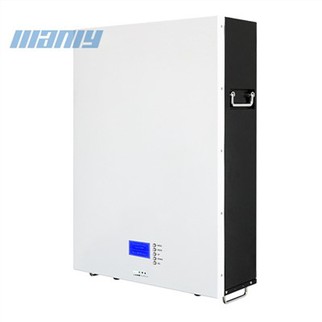
Lithium batteries are highly toxic and dangerous goods? Response: Lithium batteries do not contain highly toxic substances and are far less harmful than lead-acid batteries
Strictly speaking, "Lithium-ion batteries and lithium batteries are conceptually different." said Wang Fang, secretary-general of the Battery Testing and Application Technology Alliance, chief expert, and senior engineer in the power battery category of the China Automotive Technology Research Center. Lithium batteries are usually Refers to batteries that use lithium metal or lithium alloy as the negative electrode and use a non-aqueous electrolyte. Lithium-ion batteries refer to rechargeable secondary batteries. The negative electrode does not use metal lithium and relies on lithium ions to move between the separators of the positive and negative electrodes to work. However, in daily life, people habitually refer to lithium-ion batteries like lithium batteries or lithium batteries.
According to current understanding, most of the new energy vehicles (including pure electric vehicles and plug-in hybrid vehicles) promoted in my country at this stage use lithium-ion batteries, of which lithium iron phosphate accounts for 80%—90%, and ternary lithium The battery is also initially widely used in passenger cars.
Regarding the claim that lithium batteries are "highly toxic risk products" in the online article, Wang Fang retorted that lithium batteries will not produce any lead, mercury, or cadmium compared with traditional batteries such as lead-acid, nickel-chromium, and nickel-metal hydride. Such as toxic and harmful heavy metal elements and substances, and less pollution to the environment. Moreover, the electrolyte is organic solvents and lithium salts, which are basically non-toxic or low-toxic; but the synthesis or hydrolysis products of lithium batteries are hydrofluoric acid and other fluorine-containing compounds, which are corrosive and toxic.
In response to the “hypertoxicity theory of lithium batteries,” Liu Haojie, a senior researcher-level engineer at the 18th Research Institute of China Electronics Technology Group, said that lithium ion batteries do not contain highly toxic substances, and the metal oxides of the positive electrode and the carbon of the negative electrode are basically non-toxic. of. Moreover, lithium-ion batteries belong to a sealed system, and these substances will not be exposed to normal use. "In any case, its adverse effects are far less than the lead-acid batteries that are currently the most commonly used."
Does the lithium battery have a short life and strict operating conditions? Response: The life of the powerful lithium-ion battery can reach 2000 cycles, and the battery management system can limit "overcharge and over-discharge"
So how long is the current lithium battery life? Can shallow charge and shallow discharge and overcharge and over-discharge have an impact on battery quality, safety and service life?
"In fact, there are many conditions that affect the service life of power lithium-ion batteries, including the characteristics of the system itself, but also the manufacturing process and application conditions. An excellent battery system, coupled with scientific system management, can make it have a long life." Wang Fang said, according to the battery capacity attenuation to 80% as the cut-off condition and 100% depth of discharge test, the life of the power battery at this stage can basically meet the conditions of use of 2000 cycles.
"Overcharge and over-discharge mean that the voltage of the battery during charging and discharging is higher or lower than the specified cut-off voltage, which will harm the performance and life of the battery." Wang Fang said, but the BMS battery management system in the battery will Restrict and protect the battery, limit the charging of the battery when it is low, and recharge it when it is heated to a suitable temperature. Wang Fang said that in order to ensure the safety of lithium-ion batteries, there are a series of safety protection designs from battery cells, modules, and battery systems to avoid overcharging, over-discharging, and overheating of the battery, and timely alarm and protection of the battery when abnormal conditions are found.
The net article mentioned: There were media reports that “Tianjin 18th Research Institute has proved that lithium batteries have extinguished, overheated and exploded in almost all projects with high temperature and high pressure, puncture impact, overcharge and over-discharge.”
In this regard, Liu Yanlong, secretary-general of the China Chemical and Physical Power Supply Industry Association, said that at the end of May 2014, the 18th Research Institute of China Electronics Technology Group accepted a special media interview, but the phenomenon of battery heating, extinguishing, and explosion in the program was based on the program recording request. , After the protection circuit was removed, the abuse experiment was carried out. The main purpose of this experiment is to let the majority of users know the dangerous situation that may occur under the conditions of abuse of ternary lithium batteries without protective measures.
"The safety of lithium-ion batteries is theoretically controllable, and most of the safety problems are caused by product defects and abuse." Liu Yanlong said. "But the safety of battery cells, modules, and systems alone is not enough to absolutely guarantee the absolute safety of electric vehicles equipped with lithium batteries." Li Ping, chairman of Ningde New Energy Technology Co., Ltd. (CATL), introduced the current top-of-the-line Model-S uses 7104 Panasonic ternary lithium batteries and has done enough in battery safety protection, including setting sensors, controlling by the battery control system, and using a large number of high-strength aluminum alloys and other materials for collision protection. After adopting these safety design measures, the probability of a safety accident has reached one in ten thousand.
Wang Qinghua, a senior engineer at the researcher-level of the 18th Research Institute of China Electronics Technology Group, also pointed out that the products in the electric vehicle battery market at this stage are uneven, some manufacturers and consumers have differences on batteries and other issues, and the effectiveness of the management system is not exerted. The problem of a single cell will have a certain impact on the overall life of the battery pack. In this regard, Wang Qinghua suggested that the government improve the corresponding experimental verification standards and strengthen the management, monitoring, and testing of the electric vehicle market.
Uncontrollable pollution of used lithium batteries?
Response: Due to the relatively low environmental risk, lithium batteries have not yet been included in risky waste management, but a recycling and reuse system should be planned as soon as possible.
At present, is there a forced recycling policy for lithium batteries? Does it mean that waste lithium batteries will cause huge environmental pressures, as stated in the article on the Internet? Wang Fang said that the waste batteries classified as hazardous waste management by the environmental protection department at this stage include waste nickel-cadmium batteries and waste lead-acid batteries. Regarding disposable batteries, lithium-ion batteries, nickel-hydrogen batteries, etc., due to their relatively small environmental risks, they are not currently classified as hazardous waste management.
However, when used lithium-ion batteries enter the natural environment, electrode materials and electrolytes will react with other substances in the environment such as hydrolysis and oxidation, which may cause heavy metal ion pollution such as nickel, cobalt, and manganese, fluorine pollution, and some organic pollution. So, can this pollution be controlled?
Regarding the disposal of lithium-ion batteries, the rules in the "Electric Vehicle Power Battery Recovery and Application Policy (2015 Edition)" drafted by the National Development and Reform Commission’s Environmental Resources Department encourage the use of wet smelting technology to dispose of waste lithium-ion batteries, requiring the integration of nickel, cobalt, and manganese. The recovery rate should not be less than 98%. "For the disposal technology of lithium-ion batteries, my country has continuously researched by scientific research teams from universities and colleges and cooperated and exchanged with the United States." Wang Fang said.
On January 8th, the Ministry of Industry and Information Technology issued the "Interim Measures for the Announcement Management of the Industry Standards for the Comprehensive Application of New Energy Vehicle Waste Power Batteries (Draft for Solicitation of Comments)". Do a good job related to announcement management.
Researcher-level senior engineer and chief expert of China Electronics Technology Group Corporation Hu Shuqing said that for lithium-ion batteries that use lithium iron phosphate, lithium manganate, and low cobalt content ternary materials as positive electrode active materials, the commercial value of recycling is low, and the enterprise is enthusiastic. not tall. The recycling of these used batteries must be issued by the state in order to successfully complete the closed-loop of the industry. Nowadays, my country has issued some policies and regulations, such as the classification of used batteries, storage and transportation standards, solid waste and hazardous waste pollution prevention and control technology policies, but they are not yet perfect.