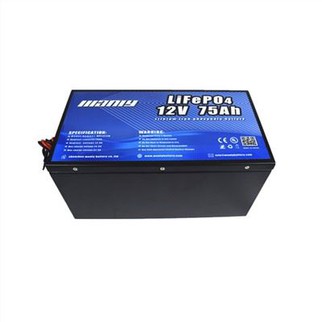
With the addition of electricity for the whole society, the rapid development of new energy, including the rise of new industries such as electric vehicles, energy storage, etc., has brought about an increasing market demand for energy storage devices. Due to the advantages of high storage energy density; long service life; with high power tolerance; very low self-discharge rate; light weight; high and low temperature adaptability; regardless of production, use and end-of-life, do not contain, nor appear any lead, mercury, cadmium and other toxic and harmful heavy metal elements and substances, green and environmental protection, etc., lithium-ion batteries have become the first choice of current energy storage methods.
As the market expects more and more lithium-ion batteries, good manufacturing process and technology become the key to guarantee the performance advantages of lithium-ion batteries. As an essential process in the production of lithium-ion batteries, battery formation and volume separation play a vital role in the performance of lithium-ion batteries, which directly affects the efficiency, cycle life, thermal stability and safety performance of lithium-ion batteries for the first time.
Generally speaking, the process of battery formation is divided into constant current charging, constant voltage charging and constant power charging, constant current discharging, constant power discharging and constant resistance discharging stages, battery formation process of lithium-ion battery charging and discharging current and voltage measurement error requirements are high, the more ideal accuracy is five ten thousandths to one ten thousandth, in order to ensure the overall accuracy of the formation equipment in one thousandth. Then the appropriate measurement means is also an important indicator of the chemistry equipment, commonly used shunt measurement, although the accuracy can meet the requirements, but due to the high common mode voltage, in the chemistry equipment can not be used. The general current sensor accuracy can reach 0.2%, but it is difficult to meet the requirements of the entire measurement range of high precision level, coupled with the temperature requirements of the formation process, low temperature drift is also a necessary condition.
LEM, as an expert in power measurement solutions, based on the original high-precision sensors, customized high-precision IT/IN series current sensors for battery formation, using closed-loop flux-gate technology, can be used on the AC and DC sides of the formation equipment. Usually, three sensors are used for the AC side of the formation equipment and two sensors are used for the DC side.
The following table compares the parameters of general Hall current sensors with those of high precision sensors. The IT/IN series sensors have significant advantages in measurement accuracy and temperature drift characteristics at low currents.
The IN series sensors use patented innovative technology with a new flux gate structure to eliminate ripples that occur at the flux gate drive frequency and reduce noise output. Stability has been added to the excitation voltage conditioning circuit.
The application of digital circuit DSp has been introduced in the new generation of IN sensors, making the sensors immune to the effects of temperature, disturbances and supply voltage variations, especially zero-point error and temperature drift have been greatly improved. An error of less than 10ppm over the temperature range from -40 to +85oC and a linearity error of 3ppm over the full measurement range have been achieved.
IN series still maintain the characteristics of the previous high precision sensors with LED display light, supply high and low level auxiliary output, can be interlocked with the control and protection system of the battery chemistry equipment, real-time monitoring whether the sensor is in normal operation, improving the reliability and safety of the whole machine.