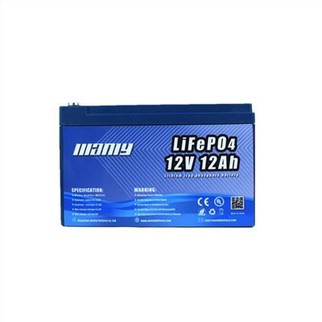
Power batteries are one of the key technologies for electric vehicles, and when Gustave Trouve built the world's first electric tricycle in 1881, he used lead-acid batteries. At present, there are still many hybrid cars and pure electric cars using the new generation of lead-acid batteries. In the past decade or so, lithium-ion power batteries have been used in the production of electric vehicles, increasingly showing their superiority.
American scholar J.A. Mas put forward the battery charge acceptable current theorem through a large number of experiments: 1) for any given discharge current, the charge acceptance current of the battery is proportional to the square root of the discharge capacity; 2) for any depth of discharge, the charge acceptance ratio of a battery is proportional to the logarithm of the discharge current, and the charge acceptance ratio can be increased by increasing the discharge current; 3) a battery discharged by Several discharge rates are discharged, and its acceptance current is the sum of the acceptance currents of each discharge rate. In other words, the charge accepting current of the battery can be increased by discharging. When the battery charge acceptability decreases, discharge can be added to the process of charging to improve the acceptability.
Power battery is one of the key technologies of electric vehicles. 1881 when Trouve (Gustave Trouve) made the world's first electric tricycle, he used lead-acid batteries. At present, there are still many hybrid cars and pure electric cars using the new generation of lead-acid batteries. In the past decade or so, lithium-ion power batteries have been used in the production of electric vehicles, increasingly showing their superiority.
American scholar J.A. Mas put forward the battery charge acceptable current theorem through a large number of experiments: 1) for any given discharge current, the charge acceptance current of the battery is proportional to the square root of the discharge capacity; 2) for any depth of discharge, the charge acceptance ratio of a battery is proportional to the logarithm of the discharge current, and the charge acceptance ratio can be increased by increasing the discharge current; 3) a battery discharged by Several discharge rates are discharged, and its acceptance current is the sum of the acceptance currents of each discharge rate. In other words, the charge accepting current of the battery can be increased by discharging. When the battery charge acceptability decreases, discharge can be added to the process of charging to improve the acceptability.
The performance and life of the automotive power battery is related to many factors, besides its own parameters, such as the quality of the battery's poles, the concentration of electrolyte, etc.; there are also external factors, such as the charging and discharging parameters of the battery, including the charging method, the charging end voltage, the current of charging and discharging, the depth of discharge, etc. The battery management system of WG6120HD hybrid electric vehicle is based on the management of the SOC value.SOC (state of charge) refers to the change state of the charge parameters participating in the reaction inside the battery, reflecting the remaining capacity of the battery. The status of the battery. This has been a unified understanding at home and abroad.
1 Lead-acid battery
Lead-acid battery is a very complex chemical reaction system. The size of charge/discharge current and external factors such as its working temperature will affect the performance of the battery. Calculating the SOC value of the battery and determining the operating mode of the vehicle based on its operating condition and other parameters is a key technology for electric vehicles.
Lead-acid battery has the longest history of application and is the most mature and cost effective battery, which has been mass produced. However, it has low specific energy, high self-discharge rate and low cycle life. The main problem at present is its short travel time for one charge. The recently developed third generation cylindrical sealed lead-acid battery and the fourth generation TMF (foil rolled electrode) sealed lead-acid battery have been applied to EV and HEV electric vehicles. Especially, the low impedance advantage of the third generation VRLA battery can control the ohmic heat during fast charging and extend the battery life.
The pulsed phased constant current fast charging method can be well adapted to the requirements of hybrid EV lead-acid batteries in variable current discharge state with short charging time to keep the battery charge state SOC always in the range of 50%-80%. The test shows that it only needs 196 seconds to charge the battery from 50% C to 80% C. This charging method basically meets the battery acceptance curve, the battery temperature rise is smaller, less gas is generated, the pressure effect is not large, and the charging time is short.
The best charging method is that the charging current always follows the inherent charging acceptance curve, and the charging acceptance rate remains constant during the charging process, and the charging current decreases according to the inherent charging acceptance curve (exponential curve decreases) as time increases, so that the charging time is the shortest. Pulse depolarization charging method can achieve fast and high efficiency charging, but the equipment is expensive and not suitable for some batteries.
The new VRLA battery for electric vehicles developed by Japanese company has voltage specifications of single 2V and 4V, and adopts liquid-poor type and plate level design. The spacing between the plates is very small, so there is no electrolyte delamination, and the shedding material is blocked by the plates moving downward, and no shedding material accumulates at the bottom of the battery.
Ectreosorce's 12V l12A-h electric vehicle level battery, its 3-hour rate of discharge quality specific energy is 50W-11/kg, 80% Ⅸ)D (depth of discharge) cycle life of more than 900 times.
German Sunshine's lead-acid battery for electric vehicles is designed with colloidal electrolyte, and its 6V, 160A-h battery is tested to have an expected life of 4 years, with the advantages of large thermal capacity and small temperature rise.
The bipolar lead-acid battery for electric vehicles was introduced by Arias in 1994 with a unique structure technology. The working current of this battery is only perpendicular to the electrode plane and passes through the thin double electrodes, so it has a very small ohmic resistance. The technical parameters of the bipolar lead-acid battery for electric vehicles developed by the U.S. BPC are: combined voltage of 180V, battery capacity of 60A-h, discharge rate specific energy of 50W-h/kg, and cycle life of 1000 times.
The lead-acid battery for electric vehicles launched by OPTLMA of Sweden has a capacity of 56A-h, and the starting power can reach 95kW, which is more than the ordinary 195A-h VRLA battery starting power, and the volume is one-fourth smaller.
2 Lithium-ion battery
The characteristics and price of lithium-ion battery are closely related to its cathode material. In general, the cathode material should meet: (1) electrochemical compatibility with the electrolyte solution within the required charge/discharge potential range; (2) mild electrode process kinetics; (3) high reversibility; and (4) good stability performance in air in the all-lithium state. With the development of lithium-ion batteries, research work on high-performance and low-cost cathode materials is constantly underway. At present, the research mainly focuses on lithium transition metal oxides such as lithium cobalt oxide, lithium nickel oxide and lithium manganese oxide lithium cobalt oxide (LiCoO2) belongs to the -NaFeO2 type structure, with a two-dimensional layer structure, suitable for the deembedding of lithium ions. Its preparation process is relatively simple, stable performance, high specific capacity, good cycle performance, and its synthesis methods are mainly high-temperature solid-phase synthesis method and low-temperature solid-phase synthesis method, and oxalic acid precipitation method, sol-gel method, cold and heat method, organic mixing method and other soft chemical methods. Lithium-manganese oxide is a modifier of traditional cathode materials, and the one with more applications is spinel-type LixMn2O4, which has three-dimensional tunneling structure and is more suitable for lithium ion de-embedding. Lithium manganese oxide is rich in raw materials, low cost, no pollution, better overcharge resistance and thermal safety, and relatively low requirements for battery safety protection devices, and is considered the most promising cathode material for lithium-ion batteries.
In the 1990s, Japan's Sony Corporation first developed a successful lithium battery for electric vehicles, when the use of lithium cobaltate material, there are flammable and explosive shortcomings. At present, Chinese companies such as Singoan Allied Power have developed 100Ah power lithium battery with lithium manganate as the cathode material, which solves the shortage of lithium cobalt acid battery.
As of October 2006, more than 20 automotive companies around the world have conducted research and development of lithium-ion batteries. For example, Fuji Heavy Industries and NEC cooperate to develop inexpensive monolithic (Cell) manganese-based lithium-ion batteries (i.e. lithium manganate batteries), which have a lifespan of up to 12 years and 100,000 kilometers in an in-vehicle environment, comparable to the lifespan of a pure electric vehicle. Toshiba's rapidly rechargeable lithium-ion battery pack, in addition to its small size and large capacity, uses nanoscale particle homogenization and immobilization technology that allows lithium ions to be uniformly adsorbed on the negative terminal of the battery, charging it to 80% of its capacity in less than a minute and fully charging it in another six minutes. Johnson Controls, a major U.S. battery manufacturer, established a research and development site in Milwaukee, Wisconsin, in September 2005 to develop lithium-ion batteries for electric vehicle needs. In August 2006, JCS was awarded a two-year USABC (United States Advanced Battery Consortium) contract by the U.S. Department of Energy (DOE) to provide high power lithium-ion batteries for pure electric vehicles. The level of research on lithium-ion batteries in China has exceeded the goals set by USABC's long-term targets for 2010 in several indicators. Suzhou Xingheng, which started the industrialization test since 1997, as the base of the national lithium-ion power battery industrialization demonstration project, has passed the test certification of UL and Extra Energy, an independent organization of the European Union, and built the first production line of power lithium-ion battery in Suzhou and successfully piloted the production, which has now achieved mass production.
During the 2008 Beijing Olympic Games, 50 lithium-ion electric buses of 12 meters long served in the central area of the Olympic Games, the first large-scale use of lithium-ion battery electric buses in the international arena. The long charging time of electric buses is such that the operation of electric cars is not disconnected: the electric car drives into the charging station, two robots take out the battery pack in the chassis of the car and put it into the channel to be charged, and then take the fully charged battery pack from the charged channel and replace it into the chassis of the electric car, the whole process only takes about 8 minutes.
The electric commercial vehicles of Citroen, Renault and Peugeot have completed user test runs. Bordeaux is one of the demonstration cities for electric vehicles in France, with 500 electric vehicles of various types, mainly used in municipal vehicles and electric minibuses, and 20 parking lots with charging facilities for electric vehicles, 16 of which are equipped with fast charging devices. The charging process of lithium batteries is different from that of lead-acid batteries. The lithium polymer (Lipo) charger has an integrated block with very few external components, and since the integrated block itself is extremely small (2mm x 3mm), the entire charger is also very small. If the voltage is high enough but below 4.2V, charge the battery with a constant current, most manufacturers will specify a current of 1C in the process, the voltage on the battery will not exceed 4.2V, during the constant voltage, the current through the battery will slowly drop, while the battery charging continues. The battery voltage reaches 4.2V and the charging current drops to 0.1C when the battery is charged to about 80-90% and then turns into a trickle charge to the battery. There are two parameters in the charger can be adjusted, that is, the normal charging current and trickle charge current (when the battery is charged "full"). It is important to note that the charging current should be chosen carefully and should be kept below the maximum recommended by the manufacturer.
The current use of electric vehicle power battery in France is mainly lead-acid batteries, the second generation of lithium-ion electric vehicles have been put into test operation. Its electric vehicle charging device uses conduction charging method. The conduction charging method includes two categories of conventional charging devices and fast charging devices. Conventional charging is provided by charging facilities with a standard civilian AC power interface, with simple leakage protection, for charging electric vehicles with on-board chargers, to complete charging in 6-7 hours, and is more widely used. Fast charging is provided by the DC output of the charger for fast charging of electric vehicles. An electric car with 25% residual power can be charged in 25 minutes.
Charging facilities have a unified charging interface, and a standard AC power interface is one of the important technical directions. The use of ordinary household sockets plus a special cable with a special plug for charging can provide AC power for electric vehicles with on-board chargers.
Lithium-ion power battery technology still needs to be further developed. (1) Most of the lithium-ion batteries for pure electric vehicles announced by the companies are laboratory test data, such as acceleration performance, charging time, continuous mileage, etc., and must be further verified in the complex external environment under actual operation, reliability, and production batch quality control. (2) lithium-ion batteries required diaphragm material failed to make a substantial breakthrough, and expensive, accounting for more than 30% of the cost of power batteries. If this material in the realization of large-scale production technology, you can significantly reduce costs.