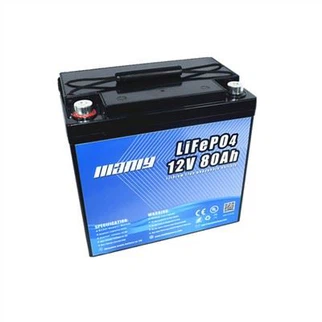
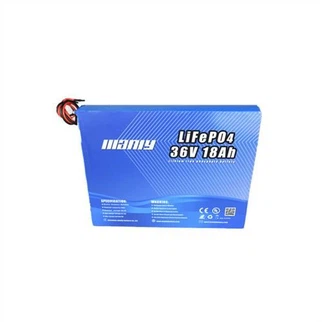
Lifepo4 Battery (abbreviation: iron lithium battery, iron battery, referred to as "iron battery" in this paper), is a new type of battery whose positive electrode material is lithium ferrous phosphate (LiFePO4). , light weight, no pollution and other advantages, mobile communications, electric vehicles, national grid and other industries are researching and using it.
Introduction of lithium iron phosphate battery
In 1990, Sony took the lead in launching a lithium-ion battery with LiCoO2 as the positive electrode material in the laboratory, and began industrial production in 1991. Compared with traditional lead-acid batteries, lithium-ion batteries have significant advantages in terms of operating voltage, energy density, and cycle life. Therefore, in the past two decades, lithium-ion batteries have been widely used in portable electronic devices, power tools and other fields. In recent years, with the global attention to energy conservation and emission reduction, lithium-ion batteries have gradually been used in various industries such as communications, national grids, and electric vehicles. For energy saving and emission reduction in the communication power supply industry, batteries are required to be smaller in size, lighter in weight, longer in life, more resistant to high temperature, easier to maintain, more stable in performance, and more environmentally friendly. Therefore, in order to meet these needs, lithium-ion batteries are also It is gradually changing to the direction of large-capacity batteries, and the Lifepo4 Battery for communication came into being.
Compared with traditional lead-acid batteries, Lifepo4 Battery for communication has the following advantages:
(1) High energy density: the nominal voltage is 3.2V, the energy density is about 4 times that of the lead-acid battery, the volume is small and the weight is light;
Strong safety: The positive electrode material of Lifepo4 Battery has good electrochemical performance, the charging and discharging platform is very stable, the structure is stable during the charging and discharging process, the battery does not burn, does not explode, and has good safety;
Good high temperature performance: the battery works normally when the external temperature is 55 ℃;
High power output: the standard discharge is 0.2C, and it can be charged and discharged at 3C;
Long cycle life: charge and discharge at room temperature 1C, the capacity of the monomer is still greater than 80% after 2000 cycles;
Environmental protection: The whole production process is clean and non-toxic, and all raw materials are non-toxic.
Compared with traditional lead-acid batteries, the application of Lifepo4 Battery for communication can better reflect the needs of energy saving, energy saving, material saving and land saving.
At this stage, the product form of Lifepo4 Battery for communication
The common voltage levels of batteries used in the communication industry are 2V and 12V. The voltage levels of the battery packs used with the DC switching power supply system are 24V and 48V, and the voltage levels of the battery packs used with the UPS AC power system are 24V, 36V, 48V, and 96V. , 240V, 384V, etc. Commonly used battery pack capacity levels range from 25Ah, 65Ah, 100Ah, 150Ah, 200Ah, 500Ah, and 1000Ah.
In order to meet the needs of the communication industry, Lifepo4 Battery products are mainly divided into two types: 12V and 48V modules, with capacity levels of 10Ah, 20Ah, 50Ah, 150Ah, 200Ah, etc. The battery modules can be connected in series and parallel to various voltage levels, multiple Various capacity battery packs to meet various needs of switching power supply and UPS backup power
By combining 12V or 48V battery modules in series, 240V, 336V, and 384V battery packs can be formed to meet the backup power requirements of UPS AC power systems and 240V/336V high-voltage DC power systems (HVDC).