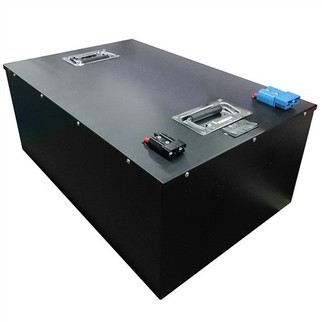
With the support of national policies and the introduction of new national standards for electric vehicles, lithium ion battery development ushered in a huge opportunity. At present, the lithium-ion battery industry has formed a complete industrial chain with a high degree of specialization. Then, how to make high-quality lithium-ion batteries for electric vehicles?
Detail 1: battery capacity, full computer monitoring
High quality lithium ion battery each cell through the consistent control! All battery scanning code on the volume dividing device volume, the computer automatically records the capacity, internal resistance and voltage of each battery according to the content of scanning code. Secondly, all the single battery spray model capacity, WH, bar code, batch code, traceable production date code.
Details two: advanced spot welding, higher technology
The high quality lithium ion battery adopts the most advanced spot welding machine equipment to connect the battery series, spot welding position and current all take the computer setting parameter monitoring, welding when the computer through the battery connected current automatic monitoring, virtual welding, if the welding is not strong alarm and stop!
Detail 3: Finished product aging test, strict standards
Each group of high-quality lithium-ion battery will adopt domestic advanced aging equipment to carry out 100% aging capacity test on the finished products. When the battery appears in the following two situations, are not shipped. First, when the battery capacity cycle after 3 weeks, there is a decline of more than 0.02% will not be shipped; When the high temperature aging capacity voltage (voltage drop) difference, a group of batteries between each string more than 15MV will not be shipped.
Detail four: can be customized protection board
High quality lithium ion battery supporting the most advanced BMS protection system with research and development patent. Effectively prevent and protect the electronic components of the system from waterproofing, high temperature, oxidation, impact, etc., and protect the battery pack (overcharge, overdischarge, short circuit, undervoltage, overcurrent, temperature control) during normal use.
Detail five: unique custom four anti four traceability battery packaging
In the appearance of the packaging, quality lithium ion battery also has a design and invention patent, all the outer boxes are made of 1mm alloy material and high temperature spray process, to achieve collision prevention, dustproof, waterproof, explosion-proof; At the same time, all the finished products of laser anti-identification code, not only to ensure product quality, but also responsible for every user.
In short, high-quality lithium ion battery only do these 5 details well, in order to fully guarantee the consistency and stability of the product. In the future, only by cooperating with such a safe and assured brand of lithium ion batteries can dealers win a greater breakthrough in the trend of lithium ion batteries. Battery capacity
Battery capacity has rated capacity and actual capacity. The rated capacity of the battery refers to the quantity of power that should be supplied when the battery discharges at the rate of 5h to the termination voltage at the ambient temperature of 20℃ and 5℃, which is expressed by C5. The actual capacity of the battery refers to the actual amount of electricity released by the battery under certain discharge conditions, which is influenced by discharge rate and temperature (so strictly speaking, the battery capacity should indicate the charge and discharge conditions).
Capacity unit: mAh, Ah(1Ah=1000mAh).
The battery internal resistance
Battery resistance refers to the resistance of current flowing through the battery when the battery is working. Ohm internal resistance and polarization internal resistance is composed of two parts. Large resistance in the battery will lead to lower discharge voltage and shorter discharge time. The size of internal resistance is influenced by the material, manufacturing process and cell structure. Battery internal resistance is an important parameter to measure battery performance.
voltage
Open circuit voltage refers to the battery in the non-operating state, that is, no current flow in the circuit, the battery between the positive and negative potential difference. In general, the open circuit voltage of lithium-ion battery is about 4.14.2V after full charge, and about 3.0V after discharge. The state of charge of the battery can be determined by detecting the open circuit voltage of the battery.
Operating voltage, also known as terminal voltage, refers to the potential difference between the positive and negative electrodes of the battery when the battery is in the working state, that is, when the current flows through the circuit. In the battery discharge working state, when the current flows through the battery, there is no need to overcome the resistance caused by the internal resistance of the battery, so the working voltage is always lower than the open circuit voltage, charging is the opposite. The discharge voltage of lithium-ion batteries is about 3.6V
Discharge platform time
Discharge platform time refers to the discharge time when the battery is fully charged to a certain voltage. For example, the discharge platform time of 3.6V of a three battery is measured, and the voltage is charged to 4.2V at constant voltage, and the charging current is less than 0.02C when the charging stop is fully charged, and then shelved for 10 minutes, and the discharge time is the discharge platform time of the current when the discharge current is lowered to 3.6V at any rate.
Because some of the electric appliances using lithium ion batteries have voltage requirements, if lower than the required value, there will be unable to work. So the discharge platform is one of the important standards to measure the battery performance
Charge-discharge ratio
Charge-discharge ratio is the current required by a battery to discharge its rated capacity within a specified period of time. 1C is numerically equal to the rated capacity of the battery, usually represented by the letter C. If the nominal capacity of the battery is 10Ah, then 10A is 1C (1 multiplier), 5A is 0.5C, 100A is 10C, and so on.