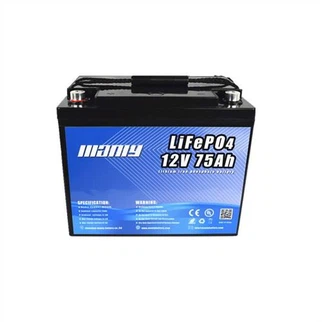
The continuous growth of the data center market is increasing the demand for UPS. As an important part of the UPS system and the last guarantee for power supply, the battery is undoubtedly the last insurance in the UPS power supply. However, due to its life span, energy density, safety, cost, and other disadvantages, it is usually regarded as the "weak link" in the data center power supply chain.
The proportion of lithium batteries in data center backup power continues to grow
In the past few years, huge market demand has promoted the evolution and evolution of lithium battery technology and structure, and its performance, safety, and cost have been significantly improved. Statistics from TrendForce's New Energy Research Center (Energy Trend) show that although a large number of lead-acid batteries are still used in data center backup batteries, lithium batteries have the advantages of long service life, fast charge and discharge speed, and small size, and are expected to gradually replace lead in the future. Acid battery. In 2019, lithium batteries accounted for 12% of data center backup batteries, and it is estimated that it will increase to 16% in 2020.
In addition to the need for a separate battery room, lead-acid batteries generally have a life span of 5 to 6 years. How to better match the life cycle of the data center, thereby reducing TCO, is also a difficult problem for data center users. According to the characteristics of the data center industry, if you want to minimize operating costs, saving system cooling energy consumption, battery maintenance, battery replacement, and service costs are very important, and lithium batteries are the key to solving these problems because of their excellent performance.
Choose lithium batteries, choose high-quality energy storage
Eaton, a global power management company, began to deploy the data center lithium battery market a few years ago, and currently has a variety of high-power UPS products that are fully compatible with lithium battery technology. Lithium batteries are far superior to lead-acid batteries in terms of battery performance, size, weight, service life, environmental protection and safety, and provide a more ideal new choice for UPS solutions for data centers.
Design life of 15 years, no need to replace for life. The life cycle of lithium batteries is generally 10 years, which is almost twice that of lead-acid batteries. As the price of lithium batteries gradually converges with the price of lead-acid batteries, the full life cycle TCO of lithium battery UPS systems has begun to drop significantly. This is why the large data center has long been a pioneer in the introduction of this new energy storage solution. The 15-year design life of the lithium battery system ensures stable performance within 10 years of use. It can be connected to high-power UPS products such as Power XpertTM 9395. The longer life cycle effectively reduces the cost of battery replacement and maintenance burden. It can be seen that the more important purpose of the investment in lithium batteries is to reduce the overall cost of ownership, rather than short-term profits.
The volume is reduced by 40% and the weight is reduced by 60%. Data centers are constantly increasing their power density due to space constraints. Compared with lead-acid batteries, lithium batteries occupy only one-third of the latter when providing the same power, while the quality is reduced by 60%, regardless of floor reinforcement. problem. It can effectively help customers increase the deployment scale of existing IT systems while reducing heat dissipation requirements, saving investment costs and operating costs.
It has excellent high-temperature resistance and can work at 0-40°C without air conditioning. The best working temperature of lead-acid battery is 20~25℃, and its life and the battery cycle life will be greatly shortened when the temperature increases by 6~10℃, while the high performance working temperature of lithium battery is 0~40℃. Therefore, the high-temperature resistance of lithium batteries can help customers reduce cooling requirements and reduce operating costs. This is also a significant advantage of lithium batteries in super-large cloud computing centers.
Built-in BMS to realize single battery control. The battery management system (BMS) is the core technology of the safety of the entire lithium battery system. When the battery has any overvoltage charging, overcurrent discharge, battery short circuit and other faults, the BMS can quickly cut off the fault current to protect the entire system from damage. In addition to accurately understanding the health of the battery system, BMS can also actively balance the charge and discharge of the battery cells to ensure the safety of charge and discharge, thereby extending the service life, reducing the overall TCO, and reducing the maintenance burden of the staff.
Thanks to the rapid development of the electric vehicle market and the energy storage market, the price of lithium batteries is rapidly decreasing, and the data center UPS will quickly complete the conversion from lead-acid batteries to lithium batteries. As a global power management company, Eaton has always been at the forefront of new energy technology reforms with innovative technology and forward-looking research in promoting the application of lithium battery technology in data centers, helping customers to easily solve the challenges brought about by changes in future energy demand.