Japan's Mitsubishi Corporation and Japan's Kyushu Electric Power Co., Ltd. are partnering with Tokyo-based battery supplier NTT Anode Energy (NTTAE), a subsidiary of Japanese telecom giant Nippon Telegraph and Telephone Corporation (NTT), to use grid-scale battery storage facilities, Reduce the impact of solar production cuts on the southern Japanese island of Kyushu.
"By the spring of 2022, solar power curtailment has been implemented in the Kyushu region, which is an early area in Japan to promote solar energy," Mitsubishi said in a statement. Solar power rationing has also been implemented in several regions.”
In mid-March, Japan's Ministry of Economy, Trade and Industry (METI) issued the first "power crisis alert" in the Tokyo area after the earthquake.
"Under such unstable conditions, efficient use of excess power should be one of the important ways to ensure stable power supply," Mitsubishi explained. "With this in mind, we have agreed to collaborate on a business model that leverages grid-scale battery storage to hedge against solar curtailment and to trade electricity across the major electricity markets."
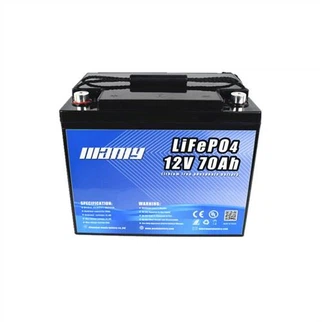
In order to effectively utilize excess power and ensure stable power supply, the three companies plan to use grid-scale battery storage devices installed by NTTAE. The first 4.2MWh storage plant will be deployed in Fukuoka and is expected to start commercial operation in February 2023.
According to the Japan Institute for Sustainable Energy Policy (ISEP), by the end of 2021, Kyushu Island has completed 10.5 GW of solar power generation capacity and 600 MW of wind power generation capacity under the national "feed-in tariff" plan. The region's throttling rate for the year is estimated to be around 4.4%, up from 3.8% the year before.
“Furthermore, with around 4 GW of nuclear power generation operating at any given time, the operation of these nuclear plants will have a significant impact on VRE capacity reductions,” ISEP said.
The island's energy resources are reduced in order of priority: thermal, biomass, solar and wind, hydroelectric, nuclear and geothermal.
"The use of pumped hydro and storage batteries is effective, but further promotion and optimization of on-line control of VRE is required, as well as comments on thermal power minimum output, demand response and virtual power plants," ISEP said.