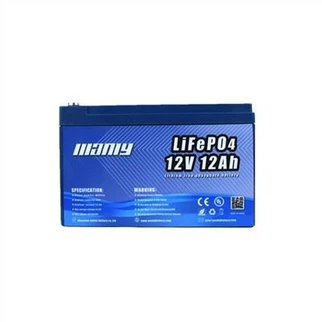
Lithium-ion battery chargers are specially designed to charge lithium-ion batteries. Lithium-ion batteries have higher requirements on chargers and need to protect the circuit, so lithium-ion battery chargers usually have high control precision and can charge lithium-ion batteries with constant current and constant voltage:
1. It should be fully charged when charging, and the accuracy of the termination charging voltage should be about 1%;
2. There is no overcurrent during charging and discharging, and short-circuit protection should be designed;
3. It is forbidden to continue the discharge when the termination discharge voltage is reached, and the accuracy of the termination discharge voltage is controlled at about 3%;
4. Pre-charge the deeply discharged battery (not lower than the termination discharge voltage) with a small current before charging;
5. In order to ensure the stable and reliable operation of the battery and prevent the interference of transient voltage changes, a delay circuit with overcharge, overdischarge and overcurrent protection should be designed inside to prevent instability caused by transient interference;
6. The factors that affect the safe and effective charging of lithium-ion batteries are voltage, current and temperature. Therefore, these three factors should be carefully controlled in the charger design;
7. The lithium-ion battery charger should also have an adaptive power path management function. When the power consumption of the system side exceeds the supply limit of the input power supply, it can ensure that the lithium-ion battery can actively start the discharge function and supply the required power to the system side.