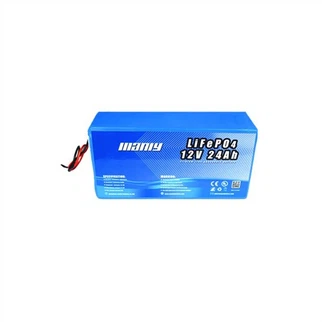
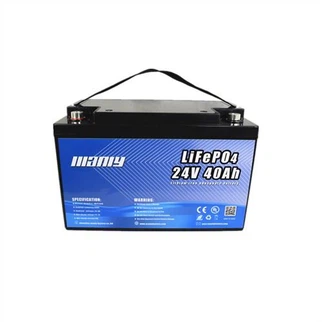
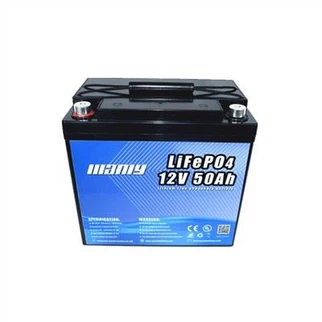
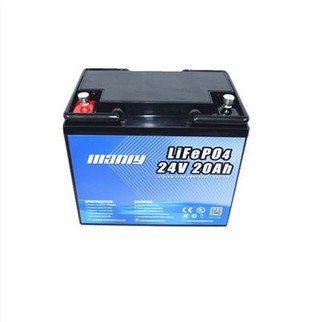
Lithium batteries have many applications in reality, and many electronic devices have lithium battery figure. In previous articles, I have elaborated on the lithium battery protection board failure. To enhance your understanding of lithium batteries, this article will introduce the use of lithium battery protection board, as well as the main points of the purchase of lithium battery protection board. If you are interested in lithium batteries, or lithium battery protection board-related content, you may wish to continue to read the following Oh.
A, the use of lithium battery protection board
Lithium battery protection board according to the use of IC, voltage and other different circuits and parameters are different, the following DW01 with MOS tube 8205A to explain: 1.
1. The normal working process of the lithium battery protection board
When the cell voltage is between 2.5V and 4.3V, the 1st and 3rd pin of DW01 output high level (equal to the supply voltage), and the 2nd pin voltage is 0V. At this time, the 1st and 3rd pin voltage of DW01 will be added to the 5th and 4th pin of 8205A respectively, and the two electronic switches in 8205A are in the on state because their G poles receive voltage from DW01, i.e. the two electronic switches are in the on state. electronic switches are in the open state. At this time, the negative terminal of the core and the P-terminus of the protection board are directly connected, and the protection board has voltage output.
2. Protection board over discharge protection control principle
When the core is discharged through the external load, the voltage of the core will slowly decrease, while DW01 will monitor the voltage of the core in real time through R1 resistor, when the voltage of the core drops to about 2.3V DW01 will think that the voltage of the core is in the over-discharge voltage state, it will immediately disconnect the output voltage of pin 1, so that the voltage of pin 1 becomes 0V, and the switching tube in 8205A will be turned off because there is no voltage at pin 5. The switch tube in 8205A is turned off due to no voltage at pin 5.
At this time, the B- of the core and the P- of the protection board are disconnected. In other words, the discharge circuit of the cell is cut off and the cell will stop discharging. The protection board is in the over-discharge state and will remain there. After the charging voltage is connected between P and P- of the protection board, DW01 will stop the over-discharging state immediately after the charging voltage is detected by B-, and the high voltage will be output again at pin 1, so that the over-discharging control tube in 8205A will be on, that is, the B- of the battery cell and the P- of the protection board will be connected again, and the battery cell will be charged directly by the charger.
3. Lithium battery protection board overcharge protection control principle
When the battery is charged normally by the charger, the voltage of the cell will be higher and higher as the charging time increases. When the voltage of the cell rises to 4.4V, DW01 will think that the voltage of the cell is in the overcharge voltage state and will immediately disconnect the output voltage of pin 3, so that the voltage of pin 3 becomes 0V and the switching tube in 8205A is turned off because there is no voltage in pin 4. At this time, the B- of the battery cell and the P- of the protection board are in a disconnected state. That is, the charging circuit of the cell is cut off and the cell will stop charging.
The protection board is in the overcharge state and stays there. When the voltage of the battery is lower than 4.3V, DW01 will stop the overcharge protection state and output high voltage again at pin 3, which will turn on the overcharge control tube in 8205A. That is, the B- of the battery cell and the protection plate P- are reconnected, and the battery cell can be charged and discharged normally again.
4. Short circuit protection control process
Short-circuit protection is an extreme form of over-current protection, its control process and principle is the same as over-current protection, short-circuit is equivalent to adding a small resistance (about 0Ω) between the PP- so that the load current of the protection board instantaneously reaches 10A or more, the protection board immediately for over-current protection.
Lithium battery protection board, its role is to prevent the lithium battery charging overcharge or over discharge and play a corresponding protective role. There is a protection plate can be a good protection of the battery itself, no, one is easy to damage the lithium battery itself, the second is a security risk, this is not a joke Oh. Of course, the protection plate is not used, because the internal resistance is small, the use of time may be a little bit longer, the price is also cheaper, but personally, or safety first.
Second, the lithium battery protection plate purchase points
In order to protect the life of the lithium battery pack, it is recommended that at any time the battery charging voltage should not exceed 3.6v, that is, the lithium battery protection plate protection voltage is not higher than 3.6v, the equalization voltage is recommended 3.4v-3.5v, battery discharge protection voltage is generally 2.5v or more.
Charger recommended maximum voltage of 3.5 series, the greater the self-discharge, the longer the equilibrium takes, self-discharge too large cells have been difficult to equalize, need to eliminate. So when picking the lithium battery protection board, try to pick 3.6v overvoltage protection, 3.5v or so to start the equalization.
In short, the lower the internal resistance of the lithium battery protection board, the better, the lower the less heat. The size of the current limit of the protection board is determined by the Kang copper wire sampling resistance, but the sustained current capability is determined by mos