Recently, a number of car companies have announced that they will be equipped with lithium iron phosphate batteries in their new energy models, making the topic of who will dominate the future of power battery technology has once again become the focus of industry attention.
A few days ago, Daimler AG and Mercedes-Benz AG Chairman of the Board of Directors Kang Lin Song said that in order to curb the soaring prices of certain metals in the entry-level models, from 2024 Mercedes-Benz will use lithium iron phosphate batteries in the next generation of entry-level models. And previously, Tesla said at an investor conference that its standard range Model 3 and Model Y models will switch to lithium iron phosphate batteries globally.
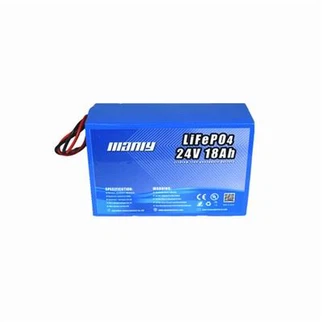
Compared with ternary lithium batteries, lithium iron phosphate cycle performance is better, longer life, charge and discharge cycle times can reach about 3500 times to 4000 times. At the same time, because it does not contain cobalt, nickel and other metal elements, lithium iron phosphate battery cost is relatively low ternary lithium batteries. However, the lower energy density has always been the shortcomings of lithium iron phosphate batteries.
But from the data, this year, the installed base of lithium iron phosphate battery growth rate is much faster than ternary lithium batteries. According to the China Automotive Power Battery Industry Innovation Alliance data, from January to September, China's power battery installation accumulated 92.0GWh. 47.1GWh of ternary lithium batteries, accounting for 51.2% of the total installed capacity, up 99.5% year-on-year; 44.8GWh of lithium iron phosphate batteries, accounting for 48.7% of the total installed capacity, up 332% year-on-year.
In the latest "new energy vehicle promotion and application of the recommended model catalog" (2021, batch 9), lithium iron phosphate in new energy passenger cars has been from the first batch of 7% in 2019, to 2021, the ninth batch of supporting the proportion of nearly half.
From the bottom once before, to now back to the mainstream camp, lithium iron phosphate "comeback" is the result of market choice. In China's new energy vehicle promotion in the early days, the subsidy policy and range directly related, so the higher energy density of ternary lithium batteries are more favored by car companies, the market even once lithium iron phosphate and "low-end" electric vehicles on the same line.
But since mid-2019, along with the continued decline in new energy vehicle subsidies, as well as the continuous iteration of new power battery technology, lithium iron phosphate energy density continues to improve, the cost advantage gradually emerged, the installed base began to pick up.
Coupled with the recent ternary lithium battery upstream raw materials such as cobalt, nickel, and other prices continue to rise, supply tension, ternary lithium battery production capacity is further limited. On the contrary, lithium iron phosphate battery raw material supply is relatively stable and does not contain cobalt and other rare metals, production, and supply is relatively smoother and was chosen by a number of automotive OEMs to carry into the car.
Robust market demand has led to a number of lithium iron phosphate material manufacturers have opened the road to expand production. For example, in September, De Fang Nano (300769, SZ) announced an investment of about 800 million yuan in a new "annual output of 200,000 tons of lithium iron phosphate precursors project"; October, Long Ban Technology (603906, SH) issued an announcement that its subsidiary will acquire a wholly owned subsidiary of Sichuan Liyuan New Materials Co. Ltd. to further enhance the comprehensive strength in the lithium iron phosphate cathode materials industry chain.
But this does not mean that the future development of battery technology routes will focus on lithium iron phosphate track, I believe that the future for long time lithium iron phosphate and lithium battery two routes will still go hand in hand, its share will also continue to change, and new materials or forms of power batteries such as sodium-ion batteries, cobalt-free batteries and the emergence of solid-state batteries, will also make a strong complement to the power battery industry diversified technology routes. The emergence of new materials or forms of power batteries, such as sodium-ion batteries, cobalt-free batteries, and solid-state batteries, will also make a strong complement to the diversified technology lines of the power battery industry and ultimately contribute to the healthy development of the new energy vehicle industry.