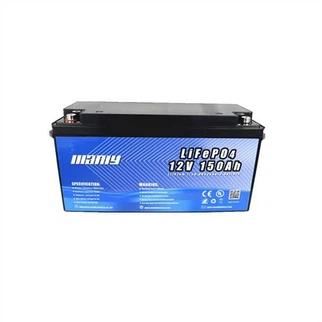
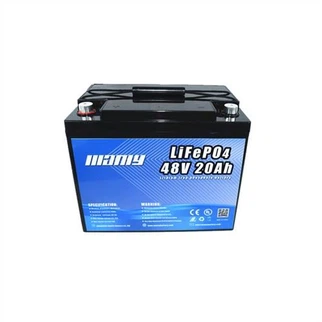
Lithium iron phosphate due to the low diffusion coefficient of lithium ions, conductivity on the poor, so the current practice is to make its particles smaller, or even made into nanoscale number, by shortening the migration path of LI + and electrons, to enhance its charging and discharging speed (theoretically, migration time and migration path squared inversely proportional). However, this poses a series of challenges for battery processing.
The first problem is material dispersion
Pulping is one of the most critical processes in battery production, and its core task is to mix the active material, conductive agent, binder and other materials evenly, so that the material performance can be better. To mix well, it is necessary to be able to disperse first. The particle size decreases, the corresponding specific surface increases, the surface energy increases, and the tendency of inter-particle polymerization increases. The more energy required to overcome the surface energy dispersion, the greater the energy required. Nowadays, mechanical stirring is commonly used, and the energy distribution of mechanical stirring is not uniform. Only in a certain area, the shear strength is large enough and the energy is high enough to separate the aggregated particles. To enhance the dispersion capacity, one is to optimize the structure of the mixing equipment, without changing the maximum shear speed to improve the proportion of space in the effective dispersion area; one is to increase the mixing power (increase the mixing speed), enhance the shear speed, the corresponding effective dispersion space will also increase. The former is a problem on the equipment, how big is the lifting space, coating online do not comment. The latter, the lifting space is limited, because the shear speed mentioned a certain limit, it will cause damage to the material, resulting in particle breakage.
A more effective method is to use ultrasonic dispersion technology. Only the ultrasonic equipment is more expensive, contacted a while ago, its price and imported Japanese mechanical mixer equivalent. The ultrasonic dispersion process is short, the overall energy consumption is reduced, the slurry is well dispersed, the polymerization of material particles is effectively delayed, and the stability is greatly improved.
In addition, the dispersion effect can be improved by using dispersant.
Coating uniformity problem
If the coating is not uniform, not only the consistency of the battery will be bad, but also related to the design, use safety and other issues. Therefore, the control of uniformity of coating is very strict in the process of battery production. Do formulation, coating process know that the smaller the material particles, the more difficult to do uniform coating. On the mechanism, I have not seen the relevant explanation. Coating online is thought to be caused by the non-Newtonian fluid properties of the electrode paste.
Electrode slurry should be a non-Newtonian fluid in the thixotropic fluid, the characteristics of this type of fluid is viscous at rest, even solid, but after stirring becomes thin and easy to flow. Binder in the sub-microscopic state is a linear or reticulated structure, stirring, these structures are destroyed, the flow is good, after resting, they re-formed, the flow becomes poor. Lithium iron phosphate particles are fine, the same mass, the number of particles increases, to link them together to form an effective conductive network, the amount of conductive agent required increases accordingly. Small particles, the amount of conductive agent increases, the amount of binder required also rises. When resting, it is easier to form a network structure and less fluid than conventional materials.
After the slurry is removed from the mixer to the coating process, many manufacturers still use turnover buckets to transfer the slurry during the process without stirring or with low stirring strength, the fluidity of the slurry changes and gradually becomes viscous to the point of being like jelly. Poor flowability leads to poor uniformity of the coating, which is manifested by increased tolerance of the surface density of the pole piece and poor surface morphology.
The fundamental is to improve from the material, such as improving the conductivity to increase the particle, particle spherification, etc., may have a more limited effect in a short period of time. Based on the existing materials, from the perspective of battery processing, the way to improve the following attempts: 1.
1. The use of "linear" conductive agent
The so-called "linear" "particle-shaped" conductive agent is the author's image, the academic may not be so described.
The use of "linear" conductive agent, is currently the main VGCF (carbon fiber) and CNTs (carbon nanotubes), metal nanowires, etc.. They are a few nanometers to tens of nanometers in diameter, length in tens of microns or even a few centimeters, while the current commonly used "particle-shaped" conductive agent (such as Super P, KS-6) size generally in the tens of nanometers, the size of the battery material for a few microns. "Granular" conductive agent and the active material composition of the electrode, the contact is similar to the contact between the point and the point, each point can only be in contact with the surrounding points; "linear" conductive agent and the active material composition of the electrode, is the point and line, line and line contact, each point Each point can be in contact with multiple wires at the same time, and each wire can be in contact with multiple wires at the same time, more contact nodes, the conductive channel will be more smooth, the conductivity will be better. The use of a variety of different forms of conductive agent combination, you can play a better conductive effect, how to make the specific selection of conductive agent, for the battery production is a very worthwhile exploration of the issue.
The use of CNTS or VGCF and other "linear" conductive agent may have the following effects.
(1) linear conductive agent in a certain degree to enhance the bonding effect, improve the flexibility and strength of the electrode;
(2) reduce the amount of conductive agent (remember that there are reports that CNTS conductive efficiency of the same mass (weight) of conventional granular conductive agent 3 times), a combination of (1), the amount of adhesive may also be reduced, the active substance content can be increased;
(3) improve polarization, lower contact impedance, improve circulation performance;
(4) conductive network contact nodes, the network is more complete, multiplier performance than conventional conductive agent is more excellent; heat dissipation performance is improved, which is very meaningful for high multiplier batteries;
(5) absorption performance is improved;
(6) higher material prices, rising costs. 1Kg conductive agent, commonly used SUPER P is only tens of dollars, VGCF about two to three thousand dollars, CNTS than VGCF slightly higher (when the addition of 1%, 1Kg CNTs calculated at 4,000 yuan, about 0.3 yuan per Ah cost increase);
(7) CNTS, VGCF and other high specific surface, how to disperse is a problem that needs to be solved in use, otherwise poor dispersion performance will not play. With the help of ultrasonic dispersion and other means. There are CNTs manufacturers to provide a good dispersion of conductive liquid.
2. Improve the dispersion effect
Good dispersion effect of the slurry, the probability of particle contact agglomeration will be greatly reduced, the stability of the slurry will be greatly improved. Through the formulation, ingredient step improvement in a certain degree can improve the dispersion effect, the use of ultrasonic dispersion mentioned earlier is also an effective method.
3. Improve the slurry transfer process
When storing slurry, consider increasing the stirring speed to avoid slurry stickiness; for the use of turnover barrels to transfer slurry, shorten the time from discharging to coating as much as possible, and change to pipeline conveying if possible to improve the slurry stickiness phenomenon.
4. Using extrusion coating (spraying)
Extrusion coating can improve the scraper coating surface texture, uneven thickness and other phenomena, but the price of equipment is high, the stability of the slurry requirements are high.
Drying difficulties
Due to the large specific surface of lithium iron phosphate, binder dosage is large, the amount of solvent needed to prepare the slurry is also large, and drying after coating is more difficult. How to control the evaporation rate of the solvent is a matter of concern. High temperature and high air volume, fast drying speed, resulting in large voids, but also may drive the migration of gum, resulting in uneven distribution of materials in the coating, if the gum in the surface layer to produce aggregation, it will impede the conduction of charged particles, increasing the impedance. Low temperature, low air volume, slow solvent escape, long drying time and low capacity.
Poor bonding performance
Lithium iron phosphate material particles are small, the specific surface ratio than lithium cobaltate, lithium manganate with increased by a lot, the need for more binder. But the binder with more, reducing the content of the active material, energy density is reduced, so where possible, the battery production process will try to reduce the amount of binder. In order to improve the bonding effect, the current common practice of lithium iron phosphate processing on the one hand to increase the molecular weight of the binder (high molecular weight, bonding capacity increases, but the more difficult to disperse, the higher the impedance), on the other hand, to increase the amount of binder. The current results do not seem to be satisfactory.
Poor flexibility
The current lithium iron phosphate wafer processing, the general feeling that the wafer is harder, more brittle, the impact on the stack may not be slightly smaller, but is in the winding, it is very unfavorable. Poor flexibility of the pole piece, winding and bending is easy to drop powder, fracture, resulting in short circuits and other bad. The explanation of this mechanism is not clear, guess is that the particles are small, the coating of the elastic space is small. Lower compaction density can be improved, but so the volume energy density is also reduced to. The original lithium iron phosphate compaction density is relatively low, reducing the compaction density is the last resort will take the means.
Translated with www.DeepL.com/Translator (free version)