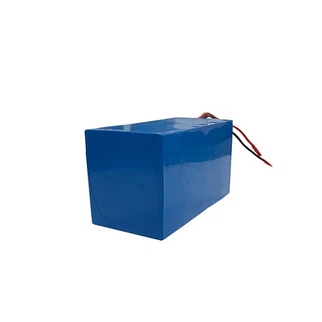
Performance comparison between lithium batteries and hydrogen fuel cells. In this field, lithium batteries for electric vehicles are well-deserved protagonists, but frequent accidents often make people sweat. At the same time, the future of hydrogen fuel, which is increasingly emerging, is uncertain. Whether lithium batteries or hydrogen fuels can carry this banner, assisting new energy sources to become a major outlet, everything remains to be verified.
Performance comparison between lithium battery and hydrogen fuel cell
From a technical point of view, hydrogen fuel cells are far better than power batteries. For example, the refueling time of hydrogen fuel cells is 3 minutes or 5 minutes, and the bigger roof takes 10 minutes or 20 minutes, and pure electric power takes at least half an hour. %; The mileage can run 300 kilometers, 500 kilometers, 700 kilometers, and even 1,000 kilometers and 2,000 kilometers with heavy trucks, but pure electric vehicles can't. In addition, the use of hydrogen fuel cells is pollution-free, even after disassembly, there is no pollution, but the disassembly of the battery is pollution.
The hydrogen fuel cell has a high energy storage density, lightweight, and generally longer cruising range. Usually, more than 500 kilometers and pure electric vehicles are based on the size of the battery capacity. At present, most pure electric vehicles have a cruising range of about 300 kilometers, and a few models can reach 400 to 500 kilometers.
From the perspective of the technical difficulty and cost of the two, the technical difficulty of lithium batteries is relatively small, the production is relatively mature, and the entire manufacturing industry chain is perfect, and it is in the expansion stage of scale effect. The key material catalyst of the hydrogen fuel cell, proton exchange Domestic industrial chains such as membranes and bipolar plates are basically in a blank state, while manufacturing costs and hydrogen refueling station construction costs are high.
The fuel cell is different from the traditional lithium-ion battery, which can quickly fill the battery with fuel in 3-5 minutes, and has a longer cruising range. For traditional new energy vehicle charging, this has become a luxury.
Lithium batteries and hydrogen fuel cells are evenly matched, each with its own advantages and disadvantages
Lithium battery has low cost and commercialization is more mature, which makes it the first choice for electric vehicle manufacturers. However, its low energy density, flammability, toxic reaction products, and slow charging are also potential "hidden dangers", especially after mass production, various problems are naturally magnified.
The hydrogen fuel cell can directly hydrogenate, the replenishment time is short, the endurance can easily reach more than 500km, and the discharge is only water, which is completely pollution-free. This advantage easily crushes lithium batteries and is more in line with the concept of environmental protection. However, the indispensable reaction catalyst in the use of hydrogen fuel-platinum rare precious metal is extremely expensive, and the cost of hydrogen fuel charging station is Tesla supercharging station Five or six times as much as hydrogen fuel, its high cost has become a roadblock to hydrogen fuel becoming a commercial road. In fact, no one is willing to buy this sky-high price for environmental protection.
Although the current hydrogen fuel cell market is extremely low, only a few countries and automobile manufacturers represented by Japan, South Korea, Europe, etc. favor it, but it has a strong presence in the battle with lithium batteries. This is because compared to lithium batteries, hydrogen fuel cells have decisive advantages such as short replenishment time, "zero pollution", and high cruising range.
In the market competition, lithium batteries will certainly win. After all, the latter has a solid history of development over a century, and the market maturity is much higher than that of hydrogen fuel cells. Take the cost of infrastructure construction, the cost of lithium battery charging stations is much lower than that of fuel cells. For example, the construction cost of a Tesla supercharging station is about 300,000 US dollars, while the cost of a hydrogen refueling station is as high as 1 to 2 million US dollars.
In short, as the power source of automobiles, hydrogen fuel cells have many advantages compared with lithium batteries, such as high energy density, long cruising range, short charging time, lightweight, and large performance improvement space. Regarding the relationship between hydrogen fuel cells and lithium batteries in the future, Professor Ouyang Minggao of Tsinghua University said that it is most likely that the two coexist.
The characteristics of hydrogen fuel cell
no pollution
The hydrogen fuel cell does not pollute the environment. It is through an electrochemical reaction, rather than using combustion (gasoline, diesel) or energy storage (battery). If hydrogen is produced through renewable energy (photovoltaic panels, wind power generation, etc.), the entire cycle is completely free The process of material discharge.
No noise
The fuel cell runs quietly, and the noise is only about 55dB, which is equivalent to the level of people's normal conversation. This makes the fuel cell suitable for indoor installation, or in places where noise is restricted outdoors.
high efficiency
The power generation efficiency of fuel cells can reach more than 50%, which is determined by the conversion properties of fuel cells, which directly convert chemical energy into electrical energy without the need for intermediate conversion of thermal energy and mechanical energy (generator).
There are a lot of battery technologies today, but lithium has the largest market share. In the competition between hydrogen fuel cell vehicles and lithium battery vehicles, lithium battery pure electric vehicles currently have an advantage. The biggest disadvantage of hydrogen fuel cell vehicles is the high manufacturing cost. Therefore, whoever wins and who loses in the future cannot be concluded early. After all, battery technology and design are changing with each passing day, and one of the technologies will eventually occupy the highest position of the battery.