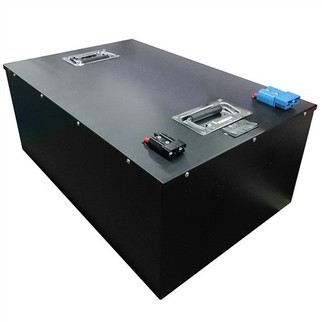
Overview of solid-state lithium battery
All-solid-state lithium battery is a kind of lithium battery that uses solid electrode material and solid electrolyte material and does not contain any liquid. It mainly includes an all-solid-state lithium-ion battery and an all-solid-state lithium metal battery. The difference is that the former negative electrode does not contain lithium metal, while the latter negative electrode is lithium metal.
At present all kinds of a new types of battery systems, solid-state batteries using organic electrolyte and solid electrolyte to replace the current new diaphragm, high security, high energy density, volume at the same time, and different ratio of high to new electrode systems (such as lithium-sulfur system, metal-air system, etc.) with wide suitability, can further enhance the quality of energy density, Thus, it is expected to become the ultimate solution of the next generation of power battery, which has attracted extensive attention from many research institutions, start-up companies, and some auto companies in Japan, the United States, Germany, and other countries.
Second, the advantages of solid-state lithium battery and the existing technical defects
Compared with traditional lithium-ion batteries, solid-state lithium batteries have significant advantages:
(1) High safety performance: Traditional lithium-ion batteries use an organic liquid electrolyte. In the case of overcharging, internal short circuits,s, and other abnormalities, the battery is easy to heat up, resulting in gas expansion, spontaneous combustion, and even explosion of the electrolyte, and there are serious safety risks. Many inorganic solid electrolyte materials are non-flammable, non-corrosive, non-volatile, and do not have leakage problems. Compared with a liquid electrolytes containing flammable solvent, the battery safety is also greatly improved.
(2) High energy density: lithium metal can be used in the anode of solid lithium battery, and the energy density of the battery is expected to reach 300 ~ 400Wh/kg or even higher; Its electrochemical stability window can reach more than 5V, which can be matched with high voltage electrode materials to further improve the mass energy density. No liquid electrolyte and diaphragm, reduce the weight of the battery, compress the internal space of the battery, improve the volume energy density; Improved safety, simplified battery housing and cooling system modules, and improved system energy density.
(3) Long cycle life: It is expected to avoid the continuous formation and growth of SEI film of liquid electrolyte in the process of charge and discharge and lithium dendrite piercing of diaphragm, greatly improving the cycle and service life of lithium metal battery.
(4) Wide operating temperature range: solid lithium battery has excellent needling and high temperature stability. If all inorganic solid electrolyte is used, the highest operating temperature is expected to reach 300℃, so as to avoid thermal runaway caused by reaction of anode and cathode materials with electrolyte at high temperature.
(5) Production efficiency improvement: no packaging liquid, support serial stacking arrangement and bipolar mechanism, can reduce invalid space in the battery pack, improve production efficiency.
(6) Flexible advantages: All-solid-state lithium batteries can be prepared into thin film batteries and flexible batteries. Compared with flexible liquid electrolyte lithium batteries, encapsulation is easier and safer, which can be applied to smart wearables and implantable medical devices in the future.
Although all-solid-state lithium batteries show obvious advantages in many aspects, there are also some urgent problems to be solved:
For the research and development of all-solid-state batteries, the key to solve the above problems lies in the development of solid-state electrolyte materials and the control and optimization of interface properties.
3. Technical path and research hotspot of solid state lithium battery
3.1 Solid state electrolyte material technology path
The performance of electrolyte material largely determines the power density, cycle stability, safety performance, high and low temperature performance and service life of the battery. Common solid electrolytes can be divided into polymer electrolytes and inorganic electrolytes.
Polymer solid electrolyte
Compared with other polymer substrates, polyoxyethylene (PEO) has a stronger ability to dissociate lithium salts and is stable to lithium, so PEO and its derivatives are the main research hotspots.
The wetting ability of polymer electrolyte is poor, and the active material deembedding lithium must be transmitted to the electrode surface through the electrode plate, so that the capacity of active material in the electrode plate cannot be fully developed in the battery working process. It is an effective method to improve the mobility of lithium ion and the capacity of battery by mixing electrolyte material into electrode material or replacing binder to fill the gap between electrode particles and simulate the wetting process of electrolyte. Due to the high crystallinity of PEO-based electrolytes, the conductivity is low at room temperature, so the operating temperature is usually maintained at 60-85 ℃, and the battery system needs to be equipped with a special thermal management system. In addition, the narrow electrochemical window of PEO makes it difficult to match the high energy density positive electrode, so it needs to be modified.
Currently, BOLLORE PEO based electrolyte solid state battery with the highest maturity has been commercially available and put into a small number of urban rental cars in the UK. Its operating temperature is required to be 60-80 ℃, with positive electrodes of LFP and LixV2O8, but the Pack energy density is only 100Wh/kg at present.