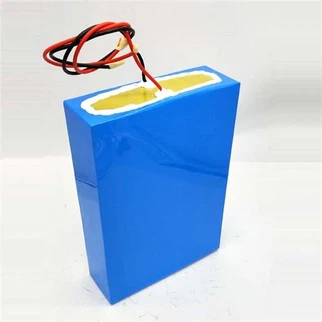
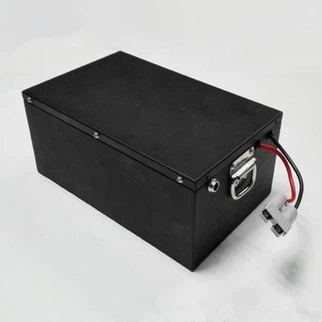
With the increasing maturity of new energy technologies, the country vigorously promotes energy saving and emission reduction, and the application of solar street lamp systems is becoming more and more extensive. As a core accessory in the system, how to choose the battery for solar street lamps?
There are four main types of solar street lamp batteries currently used in the market: lead-acid batteries, gel batteries, ternary lithium batteries and lithium iron phosphate batteries.
1. Lead-acid batteries: The plates of lead-acid batteries are made of lead and lead oxides, and the electrolyte is an aqueous solution of sulfuric acid. The main advantage of lead-acid batteries is that the voltage is relatively stable, the price is relatively cheap, and the safety is high; the disadvantage is that the service life of lead-acid batteries is relatively short, and the volume is much larger than ordinary batteries, but because of its price advantage, it is currently used in solar energy The use of street lamp industry still occupies a dominant position.
2. Gel battery: It is equivalent to an upgraded version of lead-acid battery, maintenance-free and less maintenance, mainly because the internal colloidal electrolyte replaces the sulfuric acid electrolyte, which improves the storage capacity, discharge capacity, safety performance and life span; in addition; The full name of its temperature is more widely used. The gel battery can be used in the temperature range of -40℃-65℃. The low temperature performance is better. In the northern alpine region or the tropical region with higher temperature, the gel battery is the best The choice; its seismic performance is also very good, can be used safely under a variety of harsh conditions, the service life is double or even more than that of ordinary lead-acid batteries.
3. Ternary lithium battery: The ternary lithium battery has many advantages, such as high specific energy, small size, fast charging and high price. Its deep cycle times are about 500-800 times, and its life is similar to that of gel batteries, and the temperature range for use is -15°C-45°C. However, ternary lithium batteries also have disadvantages and poor safety. If the internal stability of the battery is not stable, or the ternary lithium battery is produced by an unqualified manufacturer, it is most likely to be in the overcharging process or in a high temperature environment. An explosion occurred.
4. Lithium iron phosphate battery: high specific energy, small size, fast charging, good stability, wide temperature range, but the price is the highest among all batteries. At present, due to cost issues, the use of lead-acid batteries or gel batteries that are currently used in most solar street light systems has not been implemented on a large scale, so we will introduce the maintenance of these two types of batteries:
1. To prevent overcharging
In addition to the external maintenance, the battery life of solar street lights is also closely related to the accumulation of internal heat. If the solar battery is overcharged, the temperature inside the battery will rise step by step, causing thermal runaway. If it is serious, it may greatly shorten the life of the battery, or even make the battery useless. If we want to prevent the battery from overcharging, we must strictly follow the manufacturer's instructions to provide the charging voltage value.
2. To prevent insufficient charging
In addition to preventing overcharging, solar cells must also prevent undercharging. If the charging has been insufficient, it may also be caused by a problem with the rack system or a low voltage. Frequent under-charging will reduce the number of cycles of the battery and also shorten the life of the battery.
3. To prevent over-discharge
The depth of discharge of the battery is closely related to the number of charge and discharge cycles (service life) of the battery design. To make a ratio, if the depth of discharge is 10%, the number of cycles is 10,000, and when the depth of discharge is 70%, the number of cycles is only 500. The greater the depth of the discharge, the fewer the number of cycles.
If the over-discharge is serious, the life of the battery will be shorter. If it is serious, it may cause the battery to be unable to activate to the best state, or even be scrapped at once. In order to prevent the battery from over-discharging, it is necessary to install a BMS system in the battery, so that the voltage of the battery can be adjusted, and the voltage and current between the batteries can be balanced.
4. Control the ambient temperature
A particularly high temperature environment will shorten the life of the solar battery by half, so it is very important to control the temperature of the solar battery. The service life of the battery is relatively long in normal temperature weather, and the battery will suffer a lot in high temperature weather. If the environment is relatively harsh, with extremely low or extremely high temperatures, it is best to choose a gel battery with a wider temperature range when choosing a battery.