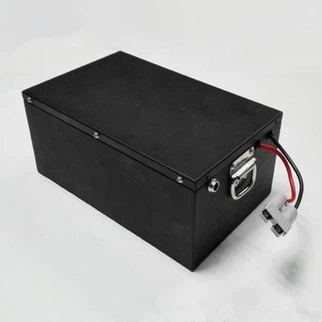
In order to test whether the performance indicators of the battery meet the requirements, the following is an introduction to the conventional performance test methods of lithium batteries:
1. Routine finished product testing
Charging: Use the test system/DC power supply to charge the battery, and use 0.2C constant current and constant voltage to charge until the battery is fully charged;
Discharge: Use the test system/load meter to discharge the battery, and use 0.2C constant current discharge until the battery is discharged;
Internal resistance: Use a high-precision internal resistance tester for internal resistance testing. The contact point must be in good contact to get an accurate resistance value. The larger the battery capacity, the smaller the internal resistance; anyway, the smaller the battery capacity, the greater the internal resistance. ; And usually the internal resistance of the rated battery is too small.
Overcurrent: The battery comprehensive tester is used to test the battery protection current of the finished battery, and whether the protection board can play the role of overcurrent protection.
Short circuit: A special tester is used to test whether the battery has a short circuit protection function. Usually, many protection boards cannot survive a short circuit when the design experience is insufficient or the battery capacity is large. Generally, electronic engineer manufacturers can basically pass it, so the choice is more formal The manufacturer is basically no problem, or simply use the positive and negative poles to directly short-circuit, whether the battery still has current output, no current output, disconnect the load, restore the voltage and other normal functions, which proves that the battery has short-circuited protection.
Capacity: 0.2C battery is used for charging and discharging, and the battery capacity reaches the nominal capacity.
2. In-depth test
High temperature: Use 0.2C constant current and constant voltage to charge. After fully charged, put it in a thermostat, adjust the temperature to 65℃ and leave it for 4H, then use 0.2C constant current to discharge to the cut-off voltage to see if the capacity can reach 85 of the nominal capacity. %the above.
Low temperature: Use 0.2C constant current and constant voltage to charge, after full charge, put it in a low-temperature box, adjust the temperature to -20℃ and leave it for 4H, use 0.2C constant current to discharge to the cut-off voltage and see if the discharge capacity reaches 60 of the nominal capacity %the above.
Cycle: Use 0.2C to charge and discharge 500 times at 25℃, and whether the capacity is stored above 80%.
Drop: Standard drop equipment is used to test whether there are any adverse reactions such as fire and combustion when dropped from 6 sides at a height of 1 meter. Normally, there is no fire, no explosion, no smoke, and no liquid leakage.