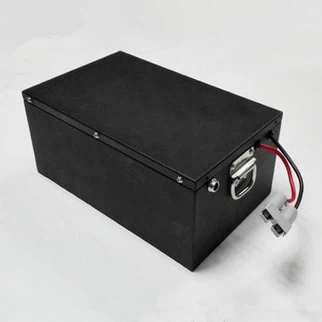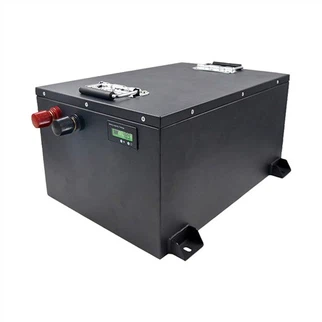
Structure and working principle of lithium iron phosphate power lithium ion battery pack:
The internal structure of LiFePO4 battery, left is olivine structure. LiFePO4 as a positive electrode of the battery, is connected by aluminum foil and the positive electrode of the battery, the middle is a polymer diaphragm, it separates the positive electrode and the negative electrode, but the lithium ion Li+ can pass and the electron E - can not pass, the right is composed of carbon (graphite), the negative electrode of the battery is connected by copper foil and the negative electrode of the battery. Between the upper and lower ends of the battery is the battery electrolyte, the battery is sealed by a metal shell.
When the LiFePO4 battery is charged, the lithium ion Li+ in the positive electrode migrates to the negative electrode through the polymer membrane; During the discharge, the lithium ion Li+ in the negative electrode migrates to the positive electrode through the diaphragm. Lithium-ion batteries get their name from the fact that lithium ions move back and forth as they are charged and discharged.
Critical performance parameters of lithium iron phosphate powered lithium ion batteries
The capacity of lithium-ion battery packs powered by lithium iron phosphate varies greatly and can be divided into three categories: small ones with a few tenths to a few milliamperes, medium ones with dozens of milliamperes and large ones with hundreds of milliamperes. There are also some differences in the same parameters for different types of batteries. Here we also analyze the parameters of a small standard cylindrical package of lithium iron phosphate powered lithium ion battery which is widely used. Its outline size: diameter of 18mm, high 650mm (model 18650).