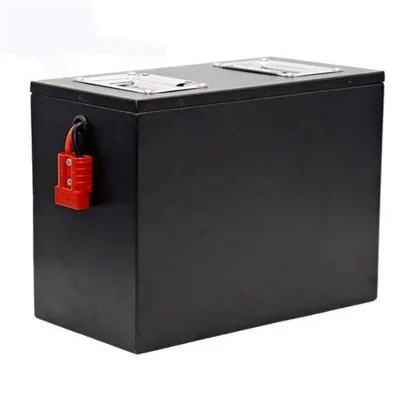
Lithium batteries are a type of rechargeable battery that uses graphite or other carbon materials as the negative electrode and lithium-containing compounds as the positive electrode. It is a type of battery that uses lithium metal or lithium alloy as the positive/negative electrode material and uses a non-aqueous electrolyte solution.
1, The development of lithium batteries
In 1981, the first patent on lithium-ion batteries was issued.
In 1992, SONY began mass production of lithium-ion batteries for civilian use.
In 1998, a large number of square lithium-ion batteries were put on the market, occupying a large market share.
In 1999, China began mass production of lithium-ion batteries.
3, the classification of lithium batteries
1) Classified by shape
Cylindrical lithium battery
Cylindrical lithium-ion batteries generally have a 5-digit model name. The first two digits are the diameter of the battery, the middle two digits are the height of the battery, and the last digit 0 represents a cylindrical shape and the unit is millimeters.
The most commonly used cylindrical lithium batteries:
18650 lithium battery
14500 lithium battery
18500 lithium battery
21700 lithium battery
26650 lithium battery
32650 (32700) lithium battery
Square lithium battery
The prismatic lithium battery usually refers to an aluminum or steel prismatic lithium battery, which is widely used in surveying and mapping, medical equipment, and portable testing equipment.
2) Classified by shell
Steel shell lithium battery
Early lithium-ion batteries were mostly steel cases. Due to the heavyweight and poor safety of the steel shell, the stability of the steel is strong. In the later period, many manufacturers optimized the design structure through safety valves, PTC, and other components, which greatly increased its safety performance. And some directly replace the steel shell, using aluminum shell and soft case, such as the current mobile phone battery.
Aluminum shell lithium battery
Aluminum-shell lithium-ion batteries are slightly better than steel-shell lithium-ion batteries because of their lighter weight and safety.
Soft pack lithium battery
Flexible packaging lithium-ion batteries are gradually expanding their market share due to their lightweight, low mold opening cost, and high safety.
3) Classified by cathode material
There are currently four types of cathode materials used in lithium-ion batteries:
Lithium Cobalt Oxide Battery
Lithium manganese battery
Lithium iron phosphate battery
Nickel cobalt manganese (ternary) lithium battery
4) Classified by electrolyte
Liquid lithium-ion battery
Liquid lithium-ion batteries use a liquid electrolyte, which is an organic solvent + lithium salt.
Polymer lithium ion battery
Polymer lithium-ion batteries are replaced by solid polymer electrolytes, which can be "dry" or "colloidal", and most of them currently use polymer gel electrolytes. The polymer matrix is mainly HFP-PVDF, PEO, PAN, and PMMA.
All-solid-state lithium-ion battery
"All-solid-state lithium battery" is a kind of lithium battery in which the electrodes and electrolyte materials used in the operating temperature range are solid and do not contain any liquid components, so the full name is "all solid electrolyte lithium battery".
3, the application fields of lithium batteries
1) Consumer goods field
Mainly used in digital products, mobile phones, mobile power supplies, notebooks, and other electronic equipment. Commonly used are 18650 lithium batteries and lithium polymer batteries.
2) Industrial field
Mainly used in medical electronics, photovoltaic energy storage, railway infrastructure, security communications, surveying and mapping, and other fields. Commonly used are energy storage/power lithium batteries, lithium iron phosphate batteries, polymer lithium batteries, and 18650 lithium batteries.
3) Special fields
Mainly used in the fields of aerospace, naval vessels, satellite navigation, high energy physics, etc. Commonly used are ultra-low temperature lithium batteries, high-temperature lithium batteries, lithium titanate batteries, explosion-proof lithium batteries, and so on.
4, lithium battery parameters
1) Voltage
Nominal voltage
The potential difference between the positive and negative electrodes of a lithium battery is called the nominal voltage of the lithium battery. The nominal voltage is determined by the electrode potential of the plate material and the concentration of the internal electrolyte.
Open circuit voltage
The terminal voltage of a lithium battery in an open circuit state is called the open-circuit voltage. The open-circuit voltage of a lithium battery is equal to the difference between the reduction electrode potential of the positive electrode and the negative electrode potential of the lithium battery.
Operating Voltage
The working voltage refers to the voltage displayed during the discharge of the lithium battery after the load is connected, also known as the discharge voltage. The operating voltage at the beginning of lithium battery discharge is called the initial voltage.
Recommended voltages for lithium batteries:
12V lithium battery
24V lithium battery
36V lithium battery
48V lithium battery
2) Capacity
The amount of power that a lithium battery can give under certain discharge conditions is called the capacity of the lithium battery, which is represented by the symbol C. The commonly used unit is ampere-hour, abbreviated as ampere-hour (Ah) or milliampere-hour (mAh).
The capacity of a lithium battery is affected by the positive electrode material used, the temperature of the battery, the discharge rate, and the voltage.
3) Internal resistance
The internal resistance of a lithium battery refers to the resistance when the current passes through the interior of the lithium battery, and the internal resistance affects the voltage of the lithium battery.
4) Cycle life
The cycle life of a lithium battery is generally expressed by the number of times of use. One cycle represents a complete charge and discharge cycle of the lithium battery (that is, the lithium battery is charged from empty to full, and then discharged from full to empty).
Note: Lithium batteries have better cycle characteristics, and generally can maintain about 80% of the capacity after 500 cycles.
5) Discharge rate
The discharge rate refers to the current size of the lithium battery when it is discharged, generally expressed by C, and expressed by the formula:
Discharge rate=discharge current/rated capacity
Note: Since lithium batteries use organic solvent electrolytes, the conductivity is generally only a few percent of that of lead-acid or alkaline battery electrolytes. Therefore, when a lithium-ion battery is discharged at a high current, it is too late to replenish Li+ from the electrolyte, and a voltage drop will occur.
6) Working temperature
The operating temperature of a lithium battery refers to the environment that the lithium battery can adapt to and the temperature of the battery itself when it can maintain normal charge and discharge operations.
When the lithium battery is at a low temperature, the discharge platform will be reduced to a certain extent. When the temperature is high, it will affect the cycle performance of the battery and cause the battery to swell slightly. Therefore, the battery is generally recommended to work in the range of 0-40°C.
5. Lithium batteries and lead-acid batteries, nickel-metal hydride batteries
| Item | Lithium battery | Lead-acid battery | Ni-MH battery |
| The energy density (wh/kg) | 200~260wh/kg | 50~70wh/kg | 40~70wh/kg |
| Open circuit voltage (v) | 3.6V | 2.0V | 1.2V |
| Cycle life (times) | 300-2000 | 400-600 | 300-350 |
| Charging speed | Fast | Slow | Very slow |
| Memory effect | No | No | Yes |
| Environmental performance | Low pollution | High pollution | Low pollution |
6, lithium battery PACK
Lithium battery PACK mainly refers to the processing and assembly of lithium batteries, which mainly process batteries, protective plates, BMS, connecting sheets, label papers, etc., into products required by customers through the battery PACK process combination.
7, lithium battery safety test
The best lithium battery must meet the UL2054 safety standard (lithium battery), and complete the following tests:
Electrical performance test
1) Short circuit test
2) Abnormal charging test
3) Forced overcharge test
4) Forced discharge test
5) Restricted voltage test
Mechanical test
1) Compression Test (Crush Test)
2) Vibration Test
Peripheral test
1) Casting pressure release test
2) Burning test
3) Spray test
Environmental test
1) Heating test
2) Thermal cycle test
8, Lithium battery transportation
Lithium battery transportation methods include air transportation, water transportation, and land transportation. The most commonly used are air transportation and ocean transportation.
Because lithium is a metal that is particularly prone to chemical reactions, it is easy to extend and burn, so the packaging and transportation of lithium batteries are not handled properly, and they are prone to combustion and explosion.
Packaging requirements for lithium batteries:
1) It must be packed in the UN specification packaging specified in the DGR Dangerous Goods Regulations in accordance with the applicable packaging instructions, and the corresponding number must be displayed on the packaging.
2) Class 9 danger labels must be affixed.
3) The dangerous goods declaration form must be filled in and the corresponding dangerous package certificate must be provided.
Transport requirements for lithium batteries:
1) The battery must pass the UN 38.3 test requirements and the 1.2-meter drop packaging test.
2) The dangerous goods declaration documents provided are marked with the UN number.
3) The battery should be protected to prevent a short circuit, and in the same package, it should be prevented from contact with conductive materials that can cause a short circuit.
4) To avoid strong vibration during the handling process, use corner guards to protect the vertical and horizontal sides of the pallet.
9, how to use lithium batteries correctly
Lithium battery storage-The most critical storage conditions for lithium batteries are temperature and humidity. It is recommended to store them in an environment with a temperature of 20°C. Pay attention to moisture and humidity, and do not let the lithium battery be in a state of power loss. Do not squeeze, bump, or store in strong static electricity and strong magnetic fields.
Lithium battery charging and discharging-do not overcharge, do not use inferior chargers, do not blindly use high-rate chargers. Do not discharge more than 80% of the battery capacity.