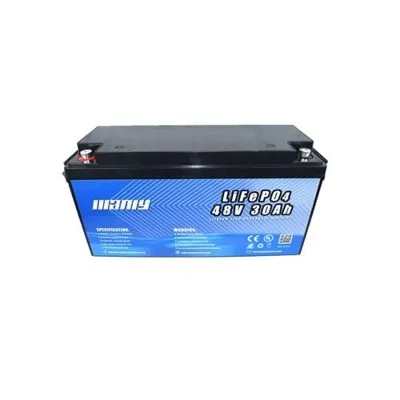
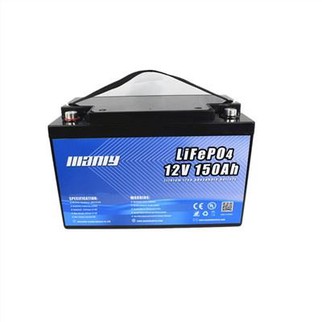
In the rapid rise of ternary, a "unified" trend, the head of the company did not give up lithium iron phosphate, and always adhere to technological innovation, is sufficient to reflect the head of the company's deep-seated knowledge of lithium iron phosphate. Since this year, lithium iron phosphate in the passenger car market rebound, as well as in energy storage, ships, communication base stations and other areas of the outbreak also confirmed their judgment.
Head effect highlights the LFP shuffle
In fact, in the past few years, the market is generally bullish ternary, ignoring the LFP, the head of the company is still making efforts in the lithium iron phosphate market and product development, bringing the lithium iron phosphate market concentration continues to rise, the head effect is very obvious.
Power battery application branch data show that in 2019, the cumulative domestic new energy vehicles supporting lithium iron phosphate power battery is about 169,000 units, with an installed capacity of 20.79 GWh; of which, the top 10 companies have an installed capacity of 20.41 GWh of lithium iron phosphate, accounting for 98.2% of the total installed capacity of lithium iron phosphate.
From the perspective of enterprises, in 2019 Ningde Times lithium iron phosphate installed capacity ranked first, Guoxuan High-tech ranked second, BYD ranked third. It is worth noting that Ningde Times and BYD lithium iron phosphate are mainly used in the new energy commercial vehicle market. In the passenger car sector, the installed capacity of Guoxuan Goke reached 1.55GWh, with a market share of 75.2%, ranking first, the data show that Guoxuan Goke provides lithium iron phosphate supporting passenger car customers in its 2019 customers has increased to 65%. As you can see, when the industry is focusing on ternary batteries, Guoxuan GaoKe is instead looking for more business opportunities in this field.
It is not easy to shake ternary batteries and find market segmentation opportunities
In fact, compared to the "catalog" data and installed data, ternary batteries are still the mainstream of new energy passenger cars, but lithium iron phosphate is also cutting part of the ternary battery "cake".
The first quarter of this year, new energy vehicle battery production and sales and installation data show that the impact of the epidemic, January-March 2020, China's power battery production totaled 8.3GWh, cumulative sales reached 7.9GWh, of which ternary batteries cumulative sales of 4.7GWh, lithium iron phosphate cumulative sales of 3.2GWh, although both have fallen compared to the same period last year, but lithium iron phosphate and ternary batteries The gap between the sales of lithium phosphate and ternary batteries is narrowing. In March, for example, China's power battery sales totaled 3.0GWh, of which 1.2GWh of iron phosphate sales, accounting for 41.4% of total sales, an obvious momentum to improve. This, lithium iron phosphate in passenger car sales and installed contribution should not be underestimated.
However, from the point of view of battery pack energy density, lithium iron phosphate is still slightly inadequate. Data show that in March 2020, China's pure electric passenger car system energy density in 160Wh/kg and above models accounted for 42.2% of the total production of pure electric passenger cars; system energy density in 140-160Wh/kg models accounted for 50.3% of production, compared to previous months have been improved. Among them, the system energy density in 160Wh/kg and above passenger cars equipped with ternary batteries, no lithium iron phosphate batteries. And look at the recent announcement of several batches of "catalog" models, system energy density in 170Wh/kg, 180Wh/kg or even higher models have appeared, passenger cars for energy density and the pursuit of range does not stop.
According to battery China, the current LiFePO4 system energy density is still below 160Wh/kg, although Guoxuan Hi-Tech said this year, its LiFePO4 monomer energy density in the laboratory has reached 200Wh/kg, the system energy density of 160Wh/kg, but as of yet no formal mass production. And Ningde Time CTP program can make lithium iron phosphate system energy density of 160Wh/kg is not known.
It is worth mentioning that in recent years, lithium iron phosphate system energy density of 140Wh/kg, supporting models with a range of more than 400km has become more common. Taking into account the passenger car subsidies back 10%, but this year the energy density has not been adjusted, in the 140Wh/kg-160Wh/kg range, range of 400km or so passenger cars, the use of safer, more cost-effective lithium iron phosphate will increase.
Such as the 330th batch of new vehicle announcements, SAIC Rongwei Ei5 for the first time declared to carry lithium iron phosphate version, after the revision of the comprehensive range of 416 km, the battery provided by Shanghai Jiexin Power supporting. The same batch of announcements in the Dongfeng Qichen D60 EV launched a "low range" model, the new car will be replaced with lithium iron phosphate battery, NEDC range of 405km, will further lower the price of the D60EV entry model.
Energy density is still the "bottleneck"
In March this year, BYD held a "blade battery" conference, its chairman Wang Chuanfu has said, "blade lithium iron phosphate" can achieve 600km range in passenger cars, and safer, will change the industry's reliance on ternary batteries, the technical route of power batteries will return to the right path.
Lithium iron phosphate in the passenger car market supporting the rapid upturn in the Guoxuan High-tech Chairman Li Chen also believes that lithium iron technology is now back to win market recognition, and lithium iron technology itself long life, safer and low-cost advantages are inextricably linked. In the future, with the subsidies retreating and market competition intensifying, the installed share of LFP in the passenger car market will continue to increase, and more and more OEMs are expected to turn their attention to LFP batteries again.
However, some industry insiders point out that "blade batteries are an innovation in structure and manufacturing process compared with the existing size of lithium iron batteries, but the 'bottleneck' of relatively low energy density of lithium iron materials still needs to be broken. When consumers, vehicles, battery companies in the pursuit of 700km, 800km or even longer range, lithium iron phosphate only through the battery pack structure innovation to break the bottleneck is still more difficult."
In other words, lithium iron phosphate materials compared to ternary materials, mass energy density still has a "short board".
Subsidy policy will continue for two years, and a gentle retreat, but there are already some car companies began to actively "seek change", which also set off a lithium iron phosphate and ternary "strife". It is conceivable that in the coming period of time, the battle between the two technical routes will continue, but no doubt the market will give the answer, complementary or trend.