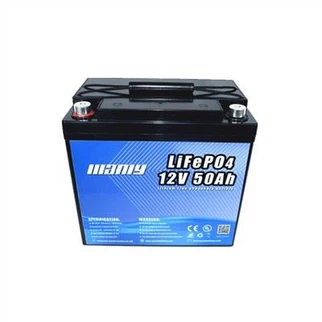
Lithium-ion batteries as the primary direction of battery development for pure electric cars now have a better use in the new energy cars. Although this type of battery has no memory, low self-discharge rate, high energy density, strong output power and other advantages, but because the activity of lithium ion will continue to decline with multiple cycles, the capacity of lithium batteries will naturally decay in use. Industry standards believe that when the capacity of the power battery decays to less than 80% of capacity, it is no longer applicable to electric cars. On the basis of this standard, China's relevant technical research center speculates that by 2018 to 2020, the country's cumulative scrap power battery will reach 120,000 to 200,000 tons; by 2025, the annual scrap volume of power battery may reach 350,000 tons.
Lithium ore is always limited, and usually, the power battery's can also complete the remaining value in other categories. The full life cycle of the power battery generally includes production, use, scrap, differentiation and reuse. "How to fully use each battery and not pollute the environment" involves the power battery ladder use and recovery system.
What are the uses of the screened power battery?
According to the national standard rules, the power battery capacity decay to 80% or less, it is mandatory to take back. The latest BYD e2 standard range version, for example, the model is a pure electric car, built-in permanent magnet synchronous motor and ternary lithium battery pack, the normal working range of 305 kM. it is known that the actual distance traveled by the vehicle is often lower than the number of normal working range, some car enthusiasts in the intercity high-speed test BYD e2 standard range version of the actual range of 231 kM. according to According to the actual cycle life of the ternary lithium battery pack 400 times to calculate, the model in the march 9.24-12.2 million kilometers after the need to change the new battery. The replaced battery can be used in low-speed electric vehicles, electric bicycles and energy storage devices after a brief treatment by the recovery organization.
Now, the common pure electric car on the market, the primary choice of lithium iron phosphate and ternary lithium batteries. Laboratory data show that in 1C charge and discharge multiplier to ternary lithium batteries continue to charge and discharge, after 800-1000 charging cycles, the battery capacity down to 80% of the capacity of the new battery. Under the same conditions, the theoretical cycle life of lithium iron phosphate batteries up to 2000 + times. However, in the very high temperature or very low temperature and other operating environments, the battery life will generally have different degrees of reduction. Some mainstream battery manufacturers promise that the number of charge and discharge cycles of ternary cells under standard conditions > 500 times. When the cells are assembled into battery packs, their voltage and internal resistance may not be consistent, resulting in the cycle life being reduced to about 400 times.
What is the difference between ladder use and disassembly and recovery?
There are two primary methods of power battery disposal, laddering and dismantling. To electric passenger cars, for example, the power battery in the car's internal integration of the battery pack (battery pack), the battery pack was recovered after the need to disassemble into a single cell, and then do the remaining life detection, and then sorting, system integration. After multiple procedures, then put into low-speed electric vehicles, electric bicycles, energy storage devices and other applications. The battery with a capacity of <50% does not have the conditions for secondary use, and it needs to enter the next link, which is disassembled and recovered by professional power battery recovery organizations.
The general operation process of disassembly and recovery is: the battery is put into salt water and completely discharged, and then crushed after discharge to extract reusable materials. For example, from the waste ternary lithium batteries, nickel, cobalt, manganese, aluminum and other materials can be extracted. Only the waste battery if not properly disposed of, it is simple to bring environmental pollution. How to ensure no pollution of the environment in the process of differentiation? The extracted materials can also bring profit to the enterprise? This requires the joint efforts of enterprises and the government.
The difficulties faced by the power battery recovery nowadays
In 2015, China surpassed the United States to become the world's largest electric car market. In that year, China's electric car sales broke 100,000 units for the first time, reaching 331,100 units. At the same time, this also means that with the increasing popularity of electric cars, the supporting power battery has also ushered in a new development.
Although the power battery recovery system in theory can constitute a closed loop, but in practice, due to high costs, low profitability and other issues, resulting in more difficult to recover. According to media reports, there are three main forces in the domestic power battery recovery market, including BYD, Ningde Time and other major vehicle and battery manufacturers, third-party recovery organizations such as Greenmax and Tianqi, and battery material suppliers such as Huayou Cobalt and Xiamen Tungsten.
And according to the characteristics of the electric car power battery, an electric car travels 10-12 million kilometers after the battery capacity decay to 80% or less. If a pure electric car run more than 20,000 kilometers a year, it is estimated that 5-6 years need to change the new battery. The industry estimates that by the end of 2019, the first batch of electric cars will be scrapped, and the retired power battery will reach 24 GWh by 2020.
In addition to the above-mentioned formal power battery recovery manufacturers, there are many informal small workshops in the industry. Some small traders buy used power batteries at a price higher than that of power battery recycling manufacturers and resell them to small workshops. Small workshops then disassemble the battery to obtain recoverable materials, and then sell these materials to make a profit. Small workshops often do not consider the capacity of 50%-80% of the battery there is room for secondary use, and in the process of dismantling is not formal, may form soil pollution.
In addition, Ningde Time's experimental data show that 1 ton of lithium iron phosphate through the gradient use, you can get about 30,000 yuan of revenue, while the direct recovery of the original material can only get about 10,000 yuan of revenue. Ternary lithium battery revenue comparison is more obvious, 1 ton of ternary lithium battery through the ladder use, can obtain 80,000 yuan of revenue, direct dismantling can only obtain about 40,000 yuan of revenue. It can be seen that the small workshop type recovery does not bring greater benefits.
At the same time, the inflow of batteries into small workshops also exacerbates the difficulty of the work of secondary use. Some regular battery retrieval manufacturers can not maintain normal operation of the factory because they do not meet the batteries used for inscription use. At this time, the establishment of a sound power battery recovery system is very critical.
China has announced a package of power battery recovery policy
Now, China's power battery take-back work has had initial development in recent years. Especially from the beginning of 2018, the central organization led by the Ministry of Industry and Information Technology and the Development and Reform Commission has launched a package of policies one after another.
It is worth noting that the Ministry of Industry and Information Technology released on November 7, 2019, "new energy car power battery recovery service network construction and operation strategy" said in particular: power battery (excluding lead-acid batteries), its service network site selection, layout, premises, facilities, safety management, environmental protection and other requirements, as well as packaging, storage, transportation and other details of the rules.
In addition, it also said that "recovery service outlets should be through the code collection tools and other methods, the use of information technology detailed records of the battery code, battery type, battery product type, battery quantity, battery origin, battery to the enterprise and other related information, save records for three years for inspection, in accordance with the relevant rules of national traceability management, timely, accurate, standard information feedback to the new energy car Production or ladder use and other enterprises". The strategy compared to the previous professional standards, for the entry threshold and service rules within the profession to put forward higher requirements, the source and destination of power batteries to trace, to ensure that the waste battery does not fall into small workshops.
At that time, the policy has just been released, it will bring what kind of changes to the construction of power battery recovery system is still to be investigated. Through the encouragement and standards of several policies, China's power battery recovery network will also gradually come into the right track.
Welcome to visit our company website: www.manlybattery.com. If you have any interests in batteries, please feel free to contact us: info@manlybattery.com