On October 30, Toyota Motor Corporation started the empirical test of its "MIRAI Future" hydrogen fuel powered lithium battery vehicle in China, and the first hydrogen fueling station of Toyota Motor R&d Center (China) Co., Ltd. was also completed in Changshu. Toyota may become the first multinational automobile company to introduce fuel powered lithium battery vehicle in China.
On November 2, the fifth China-South Korea automotive industry development seminar, Hyundai Motor Group announced that hyundai's new generation of hydrogen fuel powered lithium battery passenger car will be launched next year, and the Chinese market, the new generation of fuel powered lithium battery passenger car is also planned to be officially put into use in the Pyeongchang Winter Olympics.
Once considered to be very far away, the fuel-powered lithium battery vehicle is no longer a castle in the air. The development of fuel-powered lithium battery vehicle has become a critical breakthrough in the transformation and upgrading of the global automobile and energy industry.
With the help of the Japanese and Korean governments and big car companies, hydrogen-powered lithium-ion battery cars have taken the lead in the world. In the level of research and development and infrastructure construction, There is a certain gap between China and Japan and Japan.
"China's fuel-powered lithium battery vehicle industry technology system is not perfect, core technology lags behind international advanced level, failed to break the bottleneck of technology transfer from scientific research to industrialization." Yu Zhuoping, dean of the School of Automotive Engineering at Tongji University and director of the National Collaborative Innovation Center for Intelligent New Energy Vehicles, said in an interview with 21st Century Business Herald on November 2.
He believes that the two most critical problems affecting the commercialization of China's fuel-powered lithium battery industry are unclear industrial guidance and the lack of traction and industrial platform support from large companies.
Japanese and Korean companies are leading the way
Hydrogen fuel powered lithium-ion battery vehicles do not emit carbon dioxide when driving cars, and have advantages over electric vehicles in terms of hydrogenation time and range, so they are regarded as the ultimate solution to energy conservation and emission reduction.
However, this does not mean that hydrogen-powered lithium-ion battery cars will completely replace pure electric vehicles. Some experts believe that for a long time, these models will exist together to meet different needs.
"The relationship between fuel powered lithium battery vehicles and pure power vehicles is not either/or, but different use scenarios, they are the critical direction of the development of new energy vehicles in the future. "Lithium-ion battery cars powered by hydrogen fuel can be used in long-distance trucks in the future to make up for the range deficiency of electric cars." Yu Zhuoping said.
In addition, hydrogen-powered lithium-ion battery cars can also be popularized in taxi and car-sharing categories. Hyundai Motor Group piloted hydrogen taxis in Paris in December 2015 and launched car-sharing services in Munich last June.
Toyota, Honda and Hyundai took the lead in achieving this goal, with the Toyota Mirai, Honda Clarify and Hyundai Tucson FCEV currently in mass production. In addition, these three auto companies also announced the strategy and product planning of hydrogen fuel-powered lithium battery vehicles respectively.
"Hyundai motor's failure to respond to changes in the Korean ev market is a huge strategic mistake." Lee Ji-sang, chief executive of Hyundai Motor Group's Environmental Technology Center, said.
Compared with Toyota, Hyundai motor has been less aggressive in developing lithium-ion batteries powered by hydrogen fuel. Mr. Lee said Toyota's growing influence in fuel-powered lithium-ion batteries prompted Hyundai to step up its promotion of the technology to prove its technological prowess.
It is worth mentioning that Toyota's attempt to promote hydrogen storage and hydrogen production provides a possible path for the promotion of the whole industry chain of hydrogen fuel-powered lithium battery vehicles from hydrogen production, hydrogen storage to hydrogenation.
Taking The HamaWing wind power station built by Toyota as an example, it uses wind power to generate electricity, produces hydrogen through water electrolysis, applies hydrogen storage and irrigation to hydrogenation station, and finally completes hydrogenation. Although HamaWing's staff told 21st Century Business Herald that HamaWing's power generation rate is actually only 12 percent, which is high in terms of efficiency, Toyota hopes to improve the efficiency of urban wind power systems through empirical tests.
Mainstream car companies invest too little
According to the Blue Book on Infrastructure Development of China's Hydrogen Industry (2016), the number of hydrogenation stations in China will reach 100 and the number of fuel-powered lithium battery vehicles will reach 10,000 by 2020. By 2030, the output value of hydrogen energy industry will exceed 1 trillion yuan, the number of hydrogenation stations will reach 1,000, and the number of fuel-powered lithium battery vehicles will reach 2 million. By then, China is expected to become the world's largest fuel - powered lithium battery vehicle market.
The introduction of the double integral policy and the withdrawal of subsidies also promote the investment of Chinese automobile enterprises in the research and development of fuel-powered lithium battery vehicles. Held on September 9, 2017 (teda) international auto industry development in our country on the BBS, national Ministry of Science and Technology of high performance technology development and industry and cultural affairs, deputy director of the said publicly in advance, the renewal on hydrogen fuel power lithium battery development in the future, China will enhance innovation synergy, further international cooperation, speed up the industrialization process.
However, moving from the laboratory to commercialization of hydrogen-powered lithium batteries still faces many difficulties. "The two most pressing issues for the commercialization of fuel-powered lithium batteries are the government's industry orientation and the company's initiative. The government should clarify the role of hydrogen in the energy mix as soon as possible." Yu zhuoping said.
In fact, in order to promote the development of hydrogen fuel powered lithium battery vehicles, some local governments have issued relevant policies. In September this year, The Shanghai Municipal Science and Technology Commission, The Shanghai Municipal Economic and Information Commission, the Shanghai Municipal Development and Reform Commission jointly announced the "Shanghai Fuel power lithium battery Vehicle Development Plan", will develop fuel power lithium battery vehicle as the Shanghai automotive industry transformation and upgrading of the leading project. To establish a leading domestic and world-class technology chain and industrial chain for fuel powered lithium battery vehicles, and build Shanghai into a world-class innovation center and industrial highland for fuel powered lithium battery vehicles.
By 2020, Shanghai will build an industrial cluster containing key components, reactor, system integration, detection and certification services, vehicle development and other links, with more than 100 companies related to fuel powered lithium battery vehicles. At the level of demonstration operation and promotion, 5-10 hydrogenation stations and 2 passenger car demonstration areas will be built, with the operation scale reaching 3000 units. Pilot vehicles such as fuel-powered lithium battery buses and logistics will be actively promoted.
The construction of hydrogenation stations in China is still difficult to overcome. "In Beijing, Shanghai and other big cities, due to site selection, safety and other requirements, it is very difficult to get approval, other cities also need special approval, there are still many difficulties in the construction of hydrogenation stations, of course, this is a common problem in the world." China Automotive Engineering Society technology director Wang Ju said.
Last November, China's hydrogen energy vehicle Industry Alliance was formally established. The establishment of this alliance will accelerate the introduction, development and use of foreign advanced hydrogen energy fuel-powered lithium battery technology, and greatly reduce the cost of hydrogen energy fuel-powered lithium battery; At the same time, it will continue to integrate the whole upstream and downstream industry chain of hydrogen energy, coordinate various cities or regions, and promote the large-scale commercialization of hydrogen energy fuel-powered lithium battery vehicles in China.
Consumer psychology will also affect the commercialization of fuel-powered lithium-ion battery vehicles, and consumer concerns about hydrogen fuel safety will not change in a short time. "Although the safety of hydrogen-powered lithium ion batteries has been proven, there are still concerns in the minds of Chinese consumers." Xu Changming, deputy director of the State Information Center, said.
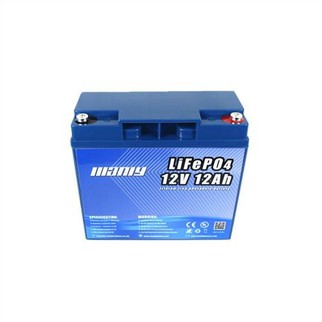
Manly Battery which located in Shenzhen,China. A leading Lithium battery manufacturer over 12 years if there is any project need to evluate ,pls feel free tosend email to info@manlybatteries.com