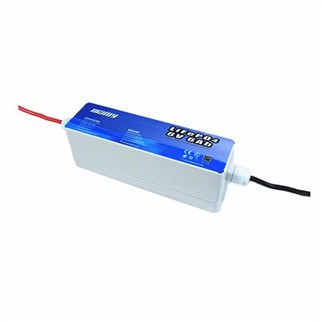
UPS power supply is a device in each data center to ensure that servers and computing equipment are not affected by power line interference and power quality problems.
1. Power selection
The use of on-line or backup UPS power supply should be determined according to the needs of computer equipment and economic conditions. If the economic conditions are relatively good, an online UPS power supply can be used. If the economic conditions are relatively poor, the backup UPS power supply can be used under the condition that the normal operation of the microcomputer is not affected.
2. Power
Calculate the total power consumption of the equipment according to the power consumption of the microcomputer and external equipment. The total power consumption is multiplied by the safety factor, which is the estimated power of the UPS power supply. Usually, the safety factor is 1.2~1.3.
3. Power time
When choosing a long-term power supply UPS power supply and a short-term power supply UPS power supply, it is necessary to consider economic conditions and application requirements. Economic conditions are better, and long-term UPS power can be used. It is also possible to use short-term UPS power in conjunction with a small generator set as a backup power source.
4. Computer room monitoring
The pan-geo UPS power supply room monitoring system consists of three parts: front-end equipment, client/server APP, and PC large screen. Users can view the running status and related parameters of the UPS equipment in real time after logging in through the client APP/PC, and can intuitively monitor the running status and related data of the system on the large screen of the mobile phone. When an abnormality occurs, the alarm information can be received synchronously.
5. Back-up
When using the backup UPS power supply, it is necessary to pay attention to the switching time of the power supply. The switching time is presented in the switching time of the UPS power supply and the demand of the microcomputer for the switching time.