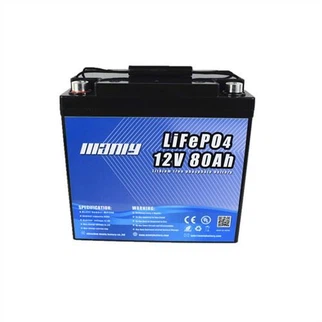
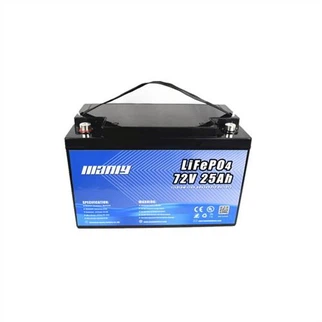
At the beginning of the lithium battery product design, the selection of lithium battery model performance testing will be carried out simultaneously, the performance and reliability of lithium batteries have a direct impact on the end product, therefore, through the lithium battery performance test at an early stage to identify and solve the problem, so what are the lithium battery performance test items.
What are the items in the lithium battery performance test.
A. Self-discharge test
Lithium battery self-discharge test is: 24 hours of self-discharge is generally used to quickly test its charge retention capacity, the battery will be 0.2C discharge to 3.0V, constant current and constant voltage 1C charge to 4.2V, cut-off current: 10mA, set aside for 15 minutes, 1C discharge to 3.0V to measure its discharge capacity C1, then the battery constant current and constant voltage 1C charge to 4.2V, cut-off current 100mA, After setting aside for 24 hours, measure 1C capacity C2, C2/C1×100% should be more than 99%.
Second, the internal resistance measurement
The internal resistance of lithium battery refers to the battery in the work, the current flow through the internal resistance of the battery, generally divided into AC internal resistance and DC internal resistance, because the internal resistance of rechargeable batteries is very small, measuring DC internal resistance due to electrode polarization, resulting in polarized internal resistance, it can not be measured its true value; and measurement of its AC internal resistance can be exempted from the influence of polarized internal resistance, resulting in the true internal value.
AC internal resistance test method: the use of lithium battery equivalent to an active resistance characteristics, to the battery a 1000HZ, 50mA of constant current, its voltage sampling rectification filtering and a series of processing so as to accurately measure its resistance value.
Third, the internal pressure test
Lithium battery internal pressure test: (UL standard) simulation of the battery at an altitude of 15240m high altitude (low pressure 11.6kPa), to test whether the lithium battery leakage or drum.
Specific steps: the battery 1C charge constant current constant voltage charge to 4.2V, the cut-off current of 10mA, and then put it in the air pressure of 11.6Kpa, the temperature (20 ± 3 ℃) low-pressure box storage for 6 hours, the battery will not explode, fire, cracking, leakage.
Fourth, the impact test
After the lithium battery is fully charged, a 15.8mm diameter rigid rod placed across the battery, with a 20-pound weight dropped from a height of 610mm on the rigid rod, the battery should not explode and fire or leakage.
Five, lithium battery cycle life test
Cycle life test is mainly to test the lithium-ion battery in the available capacity down to the permitted value of the number of charge and discharge. Specific steps are as follows.
① lithium-ion battery at (20 ± 5) ℃ ambient temperature, with 0.2C current constant current discharge to the specified termination voltage (generally 3.0V), and then charged with 0.2C current constant current to the termination voltage (generally 4.2V), transferred to constant voltage charging (charging termination current is generally 0.02C).
② Li-ion battery should be discharged to the specified discharge termination voltage at an ambient temperature of (20±5)℃ with a constant current of 0.2C.
③ lithium-ion batteries should be cycled at an ambient temperature of (20±5)°C, and the batteries should be set aside for no more than 1h between charging and discharging or discharging and charging.
④ Lithium batteries should be cycled in accordance with steps ① and ② for discharging and charging until the discharged capacity is less than 70% of the rated capacity.
How to test the quality of lithium batteries?
1, the fastest test method is to test the internal resistance and maximum discharge current, good quality lithium battery, the internal resistance is very small, the maximum discharge current is very large. Using a 20A range multimeter, directly short the two electrodes of the lithium battery, the current should generally be about 10A, or even higher, and can be maintained for a period of time, relatively stable is a good battery.
2, look at the appearance. The appearance of the degree of fullness, such as the general 2000mAh lithium battery, the volume is more on the large side. The workmanship is fine or the packaging appears to be more plump.
3, look at the hardness. You can use your hand to lightly squeeze or moderate pinch the middle part of the lithium battery, the hardness is moderate, no soft squeeze feeling is proof that the lithium battery cell is a relatively high quality battery cell.
4, look at the weight. Remove the outer packaging to sense whether the weight of the lithium battery is relatively heavy, if the heavy belongs to the quality of the core.
5, in the lithium battery charged work process, continuous discharge for about 10 minutes if the battery poles do not get hot, the battery protection plate system is proven to be perfect, generally with quality protection plate lithium battery quality are better than ordinary lithium batteries.
Since the introduction of lithium batteries, with its excellent performance has quickly become the leader in the field of batteries, but with the gradual expansion of its application and the volume of the individual battery energy density is increasingly high, the capacity is increasingly large, the safety of lithium batteries is also increasingly concerned. Therefore, performance testing and inspection is still necessary.
Welcome to visit our company website: www.manlybattery.com, If you have requests or queries on batteries, please feel free to contact info@manlybattery.com. Thank you.