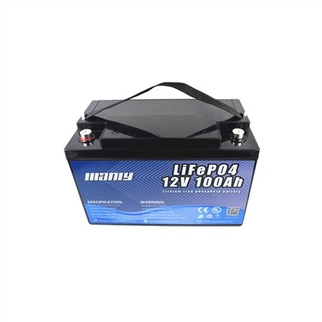
What are the conditions needed for a high quality lithium-ion battery? Generally speaking, long life, high energy density, reliable safety performance is a measure of a high-quality lithium-ion batteries are necessary conditions, lithium-ion batteries are now used in all aspects of daily life, but different manufacturers or brands, lithium-ion battery life and safety performance there are some differences, these are with the production process standards, and production materials have a great relationship; the following conditions must be is a high-quality lithium-ion must have the conditions.
1. Long service life
Secondary battery life, including cycle life and calendar life two indicators. Cycle life refers to the battery after the number of cycles promised by the manufacturer, the remaining capacity is still greater than or equal to 80%. Calendar life means that whether used or not, the remaining capacity shall not be less than 80% within the time period promised by the manufacturer.
Life, is one of the key indicators of the power lithium battery, on the one hand, the big action of replacing the battery is really troublesome and bad user experience; on the other hand, fundamentally, life is a cost issue.
Lithium-ion battery life is the battery in use for a period of time, the capacity decay to nominal capacity (room temperature 25 ℃, standard atmospheric pressure, and to 0.2C discharge battery capacity of 70%), can be considered the end of life. The industry generally calculates the cycle life of lithium-ion batteries by the number of full-fill-discharge cycles. In the process of use, irreversible electrochemical reactions will occur within the lithium-ion battery resulting in a decrease in capacity, such as decomposition of electrolyte, deactivation of active materials, collapse of the positive and negative electrode structure resulting in a decrease in the number of lithium ions embedded and de-embedded, etc. Experiments have shown that higher discharge rates lead to faster capacity decay, and if the discharge current is lower, the cell voltage will be close to the equilibrium voltage and more energy can be released.
Ternary lithium-ion batteries have a theoretical life of about 800 cycles, which is medium in the commercial rechargeable lithium-ion batteries. Lithium iron phosphate is about 2,000 cycles, while lithium titanate is said to reach 10,000 cycles. At present, the mainstream battery manufacturers in their production of ternary cells in the specification book promised greater than 500 times (standard conditions charge and discharge), but the cells in the group made into a battery pack, due to consistency issues, the important is that the voltage and internal resistance is not exactly the same, its cycle life of about 400 times. Recommended SOC use window is 10% to 90%, it is not recommended to carry out deep charging and discharging, otherwise it will cause irreversible damage to the positive and negative electrode structure of the battery, if it is calculated by shallow charging and shallow discharging, the cycle life is at least 1000 times. In addition, lithium-ion batteries are often discharged at high rates and high temperatures, the battery life will drop significantly to less than 200 times.
2. Less maintenance, lower cost of use
The battery itself has a low price per kWh, which is the most intuitive cost. In addition to what has been said, for the user, whether the cost is really low, but also depends on the "whole life cycle cost of electricity".
"Life cycle cost of electricity", the total power of lithium batteries multiplied by the number of cycles to get the total amount of electricity available for the whole life cycle of the battery, the overall price of the battery pack divided by this sum, to get the price per kilowatt-hour during the whole life cycle.
The battery price we usually talk about, such as 1500 RMB/kWh, is only priced according to the total energy of the new battery cells, but in fact, the whole life cycle cost of kilowatt-hour is the direct benefit of the end customer. The most intuitive result is, the same price to buy the same power of two battery packs, one charged and discharged 50 times to the end of life, the other charged and discharged 100 times can still be used. The two battery packs, that cheap which expensive at a glance.
To put it bluntly, it is a long life, durable, and reduces the cost.
In addition to the above two costs, the cost of battery maintenance should also be considered. Consider the preliminary cost alone, the choice of the problem battery cells, the late maintenance costs and labor costs are too high. For the maintenance of the battery cells themselves, it is important to manually equalize, the BMS comes with equalization function limited by the size of its own design equalization current, may not be able to achieve the ideal equalization between the cells, with the accumulation of time, the battery pack will appear too much pressure difference problem. In such cases, manual equalization has to be performed to charge the cells with too low voltage separately. The lower the frequency of this situation, the lower the maintenance cost.
3. High energy density / high power density
Energy density refers to the energy contained in the unit weight or unit volume; the average unit volume or mass of electricity released by the battery. Generally in the same volume, the energy density of lithium-ion batteries is 2.5 times that of nickel-cadmium batteries and 1.8 times that of nickel-metal hydride batteries, so in the case of equal battery capacity, lithium-ion batteries will be smaller and lighter than nickel-cadmium and nickel-metal hydride batteries.
Battery energy density = battery capacity × discharge platform / battery thickness / battery width / battery length.
Power density is the value of the maximum discharge power corresponding to the unit weight or volume. In the limited space of road vehicles, the only way to effectively increase the overall energy and overall power is by increasing the density. In addition, the current national subsidies, the energy density and power density as a measure of the threshold of the subsidy grade, further strengthening the importance of density.
But between energy density and safety, there is a certain contradictory relationship, as the energy density increases, safety will always face newer and more difficult challenges.
4. High voltage
As the negative electrode materials are basically graphite electrodes, lithium-ion battery voltage is important by the material properties of the positive electrode material, lithium iron phosphate voltage ceiling of 3.6V, ternary lithium and lithium manganate ion battery maximum voltage of 4.2V or so (the next part explains why the maximum voltage of lithium-ion batteries can not exceed 4.2V). The development of high-voltage cells is a technical route to improve the energy density of lithium-ion batteries. To improve the output voltage of the cell, we need high potential cathode material, low potential cathode material and high stable voltage electrolyte.
5. High energy efficiency
Cullen efficiency, also known as charging efficiency, is the ratio of the battery discharge capacity to the charging capacity during the same cycle. That is, the percentage of discharge specific capacity to charge specific capacity.
For cathode material, it is the embedded lithium capacity / de-lithium capacity, i.e., discharge capacity / charging capacity; for negative electrode material, it is the de-lithium capacity / embedded lithium capacity, i.e., discharge capacity / charging capacity.
In the charging process, electrical energy is converted into chemical energy, and in the discharging process, chemical energy is converted into electrical energy. There is a certain efficiency of electrical energy input and output in the two conversion processes, and this efficiency directly reflects the performance of the battery.
In the professional physics point of view, the Coulomb efficiency and energy efficiency are not the same, one is the ratio of electricity, one is the ratio of work done.
The energy efficiency of the battery and the Coulomb efficiency, but from the mathematical expression, there is a voltage relationship between the two. The average voltage of charging and discharging is not equal, and the average voltage of discharging is generally less than the average voltage of charging
The performance of the battery can be judged by the energy efficiency of the battery. It is known from the conservation of energy that the lost electrical energy is importantly converted into heat energy, thus the energy efficiency can analyze the heat that occurs in the working process of the battery, and then the relationship between internal resistance and heat can be analyzed. And the known energy efficiency can predict the amount of remaining battery energy and manage the reasonable use of the battery.
Because the input power is often not used to convert the active material to the charged state in its entirety, but is partially consumed, (e.g., irreversible side reactions occur), the Coulomb efficiency is often less than 100%. However, for current Li-ion batteries, the Coulomb efficiency is basically 99.9% and above.
Influencing factors: electrolyte decomposition, interface passivation, and changes in the structure, morphology, and conductivity of the electrode active material can all reduce Coulomb efficiency.
In addition, it is worth mentioning that cell decay has little effect on Coulomb efficiency and has little relationship with the temperature aspect.
The current density reflects the size of the current passed per unit area, and as the current density increases, the current passed by the stack increases, the voltage efficiency decreases due to the internal resistance, and the Coulomb efficiency decreases due to the concentration difference polarization and other reasons, which eventually leads to the reduction of energy efficiency.
6. Good high temperature performance
Lithium-ion battery high temperature performance, refers to the cell in a higher temperature environment, the battery cathode material, diaphragm and electrolyte can also maintain good stability, in high temperature can work normally, life will not accelerate decay, high temperature is not easy to cause thermal runaway accidents.
The temperature of the lithium-ion battery shows shows the thermal state of the battery, the nature of which exists as a result of the lithium-ion battery heat production and heat transfer. The study of the thermal characteristics of lithium-ion batteries, and their heat production and heat transfer characteristics in different states, enables us to recognize the important ways in which exothermic chemical reactions occur within lithium-ion batteries.
The unsafe behavior of lithium-ion batteries, including battery overcharge and overdischarge, rapid charge and discharge, short circuit, mechanical abuse conditions and high temperature thermal shock, can easily trigger dangerous side reactions inside the battery and heat, directly damaging the passivation film on the surface of the negative and positive electrodes.
After the temperature of the cell rises to 130°C, the SEI film on the surface of the negative electrode decomposes, resulting in a violent redox reaction of the highly active lithium carbon negative electrode exposed to the electrolyte, and the heat that appears puts the battery into a high-risk condition.
When the internal temperature of the battery rises above 200℃, the passivation film on the surface of the cathode decomposes and oxygen precipitation occurs on the cathode, and continues to react violently with the electrolyte, resulting in a large amount of heat and high internal pressure. When the battery temperature reaches above 240℃, it is accompanied by the violent exothermic reaction between the lithium carbon cathode and the binder.
The temperature of lithium-ion batteries has a great impact on the safety of lithium-ion batteries. The environment of use itself is also a certain temperature, and the lithium-ion battery will also appear in the use of temperature. Importantly, the temperature will have a greater impact on the chemical reaction inside the lithium-ion battery, too high a temperature will even damage the life of the lithium-ion battery, and in serious cases will cause the safety of the lithium-ion battery.
7. Good low-temperature performance
Lithium-ion battery low temperature performance, refers to the low temperature, the battery internal lithium ion and electrode materials also maintain high activity, high residual capacity, discharge capacity decreases, allowing a large charging rate.
As the temperature decreases, the remaining capacity of lithium-ion batteries decay into an accelerated situation. The lower the temperature, the faster the capacity decay. Forced charging at low temperatures is extremely harmful and can easily cause thermal runaway accidents. The vitality of lithium ion and electrode active material decreases under low temperature, and the rate of lithium ion embedding inside the anode material is seriously reduced. When the external power supply is charged with more power than the battery allows, a large number of lithium ions accumulate around the negative electrode, and the lithium ions that are too late to be embedded in the electrode are directly deposited on the electrode surface after gaining electrons, forming lithium monolithic crystals. Dendrite growth, directly penetrate the diaphragm, piercing to the positive electrode. Causes a short circuit to the positive and negative electrodes, which in turn leads to thermal runaway occurs.
In addition to the serious decline in discharge capacity, the lithium-ion battery can not be charged at low temperatures. At low temperature charging, the embedding of lithium ions on the graphite electrode of the battery and lithium plating reaction is simultaneous and compete with each other. The diffusion of lithium ions in graphite is inhibited under low temperature conditions, and the conductivity of the electrolyte decreases, resulting in a lower embedding rate and an easier lithium plating reaction on the graphite surface. Lithium-ion battery life decreases at low temperatures due to the addition of internal impedance and lithium ion precipitation to decay capacity.
8. Good safety
The safety of lithium-ion batteries, including both the stability of the internal material, including the effectiveness of the core safety measures. Internal material safety refers to the positive and negative electrode materials, diaphragm and electrolyte, good thermal stability, good compatibility between electrolyte and electrode materials, and good flame retardancy of electrolyte itself. Safety auxiliary measures refer to the safety valve design of the core, fuse design, temperature sensitive resistor design, appropriate sensitivity, after the failure of a single core, can prevent the spread of the failure to play isolation purposes.
9. Good consistency
Through the "barrel effect" we understand the importance of battery consistency. Consistency refers to the application of the same battery pack cells, capacity, open circuit voltage, internal resistance, self-discharge and other parameters are very small differences, the performance is similar. The cell itself has excellent performance of the single, if the consistency is not good, after the group, often its excellence are wiped out. Some studies have shown that the capacity of the battery pack is determined by the smallest capacity cell after the group, and the battery pack life is less than the life of the shortest cell life.
We are Manly battery Co., Ltd, a professional Lithium battery manufactuerer, if you have requests or queries on batteries, please feel free to contact info@manlybattery.com