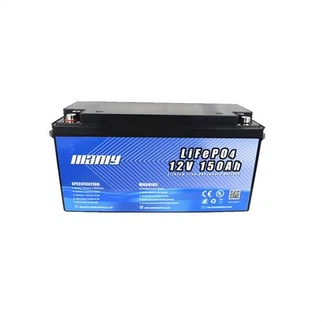
We are now planning electronic products, many times also use lithium battery power supply, the same as cell phones or tablets with lithium battery power supply, understand the knowledge of understanding the capacity of lithium batteries, perhaps the use and planning of lithium battery power supply, including the planning of battery chargers, it is necessary.
Now many people who pay attention to the discharge of lithium batteries, have this experience, that is, when the lithium battery from the overflow voltage 4.2V discharge to 3.7V, the moment is very long, but once the 3.7V is discharged quickly, yes, indeed.
Here are some information on lithium batteries, give us a summary.
First of all, the discharge channel of the battery, that is, the lithium battery is charged in the discharge, the battery voltage change condition.
Battery constant current discharge, the battery voltage to go through three processes, namely, decline, stabilization, and then decline, in these three processes, the stabilization period is the longest. The longer the stabilization time, the higher the discharge channel of the battery. The concave and convex discharge channel is closely related to the battery manufacturing process. It is because of the different positioning of each lithium battery manufacturers in the market, different skills and techniques, their manipulation of the discharge channel is not the same, and the quality is very different.
In general, a 18650 lithium battery full voltage 4.2V, when discharged with a current of 1C to 3.7V, put 60 minutes, then we say the battery capacity is 2200mAh, in this period of time According to the characteristics of rechargeable batteries, make a graph as follows, to better understand the battery capacity and voltage and current moment and discharge channel connection.
Lithium battery capacity means exactly what
Li-ion battery battery capacity and discharge channel to understand the schematic
Capacity (C) = discharge current × battery discharge channel moment
About 1 capacity of 2200mAh 18650 lithium battery, 1C discharge to 3.7V in 1 hour.
Capacity (C) = 2200mA × 1 hour = 2200mAh
Then the question arises, about the better lithium battery, generally in our product testing will be in the 3.7V future voltage drop very quickly, then in a short period of time to put the power is very little.
On the contrary, the less good battery in the 4.2V to 3.7V discharge, the voltage drops very quickly, and in the 3.7V future voltage drops very slowly, this battery is a poor performance of the general capacity is very low. Then the discharge channel of a good lithium battery is 3.7V.
In general, under constant voltage conditions, charge to a voltage of 4.2V, the current is less than 0.01C stop charging, and then set aside for 10 minutes, in any rate of discharge current, discharge to 3.7V, the battery discharge experienced a length of time, is an important indicator to measure the battery is good or bad.
However, do not just seek high channel, sometimes the channel voltage is high, but the capacity is reduced, because, under different multiplier conditions, the channel voltage is different, therefore, the channel should be considered from many sides. Both high capacity, but also to continue in the specified voltage for a long time, to be considered a really good battery.
What is the discharge rate of again?
Discharge rate F: [1/time], meaning "N hours charge (discharge) rate, often just say "number", not to say the unit; F is also called "N hours charge (discharge) rate", F = 1/(N hours), generally able to This accounting: I = 0.1 X [1/(N hours)] X C
For example, the battery capacity of 2200 mAh, charged with a current of 0.1C, equivalent to clear: the battery charging current I = 0.1 [1/hour] X 2200 [mAh] = 220 [mA]
With the above lithium battery battery capacity and discharge channel to understand the schematic diagram, can better understand the reasoning of rechargeable battery capacity and battery discharge channel, can also be said to measure the working moment of high battery power, the same two battery capacity is the same, after charging the overflow assuming that together from 4.2V to 3.7V, but a long moment, a short moment, is a long moment of high battery channel, is a high voltage moment For example, the two batteries used in cell phones, standby time is the same, but the two phones together to call, the battery with a long channel moment will tell the moment long, the battery with a short channel moment will call the moment short Two, on this chart, another meaning, it is also very meaningful to understand the power handling monitoring of lithium batteries.
For example, now, the rechargeable battery for power monitoring methods, there are generally two.
Measuring the battery voltage approach. When the charger detects the battery voltage while charging, when the voltage reaches the rule voltage value is considered to be charged. Such as lithium batteries are charged to 4.2V when the voltage is considered full. Detect the voltage of the voltmeter accuracy to reach plus or minus 1% accuracy. Because the lithium battery overcharge to damage. If you want to supervise the battery charging and discharging, there are very sophisticated circuit to refer to the book, if only to measure the words then it is good to do, based on the capacity of the load resistance, with the standard discharge current discharge, then detect the voltage, as long as it can reach or close to the nominal discharge time on the line.
Measurement of battery voltage this approach, there are many shortcomings. For example, on the battery produced by different manufacturers, the connection between its open circuit voltage and capacity varies, etc.. The advantage is that the planning cost is relatively low.
There is also a common way to monitor the remaining capacity is to understand the remaining capacity of the battery in some places where more accurate battery capacity is required, and to budget the remaining capacity of the battery by measuring the net charge flowing into/out of the battery. The total current flowing into/out of the battery is integrated, that is, the area under the curve in the graph, and the net charge number obtained is the remaining capacity.
This method of battery capacity calculation is now thought to be a more accurate way to calculate battery power. Of course, the planning cost is also relatively high.
If you have any demands in batteries, please feel free to contact info@manlybattery.com