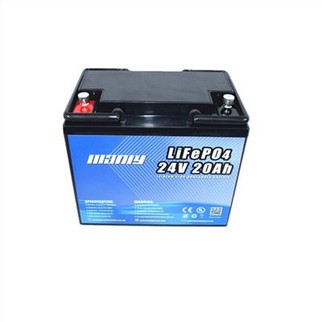
The so-called battery life means that when the battery capacity drops to 80% of the rated capacity, the battery life ends. However, below 80% charge capacity, the battery can still supply usable power despite the reduced operating time.
The decay of battery cycle life is actually a changing trend that the current actual available capacity of the battery is related to its rated capacity when it leaves the factory. Generally speaking, we refer to the number of cycles through which the capacity of a lithium-ion battery drops to 80% of the initial capacity during the cycle, which means the life of the battery.
Regarding an ideal battery, the capacity balance does not change during its cycle, and the initial capacity in each cycle should be a certain value, but in reality the situation is much more complicated. Any side reactions that can appear or consume lithium ions may lead to changes in the battery capacity balance. Once the battery's capacity balance is changed, the change is irreversible and can accumulate through multiple cycles, seriously affecting the battery cycle performance. Influence.
Regarding battery life, the life of lithium-ion batteries on ordinary electronic products is about 5 to 20 years, and the average can reach 8 years. However, at the current level of technology, the service life of lithium-ion batteries in electric vehicles is only about 3-5 years.
There are many factors that affect the cycle life of lithium-ion batteries, but the underlying fundamental reason is that the number of lithium ions involved in energy transfer is constantly decreasing. It should be noted that the total amount of lithium elements in the battery is not reduced, but the activated lithium ions are less, they are imprisoned in other places or the active channels are blocked, and they cannot freely participate in the process of cyclic charge and discharge.