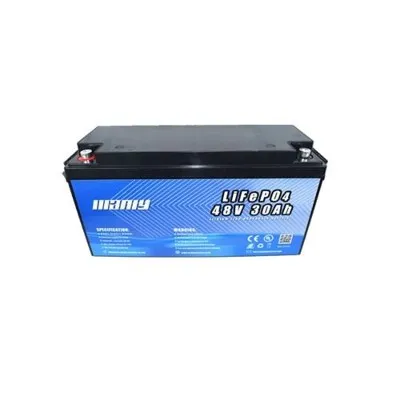
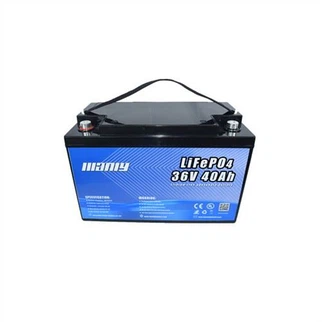
Lead-acid batteries and lithium iron phosphate batteries are two important power reserve energy sources. They have different characteristics in terms of battery materials, energy density, battery performance, cycle life, and safety characteristics.
1. The electrodes of lead-acid batteries are mainly made of lead and its oxides. The electrolyte is a kind of storage battery with a sulfuric acid solution. The iron-lithium battery mainly uses lithium iron phosphate as the positive electrode material, which is suitable for power applications;
2. The energy density of lead-acid batteries is generally 40Wh/kg, and the energy density of lithium batteries is high, reaching 240Wh/kg. The weight of lithium iron phosphate batteries is more than 65% lighter than lead-acid batteries of the same capacity;
3. Phosphoric acid batteries have wider environmental temperature adaptability than lead-acid batteries, stable discharge performance, and can meet the needs of high current discharge.
4. The cycle life of lead-acid batteries is about 800 times, and the cycle life of lithium iron phosphate is about 2500 times.
5. There is a large amount of lead in lead-acid batteries. If they are disposed of improperly, they will pollute the environment. Lithium iron phosphate batteries contain no harmful substances and will not pollute the environment during production and use.
6. Lithium iron phosphate is currently the safest lithium-ion cathode material as a cathode material for lithium batteries. Although the tap density is low and the voltage platform is low, due to the safety and stability of the cathode material, it is abused in extrusion, overcharging, short-circuiting, etc. It is still safe under conditions due to its safety and stability.
Through comparative analysis, lithium iron phosphate batteries have more advantages than lead-acid batteries and have become an important development direction for lithium-ion power batteries.