On June 22, the Ministry of Industry and Information Technology, Ministry of Finance, Ministry of Commerce and other five departments jointly issued a new "double points" policy. The policy states, "2021 ~ 2023 new energy vehicle points ratio requirements of 14%, 16%, 18%." This means that traditional car companies need to increase their sales of new energy vehicles year by year.
However, the data of the Passenger Association shows that the cumulative sales of new energy vehicles from January to May 2020 is about 240.0 thousand units, an increase of -44.9% year-on-year. If there is no accident, this year's annual sales of new energy vehicles will be the first negative growth.
On the one hand, the policy requirements to improve; on the other hand, market demand decline, new energy vehicle development crux where?
Battery war for cost
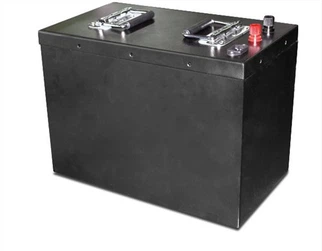
Although manufacturers have repeatedly avoided the cost issue in the competition between electric cars and traditional fuel cars, but from the desperate efforts of each to reduce the cost of power batteries, the cost reduction is the way to survive the electric car breakthrough. And the competition of electric vehicles has evolved into a battery war.
In the 2020 Chongqing Auto Forum, Xiao Yong, deputy general manager of GAC New Energy, said, "New energy is definitely cheaper than traditional fuel cars, not to mention the purchase cost and maintenance cost. This is a 'sweet spot', but the bigger 'sweet spot' is the combination with the intelligent network function. We hope to provide customers with more 'sweet spots' that fuel cars can't offer, to ensure victory in the competition with fuel cars."
While using the "sweet spot" to attract consumers, manufacturers are trying to find ways to reduce costs. Xiao Yong said: "At present, the biggest component of the cost of pure electric vehicles is the battery, and the cost of the battery accounts for a very large proportion of the whole pure electric vehicle selling price. In order to solve this problem, GAC New Energy not only reduces the cost of batteries, but also strives to make the vehicle run farther with the same amount of electricity through technological revolution. We firmly believe that the gap between the manufacturing cost of pure electric vehicles and fuel vehicles will be further narrowed in the future, and the price will become more and more advantageous."
Reducing costs, GAC New Energy is not an isolated case, the battery war has already begun, with module-less batteries bearing the brunt. The "2020 Power Battery Industry Development Report" (hereinafter referred to as the "Report") released by the China Automotive Technology Research Center shows that "module-free battery packs have become the main choice for companies to control battery costs and improve battery energy density. Ningde Time, BYD, Hive Energy (Great Wall) and Tesla have all launched module-less battery pack technology."
Behind the cost is safety
The goal of the battery wars is to make batteries cost less and electric vehicles run farther. In this context, the high nickelization ternary lithium battery has become the mainstream direction, but the safety risk behind it has increased greatly.
The Report shows: "In 2019, the ternary lithium battery accounts for more than 60%, and high nickel becomes the mainstream direction. As the ternary lithium battery has an advantage in energy density, the installed capacity has increased year by year, and the market share reached 62.18% last year, high nickelization is the mainstream of future power battery development, and the current power battery companies are vigorously laying out."
However, at the 2019 TEDA Forum, Yang Yusheng, an academician of the Chinese Academy of Engineering, publicly appealed, "High nickel ternary and other batteries should not be the focus. As long as the subsidies are removed, or the subsidies are not linked to mileage and not linked to the specific energy of the battery, there is no need to take risks with high nickel ternary."
Why was the high nickel ternary battery firmly rejected by the 87-year-old academician? Yang Yusheng said, "The ratio of nickel-cobalt-manganese from 333, 523, 622 to 811, the danger is constantly increasing." According to the analysis of the Report, "Power battery fires are generally divided into charging spontaneous combustion, collision impact combustion, driving spontaneous combustion and water-related spontaneous combustion, of which charging spontaneous combustion and driving spontaneous combustion are the most dangerous, the former occurs when there is generally no supervision and no signs, the latter occurs at a faster speed and difficult to escape."
Although the battery war in controlling costs and improving the range of the first results, but the electric car safety problems have not been effectively solved, so the market does not buy. This year, due to Xi'an, Hohhot, Xishuangbanna State Jinghong, Changsha, Guangzhou, Shenzhen, Dongguan, Huizhou and many other places, electric vehicle safety accidents. early June, the Ministry of Industry launched the strictest electric vehicle safety investigation. At the same time, these accidents are shocking and discourage some consumers who want to buy electric vehicles.
What is the difficulty?
The original purpose of the country's development of new energy vehicles is to save energy and reduce emissions, while manufacturers who take the technical route of electric vehicles must solve the contradiction of price and value deviation. The battery war seems to be a cost-cutting war, but in essence it is a competition for companies to choose different technical solutions and find a balance between price and value. The Report analyzes that "the battery thermal runaway is not technically insurmountable, the difficulty lies in balancing cost, energy density, and safety." At present, the battery war is in a scorching battle, with no clear winner.
At the same time, the industry has questioned the technical route of electric vehicles. Yang Yusheng has pointed out that "pure electric vehicles with more batteries, heavier cars, and more power consumption may not be the ultimate goal. If everyone recognizes that the development of electric vehicles is for energy saving and emission reduction, the policy should be changed, and after the change, pure electric vehicles should not be the ultimate goal. I used to think that pure electric cars are good, but 8~9 years ago I started to realize slowly that there are more problems with pure electric cars. So the last 8 to 9 years, I have been talking about not being able to engage in long-distance pure electric vehicles, to measure the whole process of energy-saving and emission reduction, the engine and battery with the best results."
The new energy car market continues to decline, weak companies will gradually be out of the game. 2021 new "double points" policy was officially implemented, a new round of competition opened. In the case of pure electric vehicles still dominate, the only enterprise that can crack the contradiction between price and value can enjoy the policy dividend, and the battery is becoming the focus of competition, who is the first to win in the battery war, who will occupy an advantageous position.