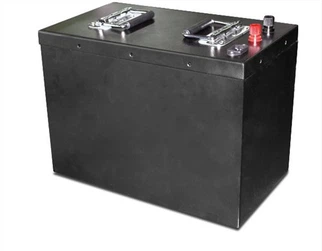
For the design of the 48v lithium battery pack balance charging circuit topology, domestic and foreign researchers have proposed many different circuit topologies. According to the energy consumption of the circuit during the equalization process, the equalization charging circuit of the battery pack can be divided into two categories: energy dissipation type and energy non-dissipation type.
1. Energy dissipative balance is achieved by discharging in parallel with shunt resistors at both ends of every single cell in the battery pack to achieve balance. The shunt resistance discharge equalization circuit is the most direct equalization technology. This technology discharges the high-capacity single cells through the shunt resistance until all the single cells have the same capacity.
2. Related to energy dissipative equalization, the energy non-dissipative equalization circuit consumes less energy but is more complicated than the circuit structure.
①Flying capacitors connect each battery with a capacitor in parallel. This capacitor can be connected in parallel to its own battery or adjacent batteries by switching. When the voltage of a certain battery is too high, first connect the capacitor in parallel with the battery, the capacitor voltage is consistent with the battery, and then switch the capacitor to the adjacent battery, and the capacitor discharges the battery to realize energy transfer.
② Switched capacitor method balance Regarding the power lithium battery pack composed of n single cells in series, the switched capacitor method balance circuit requires n-1 capacitive elements and 2n switching devices. Take the inconsistency of the voltages between the B1 and B2 terminals of the single battery as an example. There are two states during the control process. The disadvantage of this circuit is that it can only be used for the terminal voltage balance between the single batteries, and it can only be used between adjacent single batteries. Therefore, when the number of batteries in series is large, the equalization time is relatively long.
③The double-layer capacitor method equalization circuit is also a derivation and transformation of the switched capacitor method circuit. The difference is that the circuit uses two layers of switched capacitors to realize energy transfer between batteries. Compared with the balanced circuit of the switched-capacitor method, the advantage of this circuit is to use the newly added outer switched capacitor, so that the single battery can not only balance the voltage with the adjacent single battery but also with the non-adjacent single battery. Equalization, so the equalization speed can be improved.