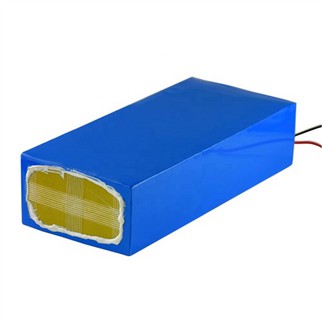
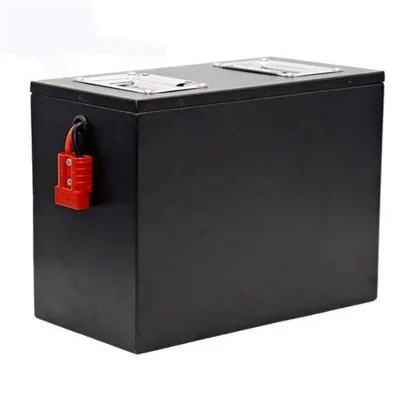
The full name of lithium iron phosphate battery is lithium iron phosphate lithium-ion battery. Because its performance is particularly suitable for power applications, the word "power" is added to the name, that is, lithium iron phosphate power battery. Some people call it a "lithium iron power battery", and do you know the charging techniques of lithium iron phosphate? Let me introduce you to the charging skills of lithium iron phosphate batteries.
1. Before solving the problem, we first need to understand the structure and working principle of lithium iron phosphate batteries. LiFePO4 is used as the positive electrode of the battery. It is connected to the positive electrode of the battery by aluminum foil. In the middle is a polymer separator, which separates the positive electrode from the negative electrode. Ions can pass but electrons cannot pass. On the right is the negative electrode of the battery composed of carbon (graphite), which is connected to the negative electrode of the battery by copper foil. Between the upper and lower ends of the battery is the electrolyte of the battery, and the battery is hermetically sealed by a metal casing. When a lithium iron phosphate battery is charged, the lithium ions in the positive electrode migrate to the negative electrode through the polymer separator; during the discharge process, the lithium ions in the negative electrode migrate to the positive electrode through the separator. Lithium-ion batteries are named after lithium ions move back and forth during charge and discharge.
2. When the battery is charged, lithium ions migrate from the surface of the lithium iron phosphate crystal to the surface of the crystal. Under the action of the electric field, they enter the electrolyte, pass through the diaphragm, and then migrate to the surface of the graphite crystal through the electrolyte, and then are embedded in the graphite crystal. Grid. At the same time, electrons flow to the aluminum foil collector of the positive electrode through the conductor, flow to the copper foil collector of the negative electrode through the tab, battery pole, external circuit, negative pole, and negative lug, and then flow to the graphite negative electrode through the conductor. The charge on the negative electrode is balanced. After the lithium ions are deintercalated from the lithium iron phosphate, the lithium iron phosphate is converted into iron phosphate.
3. When the battery is discharged, lithium ions are extracted from the graphite crystal, enter the electrolyte, pass through the diaphragm, and then migrate to the surface of the lithium iron phosphate crystal through the electrolyte, and then re-embed into the lithium iron phosphate crystal lattice through the surface. At the same time, the battery flows to the copper foil collector of the negative electrode through the conductor, flows to the aluminum foil collector of the battery positive electrode through the tab, battery negative pole, an external circuit, positive pole, and positive tab, and then flows to the iron phosphate through the conductor. Lithium cathode balances the charge of the anode.
Notes: Once again remind the lithium iron phosphate battery to be waterproof and dustproof when using it, so there should be no water in the storage place, which will affect the performance and service life of the battery.