Lithium iron phosphate batteries and other lithium batteries are only different in cathode materials, and the process is similar to other lithium batteries. The major procedures are as follows: ingredients-coating-roll pressing-slitting-sheet making-winding-assembly-laser welding-baking-liquid injection-activation-formation-sealing-cleaning-volume separation-sorting. The main difference is that the lithium iron phosphate material has poor electrical conductivity, so the material particles are made relatively fine and the specific surface is large, which makes it difficult to disperse the ingredients and easy to absorb water. The other differences are really small.
As a high-performance secondary green battery, the lithium-ion battery has high voltage, high energy density (including volume energy, mass-specific energy), low self-discharge rate, wide operating temperature range, long cycle life, environmental protection, There is no memory effect and the advantages of large current charge and discharge. The improvement of the performance of lithium-ion batteries is largely determined by the improvement of the performance of electrode materials, especially cathode materials. Currently, the most widely studied cathode materials include LiCoO2, LiNiO2, and LiMn2O4. However, due to the toxicity of cobalt and limited resources, the preparation of lithium nickelate is difficult, the cycle performance and high-temperature performance of lithium manganate are poor, and other factors restrict their application and development. Therefore, the development of new, high-energy, and inexpensive cathode materials is crucial to the development of lithium-ion batteries.
In 1997, Padhi et al. reported that lithium iron phosphate (LiFePO4) with an olivine structure can reversibly insert and remove lithium, and has the characteristics of high specific capacity, good cycle performance, stable electrochemical performance, and low price. It is the first choice for the new generation Green cathode material, especially as a powerful lithium-ion battery material. The discovery of lithium iron phosphate has attracted the attention of many researchers in the electrochemical industry at home and abroad. In recent years, with the increasing application of lithium batteries, more and more researches on LiFePO4 have been conducted.
The structure of lithium iron phosphate
Lithium iron phosphate (LiFePO4) has an olivine structure, a slightly distorted hexagonal close-packed, and its space group is Pmnb type.
LiFePO4 is composed of FeO6 octahedrons and PO4 tetrahedrons. P occupies tetrahedral positions, while Fe and Li are filled in the octahedral voids. Fe occupies co-angular octahedral positions and Li occupies co-sided octahedral positions. . In the lattice, one FeO6 octahedron is edged with two FeO6 octahedrons and one PO4 tetrahedron, while the PO4 tetrahedron is edged with one FeO6 octahedron and two LiO6 octahedrons. Due to the close arrangement of oxygen atoms in the nearly hexagonal packing, lithium ions can only be deintercalated on a two-dimensional plane, and therefore have a relatively high theoretical density (3.6g/cm3). In this structure, the voltage of Fe2+/Fe3+ to metal lithium is 3.4V, and the theoretical specific capacity of the material is 170mA·h/g. A strong P-O-M covalent bond is formed in the material, which greatly stabilizes the crystal structure of the material, resulting in high thermal stability of the material.
Wang et al. made a detailed analysis of the electrochemical performance of LiFePO4. Figure 2.2 is the cyclic load voltammogram of LiFePO4. Two peaks are formed in the CV diagram. During anode scanning, Li+ is removed from the LixFePO4 structure and forms oxidation at 3.52V. Peak; when scanning from 4.0 to 3.0, Li+ is inserted into the LixFePO4 structure, corresponding to a reduction peak at 3.32V; the redox peak in the CV curve indicates that a reversible lithium-ion intercalation and deintercalation reaction occurs on the LiFePO4 electrode.
The performance of lithium iron phosphate
1) High energy density
Its theoretical specific capacity is 170mAh/g, and the actual specific capacity of the product can exceed 140mAh/g (0.2C, 25°C);
2) Security
It is currently the safest cathode material for lithium-ion batteries; it does not contain any heavy metal elements harmful to the human body;
3) Long life
Under the condition of 100% DOD, it can be charged and discharged more than 2000 times; (Reason: the stability of the lithium iron phosphate lattice is good, and the insertion and extraction of lithium ions have little effect on the lattice, so it has good reversibility. Existing shortcomings The electrode has poor ion conductivity, which is not suitable for high-current charging and discharging and is hindered in the application. The solution: coating the electrode surface with a conductive material and doping to modify the electrode.)
The service life of a lithium iron phosphate battery is closely related to its use temperature. Too low or too high a use temperature will cause great hidden dangers in its charging and discharging process and use process. Especially used in electric vehicles in northern China, in autumn and winter, the lithium iron phosphate battery cannot supply power normally or the power supply is too low, and it's working environment temperature needs to be adjusted to maintain its performance. At present, the domestic solution to the constant temperature working environment of lithium iron phosphate batteries requires consideration of space limitations. The most common solution is to use aerogel felt as an insulation layer.
4) Charging performance
The lithium battery with lithium iron phosphate cathode material can be charged at a high rate, and the battery can be fully charged within 1 hour.
1. Iron phosphate drying to remove water
(1) Drying process in drying room: The stainless steel sagger is filled with raw material iron phosphate and placed in the drying room, and the temperature of the drying room is adjusted to 220±
Dry at 20°C for 6-10 hours. The discharge is transferred to the next process to the rotary furnace for sintering.
(2) Rotary kiln sintering process: After the rotary kiln is heated up and the nitrogen flow reaches the requirements, feed (materials from the drying room of the upper process), adjust the temperature to 540±20℃, and sinter for 8-12 hours.
2. Mill mixing process
During normal production, the two grinders are put into operation at the same time, and the specific feeding and operation of the two equipment are the same (one can be operated separately during debugging), and the procedure is as follows:
(1) Lithium carbonate grinding: weigh 13Kg of lithium carbonate, 12Kg of sucrose, and 50Kg of pure water, mix and grind for 1-2 hours. time out.
(2) Mixing and grinding: Add 50Kg of iron phosphate and 25Kg of pure water to the above-mixed solution, and mix and grind for 1-3 hours. Shut down, the output is transferred to the dispersing machine. Sampling to measure particle size.
(3) Cleaning: Weigh 100Kg of pure water, clean the grinder 3-5 times, and transfer all the lotion to the dispersion machine.
3. Dispersing process of dispersing machine materials
(1) Transfer the material about 500Kg (including the material for cleaning the grinder) to the dispersing machine together with the materials that have been mixed by two grinders (or one grinder twice), and then add 100Kg of pure water, adjust the mixing speed, and fully Stir and disperse for 1-2 hours, waiting to be pumped into the spray drying equipment.
4. Spray drying process
(1) Adjust the inlet temperature of the spray drying equipment to 220±20°C, the outlet temperature to 110±10°C, and the feed rate of 80Kg/hr. Then, start spray drying to obtain dry materials.
(2) The solid content can be adjusted to 15%~30% according to the spray particle size.
5. Material briquetting and charging of hydraulic press respectively adjust the pressure of the hydraulic press to 150 tons and 175 tons. Load the spray-dried material into the mold, hold the pressure for a certain period of time, and compact it into a block. Load the sagger into the push plate furnace. At the same time, several sets of bulk samples were put in to compare with the compressed materials.
6. The pusher furnace is sintered and the temperature is increased first, nitrogen is passed, and the atmosphere is below 100ppm. Push the sagger into the pusher furnace, press the heating section 300-550℃, 4-6 hours; the constant temperature section 750℃ 8-10 hours; The section is carried out for 6-8 hours, and the material is discharged.
7. Rolling ultra-fine grinding
The material burned in the pusher furnace is fed into the ultra-fine grinding, the speed is adjusted, and the roll grinding is carried out and then sent to the ultra-fine grinding for grinding. Each batch is sampled to test the particle size.
8. Screening and packaging
The grinding materials are screened and packaged. Two specifications: 5Kg and 25Kg.
9. Inspection and storage
Product inspection, labeling, and storage. Including product name, inspector, material batch, date.
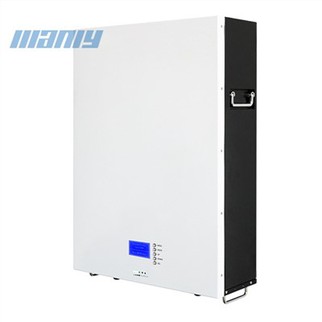
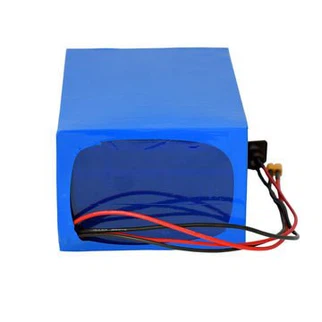
(Manly 12V 100Ah LiFePo4 Battery Module)
MANLY Battery Company, a professional manufacturer of lithium iron phosphate batteries, provides customized services for multi-series parallel lithium iron phosphate batteries/lithium iron phosphate power batteries. Like 12V, 24V, 36V, 48V voltage, and 3.2Ah, 12Ah, 24Ah ... 300Ah capacity LiFePo4 battery module. Those lifepo4 battery packs are widely used in electric bicycles, golf carts, electric wheelchairs, electric tools, electric toys, Solar batteries, emergency lights, solar street lights, UPS backup power supplies, and various instruments.