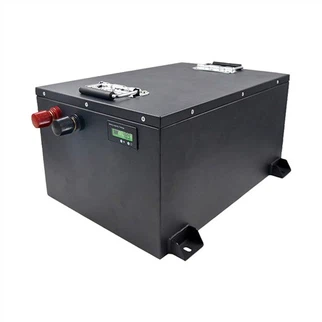
At present, the domestic annual output of electric bicycles is about 30-35 million, and the lithium penetration rate is about 10%. With the promotion of lithium electric vehicles by policies, manufacturers, and consumers, it is expected that the lithium penetration rate will exceed 80% in 2022. According to electric bicycles The 48V/12AH charged electricity demand for bicycles is expected to exceed 17GWh in 2022. According to the calculation of the 70% lithium penetration rate of the country's 250 million electric bicycles, the entire market is expected to demand 100GWh.
1. Energy storage and small power: direct energy storage system for towers, two rounds of lithium battery replacement acceleration
1. A considerable increase in the replacement of lithium batteries in communication base stations has benefited from the replacement of existing base stations, the large-scale popularization of 5G base stations, and the broad market space for communication energy storage, as well as the rapid commercialization of power storage on the power generation side, grid side, and user side, and energy storage The market is developing rapidly. Compared with traditional lead-acid energy storage batteries, lithium-ion batteries have excellent performance such as low pollution and long cycle life. As their costs continue to decline, the economics of lithium-ion batteries have begun to become prominent. New battery energy storage uses more and more lithium ion batteries, and gradually replaces lead-acid batteries, and is more and more widely used in the energy storage market. Energy storage batteries do not require high energy density, and pay more attention to battery cost, cycle performance, life cycle cost, etc. Lithium iron phosphate batteries have low production costs and high cycle times.
In the past, the relative price of lithium iron phosphate was relatively high, and the economics of making energy storage batteries were not outstanding. The price drop promoted the gradual realization of the possibility of substitution. In the past, the price of iron-lithium batteries was higher, and the cycle life was not much different from that of lead-acid batteries. At present, the price of lithium iron phosphate batteries has fallen more, the cycle life has increased, and the price of lead-acid has risen, and environmental protection requirements have become more stringent. The substitution trend is obvious.
The lead-acid replacement process of the iron tower system has begun. As of the end of June 2019, China Tower has received 65,000 5G base station construction needs, and it is expected to receive 100,000 5G base station construction needs throughout this year. 5G base stations are mainly divided into macro base stations and micro base stations, and micro base stations can be subdivided into: micro base stations, pico base stations, and femto base stations. Among them, the energy storage battery equipment is needed for the macro base station, and the micro base station generally uses the direct power supply from the mains, and there is no electric energy storage equipment.
According to the category, the demand for lithium batteries in the communications market can be divided into: the original 4G base station lithium battery replaces lead-acid, the newly built 5G base station and the backup power supply for the computer room, and the core scenario of the lithium battery application in the communications market is the backup power supply for the base station. In 2018, China Tower will replace lead-acid lithium batteries with a total of 120,000 towers, using about 1.5GWh of lithium batteries, and 300,000 towers in 2019, using 4-5GWh of lithium batteries. It is expected to replace 600,000-700,000 towers in 2020, which is expected to be 8GWh. The total replacement of the tower is about 25GWh, and the space is huge.
2. There is huge room for two-wheeled vehicles to replace lithium batteries
The trend of lithium-ion battery for two-wheeled vehicles is clear: First, the energy density requirements of two-wheeled electric vehicles. The “new national standard” requires light weight (55kg). Under the same cruising range requirements, the weight of lithium batteries and the weight of the body are more important. The second is energy saving and environmental protection requirements. Lithium batteries are almost environmentally friendly and pollution-free, while lead-acid batteries are more polluting, and there are relevant restrictions in various places. There are also economic requirements. From the perspective of the life cycle cost of electric bicycles, lithium batteries The service life is 2-3 times that of lead-acid batteries, and the current price of lithium batteries is less than three times that of lead-acid batteries, and the price of lithium batteries continues to decrease, while the price of lead-acid batteries has increased due to environmental restrictions and other reasons. . At present, the domestic annual output of electric bicycles is about 30-35 million, and the lithium penetration rate is about 10%. With the promotion of lithium electric vehicles by policies, manufacturers, and consumers, it is expected that the lithium penetration rate will exceed 80% in 2022. According to electric bicycles The 48V/12AH charged electricity demand for bicycles is expected to exceed 17GWh in 2022. According to the calculation of the 70% lithium penetration rate of the country's 250 million electric bicycles, the entire market is expected to demand 100GWh. At present, Penghui Energy's small power supply mainly supplies Chaowei, Mavericks Electric, Hellobike, Wuyang Honda, etc. This year, it will gradually introduce Taiwan Bell and other customers. It is expected that with the smooth progress of customer introduction, the revenue of small power will increase by 30%, but the intensified competition will lead to gross profit margins to remain below 20%.
2. 5G enables base station energy storage wind to
On October 31, Chen Zhaoxiong, Vice Minister of Industry and Information Technology, together with China Telecom, China Mobile, China Unicom (5.660,0.00,0.00%), and the chairman of China Tower jointly announced the official launch of 5G commercialization. In addition to the China Tower, related companies such as power grid companies, electrical equipment, and battery energy storage have also joined the 5G construction army. 5G means higher frequency and requires more dense base station sites, which directly leads to investments including site selection and construction and maintenance costs, power supply facility renovation costs, high electricity bills due to high power consumption, and power system upgrades and transformations. The cost is huge, and the cost of site selection for base station construction and electricity consumption are the biggest problems that limit the speed of 5G base station construction. The construction and promotion of 5G base stations are actually facing multiple pressures.
Under pressure from investment and operation, China Unicom and China Telecom proposed to cooperate to build a 5G network. China Tower, power grid companies, electrical equipment, battery energy storage and other related companies have also proposed various solutions to deal with cost problems, and are expected to become beneficiaries in the promotion and application of 5G.
1. High construction cost and high rent: 4G upgrade, 5G+ tower data: 5G base station construction density is at least 3 times that of 4G base station-that is, the number of base stations required for 5G is 3 times that of 4G, and the number of base stations for a single station is upgraded and upgraded to 30,000. Yuan, and the cost of all the new construction is about 600,000 yuan.
The construction of 5G base stations requires high density, and the rent for construction land is very expensive, especially in the old urban areas of first-tier cities, for example, the annual rent can reach 100,000 yuan. On November 31, Chen Zhaoxiong proposed to accelerate the application and innovation of 5G in vertical industries such as industry, transportation, and energy at the 5G commercial launch ceremony. It can also be seen from the current construction model that the future 5G base station will serve as a shared "smart energy (4.860, -0.08, -1.62%)" carrier, transforming from a "communication tower" to a "social tower" and "smart tower".
As a communications infrastructure operator with 97% of the domestic communications tower market, China Tower has become the key to the progress of 5G construction. As early as last April, China Tower successively signed strategic cooperation agreements with State Grid Corporation of China and China Southern Power Grid Corporation to start a new cooperation model of "sharing towers". This is the construction concept of multi-station integration in the "Ubiquitous Power Internet of Things" of the State Grid at the beginning of this year, and it is also the application mode of the "Communication Base Station Idle Energy Storage Demonstration Project" in the construction of the "Digital Grid" released by China Southern Power Grid recently.
China Tower said that 97% of the current 5G base station construction process has been through the sharing of existing site sites. This move can reduce infrastructure construction costs by 42% and directly save telecommunications companies' annual operating costs by 25%; and the new tower will also The sharing rate has increased from 14% to 80%, which is equivalent to 700,000 towers less construction, 130 billion yuan in industry investment and 37,000 mu of land saved, and the overall cost reduction and efficiency increase are obvious.
The State Grid and China Southern Power Grid have successively built "power poles + 5G" base stations in many places. With the help of power towers to build 5G base stations, the construction period is greatly shortened, 5G construction investment costs are saved, and the 5G coverage quality and progress have been improved. At the same time, power supply companies open up substation resources to 5G operators, which also reduces operators' operation and maintenance costs.
In addition, 5G network slicing also meets the needs of the State Grid's ubiquitous power Internet of Things and can be applied in fields such as distributed renewable energy control and power big data platforms.
2. High energy consumption and electricity bills: conversion to direct, 5G + energy data: the electricity costs formed by energy consumption, accounting for 20% of the operator's network maintenance costs. The electricity bill brought by the power consumption of 5G base stations is 3 to 4 times that of 4G. Even if the three major operators share the base station, the monthly electricity bill for a single station is 5,000 yuan. At present, the 5G operating electricity price adopts relatively high commercial electricity price, and some sites have to use a transfer power supply, which is 30%-40% higher than that of direct power supply.
It is reported that the three major operators and China Tower are currently planning to apply for preferential electricity tariffs to the National Development and Reform Commission and the National Energy Administration, and at the same time carry out "transition of power supply" to "direct power supply", which is expected to save 700-800 million yuan in annual electricity costs. At present, many provinces have issued relevant policy guidelines, calling on state-owned enterprises and institutions to open up public property areas to build 5G base stations for free, and to convert power supply to direct power supply to reduce base station construction and operation costs by granting construction and electricity subsidies.
On July 5, 2019, the Shanghai Municipal Government issued the "Implementation Opinions on Accelerating the Construction and Application of 5G Networks in the City" to promote the openness and sharing of public facilities.
On September 11, 2019, the Shenzhen Municipal Government's "Shenzhen's Measures for Taking the Lead in Realizing Full Coverage of 5G Infrastructure and Promoting the High-Quality Development of 5G Industry" proposed to take the lead in opening up public resources for free, and the management cost of base stations should not exceed 500 in principle Yuan/month. A single-site reward of 10,000 yuan will be given to telecommunications operating companies that complete the 5G base station construction goals on time, and a single telecommunications operating company will be rewarded up to 150 million yuan.
On September 29, 2019, the Fujian Provincial Development and Reform Commission issued the "Implementation Opinions on Accelerating the Development of the 5G Industry in Fujian Province", requiring local organizations to promote qualified 5G base station conversion power supply to direct power supply projects and encourage the promotion of the application of energy storage technology in 5G base stations. Reduce the cost of power facility renovation and use.
On September 20, 2019, the Shanxi Provincial Government issued the "Implementation Opinions and Several Measures for Accelerating the Development of 5G Industry in Shanxi Province" to strengthen the openness of public areas to the construction of 5G base stations and promote the conversion of existing power supply base stations to direct power supply. The part of the electricity fee that exceeds the target electricity price of 0.35 yuan/kWh will be subsidized by the province, city, and county (district) at a ratio of 5:2:3.
On August 6, 2019, the Jiangxi Provincial Government issued the "Measures to Accelerate the Development of 5G" to promote the co-construction and sharing of public resources, and to transfer power supply to direct power supply for qualified 5G base stations and equipment rooms and other supporting facilities.
From 2019 to 2021, each base station will be given 8,000 yuan, 5,000 yuan, and 3,000 yuan electricity subsidies, and each telecom operator will not exceed 10 million yuan per year in provinces and cities. In response to 5G power consumption and electricity bill management solutions, the energy storage system has to be peak-shaving and valley-filling. Take the 5G base station near the Hangzhou Olympic Sports Area as an example, by controlling the base station to charge the energy storage battery during the low electricity consumption period, Discharge during peak electricity consumption, peak shaving and valley filling reduce the impact on normal electricity consumption in other cities, and at the same time, it also saves part of the electricity bill by using the peak-to-valley price difference.
China Tower also takes a fancy to this vast energy storage application market. In June this year, it established a wholly-owned Tower Energy, which is mainly engaged in the technology development of batteries, charging piles, and energy storage systems. The Tower Zhilian Technology Co., Ltd., which was established at the same time, also carried out social informatization and Internet of Everything business to realize the Internet of Things function of sharing the tower.
3. High purchase cost for power supply expansion: battery iteration and echelon utilization data: 4G base station changes to 5G power greatly increase, need to increase the backup battery capacity simultaneously, generally backup power needs to reserve 3-4 hours of power. It is estimated that during 2019-2025, 5G construction will bring about 155.4GWh of increase in demand for lithium batteries.
According to analysis reports, as the core equipment to ensure the continuous power supply of the base station, the cost of power equipment such as batteries accounts for more than 40% of the cost of the base station equipment. When the mains supply is normal, the battery can help smooth filtering and improve the quality of the power supply. When the power supply fails, the battery can be used as a backup power supply. Previously, 4G base station batteries generally used lead-acid batteries, but the power consumption of 5G base stations doubled compared with 4G, and requirements for expansion and upgrading were also proposed for the power system. Lithium iron phosphate batteries are more efficient in battery discharge efficiency, installation space and construction costs. Lead-acid batteries all have advantages. China Tower has previously stated that it will no longer purchase lead-acid batteries and switch to cascading lithium batteries.
Performance comparison of lead-acid batteries and lithium iron phosphate batteries) Compared with lead-acid batteries, the current cost of lithium iron phosphate batteries is still relatively high, which will also become the promotion of 5G base stations.
Another high-cost expenditure, so the use of batteries in cascades has become the first choice for China Tower as a backup power source for base stations. At the same time, the scale formation period of the decommissioning of power batteries coincides with the timeline of 5G promotion. It is estimated that by 2020, retired power batteries will accumulate to 24GWh. In addition to dismantling and recycling, echelon utilization has become an important market. Especially different from other energy storage application scenarios, the communication base station power system has relatively low requirements on battery performance, which has become the relatively best scenario for echelon utilization of retired batteries.
According to reports, as of September this year, China Tower has used about 4GWh of echelon batteries in the field of backup power for 300,000 base stations. At present, the technical and economic feasibility of echelon batteries in communication base stations has been fully verified. China Tower currently has approximately 1.97 million base stations, and it is expected that the purchase of tiered lithium batteries in the future will be very substantial. The transformation of the power supply system of 5G base stations can directly drive the application market of power battery cascade utilization of energy storage.
Even Jianrui Woneng (1.590, -0.02, -1.24%), who is struggling on the cliff of bankruptcy and taking multiple measures to break the situation, has taken a fancy to the base station power supply market. On September 23, Jerry Wong issued an announcement stating that it has signed a five-year cooperation agreement with Aerospace Burke and plans to jointly build a high-quality supplier and service provider for China's towers. Jerry Wong will supply Watermark batteries to China's tower. According to data, in 2018, China Tower purchased tiered lithium batteries worth 205 million yuan from Aerospace Burke, and also purchased 137 million yuan worth of tiered lithium batteries from Xinmu Electronics, a subsidiary of Shanmu New Energy. In addition to external procurement, China Tower has also established its own power battery recycling system. The first batch of cascade batteries trial-produced in Xinxiang, Henan Province a few days ago have all been put into the construction of 5G base stations.
This is just the beginning. According to reports, as of the end of September, three telecommunications companies have opened more than 80,000 5G base stations nationwide, and the planned target is to reach 130,000 by the end of this year. However, according to the long-term plans of the three major operators for 5G, it can be seen that 2019 is only the starting point for the construction of 5G base stations, and it is expected that the large-scale construction period of 5G base stations will begin next year. Bank of China International Securities believes that during 2019-2025, the demand for lithium batteries for base station energy storage batteries will be 3.9GWh, 23.1GWh, 28.9GWh, 31.4GWh, 21.0GWh, 23.9GWh, 23.1GWh, which will bring a total of 155.4GWh. Increase in demand for lithium batteries.
In the future, 5G base stations still have a lot of room for imagination for battery energy storage.
The arrival of the 5G era means that operators will upgrade and transform national communication base stations. It has been a general trend in recent years to support lithium batteries in base station systems. The energy storage market for communication base stations will once again ignite the fire of lithium batteries.
It has been learned from many lithium battery companies that most battery companies have already withdrawn from the communications base station market due to price wars. Although it is conservatively estimated that the popularization of 5G communications and base station upgrades this year will bring a market of 1 billion yuan for lithium batteries, battery companies still remain on the sidelines.
It can be seen that how to get rid of the shackles of the price war and lead the communication base station lithium battery to a healthy future is the focus of lithium battery companies. In the future, especially after upgrading 5G, lithium battery companies will no longer focus solely on communication base stations, but on how communication networks evolve and whether customer targets will change. These two cores are the key to determining the fate of lithium batteries in the communications field.
In general, as the demand for 5G communication base stations grows, the future lithium battery energy storage market space will be very considerable. However, due to the fierce competition in the communication base station market and the intensified price war, corporate profits are meager. There are not too many power supply and magnetic parts companies that can eat this cake. Relevant enterprises still need to continuously strengthen the level of technological research and development, and greatly increase their competitiveness in the market.
With the gradual application of 5G technology, the future will profoundly affect economic and social development. 5G is the main development direction of the new generation of information and communication technology. It will bring a huge market for lithium battery energy storage communication base stations. Lithium iron acid batteries will achieve great development. As long as you have the courage to seize opportunities and meet challenges, tomorrow will be even better.