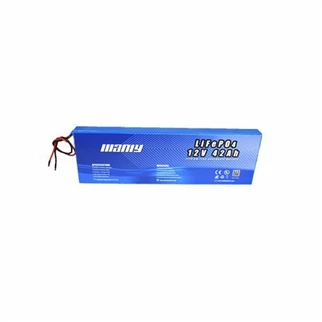
That's right, automotive 12V lead-acid batteries are coming out of the market. Europe has decreed that after 2030, lead-acid batteries will no longer be used in all new vehicles, creating a huge challenge for OEMs to find alternative solutions. While this may seem like a daunting task, it also presents a huge opportunity to not only eliminate environmentally harmful batteries, but also reduce vehicle weight and improve overall efficiency.
The 12V battery and Power Delivery Network (PDN) is a global standard supporting hundreds of loads, including some that are safety-critical, so solutions must be both innovative and robust. High-density, high-power, high-efficiency power modules for connecting high-voltage, 48V and 12V PDNs provide the most flexible and scalable solution to this upcoming challenge.
When considering potential solutions, OEMs must consider several important factors: increasing power to support new features with better performance, increasing efficiency to extend driving range and optimizing thermal management, reducing carbon dioxide, optimizing cable routing, reducing harness weight, and Meets EMI requirements. These are some of the variables in this complex equation.
There are two main options for solving this equation. Replacing the 12V lead acid battery with a 12V lithium ion battery is an option. While it does offer some slight weight savings, it also retains the decades-old legacy of 12V PDNs with no additional benefits. Another option is to support a 12V PDN powered by a 400V or 800V main battery in EV and HEV/PHEV. The latter option has many advantages, but both are worth exploring further.
With 12V Li-ion battery
Simply replacing a 12V lead-acid battery with a 12V lithium-ion battery does save about 55% in weight, but has a high cost impact. 12V Li-Ion batteries require a battery management system (BMS) to control charging and keep the battery fully functional throughout the life of the car. That's where Tesla and Hyundai are headed.
In addition, a large DC-DC converter from high voltage to 12V (with voltage and current regulation) needs to be added to charge the 12V Li-Ion battery and power the electrical load. But that doesn't add any advantage. All it adds is weight, overall vehicle layout complexity and system cost, and it also reduces the overall reliability of the vehicle. In contrast, eliminating the 12V battery not only reduces the weight of the car by 13kg, but also increases cargo space by 2.4%.
Traditional 12V PDNs are inefficient
Maintaining a 12V physical battery means maintaining an inefficient PDN with unnecessary redundancy. In a typical automotive 12V PDN, all 12V loads connected to the 12V bus have internal pre-regulators that convert a wide input voltage range (usually from 6V to 16V) to 5V, 3.3V or less. From a global systems perspective, whether it is an electric vehicle, a hybrid vehicle, or a plug-in hybrid vehicle, there is series regulator redundancy. A high voltage to 12V DC-DC converter regulates the 12V bus (high efficiency), while the pre-regulator provides the proper internal voltage for each load (Figure 1).
This traditional architecture originated in the days when cars were equipped with alternators, a sensitive 12V PDN that needed voltage regulation to charge the battery, keep the radio working during a start-up event, or keep the car's incandescent headlights properly brightness. OEMs have been very creative in getting around the 12V power limitation, designing two 12V batteries in recent years, a 24V battery for power steering, and several DC-DC converters in between.
Replaces 12V battery
A better solution to this problem is to completely rethink the automotive PDN: do away with the physical 12V battery and replace it with a 12V "virtual" battery in the EV's main battery (Figure 2). Every electric car has a main battery, so it doesn't make sense to carry additional energy storage. The ideal vehicle architecture uses a high-voltage battery to power the powertrain and all auxiliary loads. This is possible with Vicor's high-density bus converter module technology, which virtualizes the low-voltage battery (48 or 12V) directly from the high-voltage battery (400 or 800V).
The BCM bus converter uses zero-voltage, zero-current switching (ZVS/ZCS) technology, which operates at a higher frequency than conventional converters, so it responds faster than a physical battery. For example, the BCM6135 operates at 1.2MHz, unlike conventional ZVS/ZCS resonant converters, which operate at narrowband frequencies (Figure 3). The high frequency operation of the BCM provides fast response to changes in load current and a low impedance path from input to output. The combination of fixed ratio conversion, bidirectional operation, fast transient response (over 8mA per second), and low impedance path helps the BCM make a high voltage battery look like a 48V battery, which we call "transformation". This ability to transform the power supply is both an important advantage and an important differentiator compared to conventional converters.
Where will the electric vehicle supply network go?
12V lead-acid batteries will soon be withdrawn from the European market. The timing is perfect given all the innovations driving the redesign of the electric vehicle supply network.
Automotive electrical PDNs are at a crossroads in 12V supply. While trying to keep architectural changes to a minimum, more and more stringent power loads are applied to vehicles. Tesla CEO Elon Musk said: "Why do we use 12V? 12V is just a residual voltage, which is really too low."
OEMs are scrambling to design better PDNs that provide EVs with greater range and higher performance. Eliminating the 12V battery entirely is a clear long-term solution, reducing weight and space while providing better transient response and system performance.