Battery storage system can be used as a buffer between multiple power sources and stable power demand, and can increase the generation capacity and legal quality of unstable power sources like wind and solar. It can also be used for general grid distribution users to cut peaks and fill valleys, storing the valley time tariff electricity in the form of direct current in the battery matrix (power stack), to peak time tariff time, and then output to each appliance and electricity use at industrial frequency (50Hz), which is equivalent to using the low price time electricity in the high price time, the difference is the peak and valley difference energy storage savings revenue.
The following are the main components of a general battery energy storage power plant system.
Transformer and high-voltage switchgear
Transform the grid voltage (10KV, 6KV or other levels of voltage) from the grid into the required voltage level (e.g. 0.4KV) for the user's appliances and power consumption
Low-voltage switch and control cabinet
Control and management for charging and discharging and power output
Control system
The battery energy storage system is controlled by a programmable logic controller (PLC) and a human-machine interface (HMI). one of the key functions of the PLC system is to control the charging time and rate of the energy storage system. For example, the PLC can receive real time data on the price of electricity and decide how quickly to recharge the battery system based on the maximum allowable demand, the state of charge and the price comparison during peak/off-peak hours. This decision is dynamic and can be optimized on a case-by-case basis. It is integrated with the rest of the system through standardized communication inputs, control signals and power supply. It can be accessed via dial-up or the Internet. It has multiple layers of defense to restrict access to its different functions and provides customized reporting and alarm functions for remote monitoring.
Power Conversion System (PCS)
The Power Conversion System functions to charge and discharge batteries and provide improved power quality, voltage support and frequency control for the local grid. It has a complex and fast-acting, multi-quadrant, dynamic controller (DSP) with dedicated control algorithms, capable of converting the output over the entire range of the device, i.e. cyclically from full power absorption to full power output. Currently, bi-directional inverters are commonly used.
Battery matrix (stack)
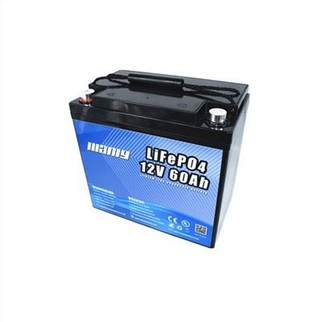
A battery matrix (stack) is composed of several single cells.
Battery energy storage systems can be used to save investment in the fixed equipment of the grid system; improve the utilization of grid equipment and reduce the cost of use for end users.
Other important advantages that energy storage systems can achieve in the transmission and distribution system include
Improving service reliability and power quality through reactive power compensation and voltage regulation;
Peak and valley reduction, storing valley power for sale at peak times, thereby reducing market risk from peak price fluctuations and controlling the high cost of energy imbalances;
Reducing line losses through local power supply, power factor correction, and voltage regulation;
Reduces line congestion and provides smooth access to bottlenecks in the energy supply;
Basic customers can realize the use of valley power during peak consumption, increasing the value of equipment use and capacity expansion.
Peak and valley reduction
Energy storage systems can reduce peak customer energy loads at the distribution side, which will facilitate grid equipment utilization and meet end-customer demand. The grid load factor is thus improved.
Smart Grid
The smart grid is an important part of the future developed grid management system, in which energy storage technology has a huge market potential.
In terms of investment amount as well as power quality considerations, there are generally two types of models.
1, peak time all use valley time electricity output, this mode of battery matrix size and output inverter are relatively large, its energy storage energy is also the largest, the battery matrix in the stored electricity can meet the peak time hours of all electricity consumption, that is, the energy storage power station system in peak time to appliances and electricity consumption output all by the stored valley time electricity, by the grid access to the frequency electricity only as charging power and backup power supply. The peak-to-valley energy saving benefit of this mode is the largest, but the investment is also the largest, and because the output to the appliances and power users is all PWM waveform, so the power quality management requirements are also the highest. Here it is called A mode.
2、The power output at peak time is shared by the power stored at valley time and the frequency power connected to the grid, i.e., the required power is output to the consumer and the power side by the parallel connection of the energy storage power plant system and the frequency power connected to the grid at peak time. The battery matrix size and output inverter of this mode are smaller (e.g., 50%) than those of mode A. Its energy storage energy is also relatively small (e.g., 50%), and the electricity stored in the battery matrix is only needed to meet part of the peak hour electricity consumption (e.g., 50%). The peak-to-valley energy saving benefit of this mode is smaller than that of the A mode, but the investment is also smaller, and the requirement for power quality management is also lower because the entire power output to the appliances and power usage is a superposition of the two types of power, PWM waveform and grid frequency. It is called B mode here.
In addition, from the amount of investment and the size of the battery matrix can be divided into two other sub-modes.
3, a charge mode, this mode of the battery matrix scale is relatively large, its energy storage energy is also relatively large, the battery matrix stored in the electrical energy can meet all the time except for the valley hours of electricity consumption, that is, the energy storage power station system in the valley hours once the stored electrical energy, enough in the peak hours and the usual time to appliances and electricity output. The peak-to-valley energy saving benefit of this model is relatively large, but the investment is also relatively large. Here the combination of this sub-mode and A mode is called A1 mode, and the combination of this sub-mode and B mode is called B1 mode.
4, the secondary charging mode, this mode of the battery matrix is relatively small, its energy storage energy is also relatively small, the battery matrix stored in the electrical energy only to meet the morning peak hours of electricity consumption, that is, the energy storage power station system in the valley of the first time the stored electrical energy, in the morning peak hours can be used to electrical appliances and electricity output. In the afternoon and noon, the storage system will be charged again, and the storage system will use the electricity stored in the second charge to output electricity to the appliances and electricity consumption in the evening and night peak hours. Since the price of electricity during weekdays is higher than the price of electricity during valley hours, the peak-to-valley energy saving benefit of this model is relatively small, but the investment is also relatively small. The combination of this sub-mode with the A-mode is referred to here as the A2-mode, and the combination of this sub-mode with the B-mode is referred to here as the B2-mode.
Energy storage power plants that use batteries as energy storage devices to store energy in the valley hours, and use inverters to generate PWM waves to output power to appliances and power users in the peak hours, although their technology is basically mature, with few barriers, and the overall technical content is not very high. However, in terms of details, the power quality requirements of the power supply and the power grid, it is necessary to make the power output to the appliances and the power supply, as well as the power feedback to the power grid related to the quality of regulations. It is not only the quality of the power output to the appliance and the power source that must be ensured, but also the quality of the power feedback to the grid.
If the current construction plan of battery storage power plant is adopted, not only must the quality of the power delivered to the consumer and the power side be managed to eliminate the negative impact on the quality of the power used, but also the quality of the power fed back to the grid must be managed to meet the national requirements for the power quality of the grid. This must be in the energy storage power station design and installation of high voltage, high-power power management devices (such as SVG, etc.), which will inevitably produce the following three main problems: 1, greatly increased the construction costs; 2, because SVG and other power management equipment for waveform distortion management will eliminate part of the power such as harmonics, harmonics are also electrical energy, eliminate some of the less, so will make the energy saving revenue is reduced; 3, SVG and other power management devices are dynamic operation of power electronic equipment, failure rate and operation and maintenance workload are relatively large, increased operation and maintenance costs will also reduce the energy saving revenue.
If a special connection of three-phase balancing transformer is used to replace the ordinary transformer, and then the stored electric energy is output to the appliances and power consumption through the three-phase balancer, it can greatly reduce the impact of waveform distortion such as harmonics on the user's power quality and on the power quality of the grid. For B1 and B2 mode battery storage power plants, it is possible to meet the power quality requirements of users and the national power quality requirements of the grid without using any power management equipment. Accordingly, there are three main advantages as follows: 1、reduce the construction cost; 2、reduce the elimination of electric energy such as harmonics by SVG and other electric energy management equipment for waveform distortion management, so that the energy saving benefit increases; 3、the three-phase balancing transformer and three-phase balancer are static operation, which will not produce any fault, so there is no need to operate and maintain the operation and maintenance cost.
Translated with www.DeepL.com/Translator (free version)